
How we work: facts are checked against original sources and linked, cruise prices are verified on the cruise line’s own website the day we publish, and we earn no commissions. Spotted a mistake? Tell us and we will correct it.
There is a stone tower on the bank of the Rhine at Kaub with a digital display on the front. Barge captains, grain traders and river cruise planners have watched that number for generations.
This evening it reads minus four.
Not four. Minus four centimetres. Earlier today it touched minus six, according to raw readings from PEGELONLINE, the German federal waterways agency’s live gauge service. The river is still there. Ships are still moving on it. But Europe’s busiest river cruise highway has never read this low, and about 140 kilometres downstream, a hotel ship carrying 140 passengers has already found the bottom.
Here’s the strange part: “minus four centimetres” does not mean the Rhine is empty. It means something much more specific, and once you know how to read it, you can check your own river cruise before the cruise line tells you anything.
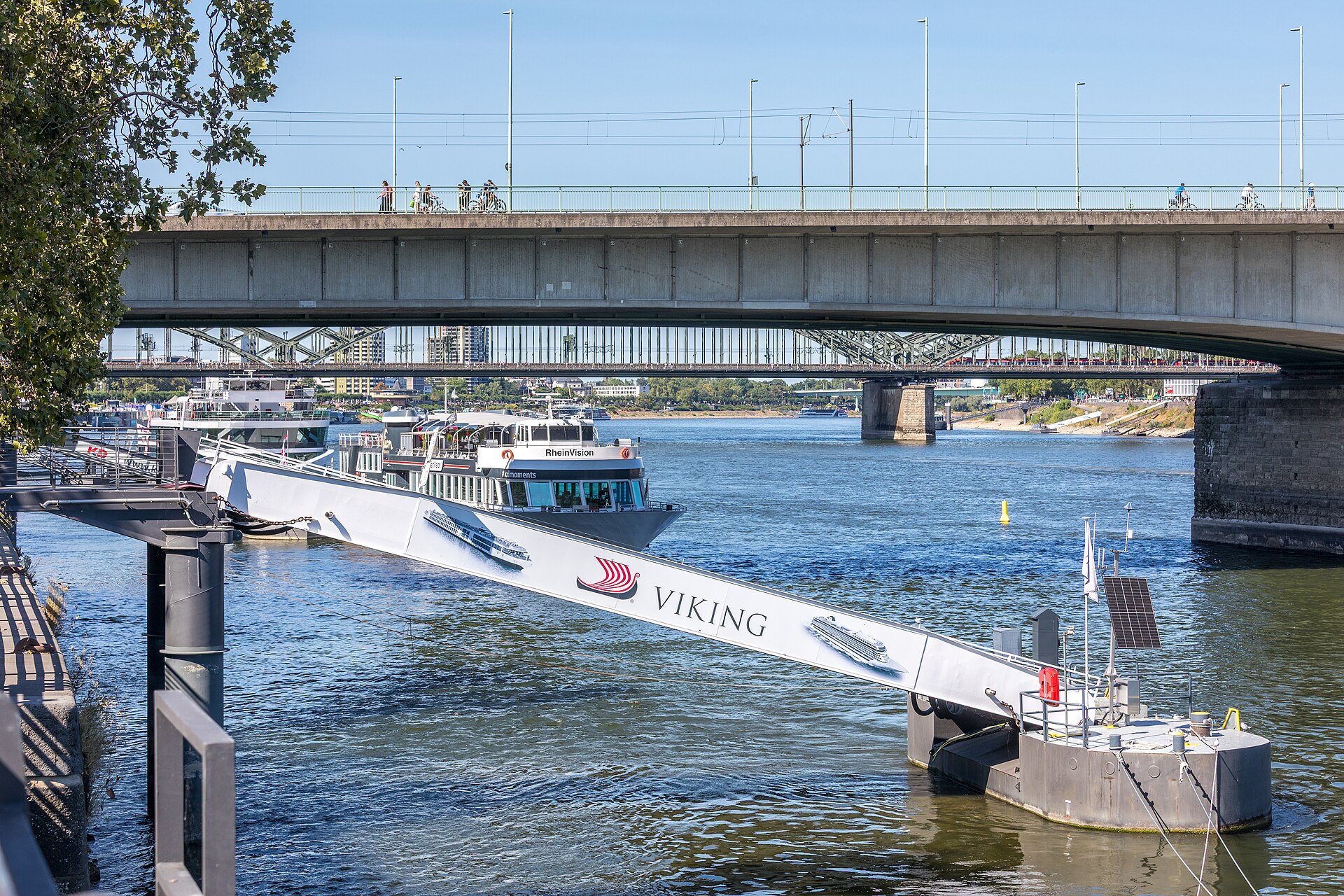
Stuck by the Deutz Bridge
On the afternoon of Saturday, September 26, 2026, the river cruise ship MS Dutch Melody was heading down the Rhine through Cologne. At about 3:13 p.m., close to the Deutz Bridge, she ran aground in the middle of the shipping channel.
There were 140 passengers aboard. The crew called for help from another ship nearby, and at about 5:43 p.m., roughly two and a half hours later, the Dutch Melody was pulled free. Nobody was hurt. The timings come from German cruise news sites Schiffe und Kreuzfahrten and Kreuzfahrttester. DutchNews, citing German river police, reported that the ship got going again with another vessel’s help and carried on downriver.
She may not have been the only one that day. Kreuzfahrttester, citing the water police, reported that a second, unnamed river cruise ship carrying 129 passengers and 33 crew grounded near the Kennedy Bridge in Bonn at about 7 a.m., and worked itself free on a second attempt by noon. We found only that one report of the Bonn grounding, so treat it with care.
If you have to sit on a sandbank, at least Cologne has a view of the cathedral.
Three Gauges, Three Records

The Rhine is measured at dozens of points, but three matter most to cruisers. All three have now set records.
- Kaub, in the Rhine Gorge, sits on the shallowest stretch of the Middle Rhine. Its old record low was 25 cm, set on October 22, 2018, per PEGELONLINE’s station data and Wikipedia. On September 24 this year it hit 4 cm, which Bloomberg called the lowest since records began. Then it went negative.
- Cologne read 40 cm on September 27 and 28, a new low reported by both DutchNews and Kreuzfahrttester. The gauge’s previous all-time low was 69 cm, in October 2018.
- Lobith, where the Rhine enters the Netherlands, fell to 6.10 metres on Sunday, September 27, the lowest since measurements there began in 1866, according to Rijkswaterstaat data reported by Weeronline and DutchNews.
The Dutch also had to reroute traffic. From Friday, September 25, Rijkswaterstaat made the Upper IJssel one-way, because the channel had become too narrow for ships to pass each other safely. Vessels heading the other way now face a detour of up to 300 kilometres via Tiel, Amsterdam and the IJsselmeer. Rijkswaterstaat’s understated summary of the river: “zeer laag voor de tijd van het jaar.” Very low for the time of year.
The Record That Kept Breaking: A Timeline
Records normally fall by a centimetre at a time. This year they’ve been falling every few weeks. Here is how Lobith and Kaub got here, compiled from the sources linked.
| Date | Gauge | Reading | What it meant |
|---|---|---|---|
| Oct 22, 2018 | Kaub | 25 cm | Kaub’s all-time low for nearly eight years (Wikipedia, PEGELONLINE) |
| Oct 29, 2018 | Lobith | 6.49 m | Lobith record low at the time (Weeronline) |
| Aug 18, 2022 | Lobith | 6.48 m | Record broken by 1 cm, and in summer rather than the usual autumn (Weeronline) |
| Jul 30, 2026 | Lobith | 6.47 m | Record broken by 1 cm again (Hart van Nederland, citing Rijkswaterstaat) |
| Mid-Aug 2026 | Kaub | Single digits | First single-digit reading in Kaub’s history (Wikipedia) |
| August 2026 | Lobith | 6.12 m | A 35 cm plunge below the old record (Weeronline, DutchNews) |
| Sep 24, 2026 | Kaub | 4 cm (2 cm in raw data) | Bloomberg reports the lowest since records began (Bloomberg via Swissinfo, PEGELONLINE) |
| Sep 25, 2026 | Kaub | Below zero | Raw readings dip to -1 cm (PEGELONLINE). Wikipedia notes -3 cm on September 26. |
| Sep 26, 2026 | Cologne | About 45 cm | MS Dutch Melody runs aground by the Deutz Bridge (Schiffe und Kreuzfahrten, Kreuzfahrttester) |
| Sep 27, 2026 | Lobith | 6.10 m | Lowest since records began in 1866 (Weeronline, DutchNews) |
| Oct 1, 2026 | Kaub | -6 cm | Lowest raw reading so far (PEGELONLINE, River Water Watch) |
Look at Lobith. Between 2018 and July 2026 the record moved by two centimetres in total. Since then it has dropped another 37.
Why “Minus Four” Doesn’t Mean Dry: How to Read a River Gauge
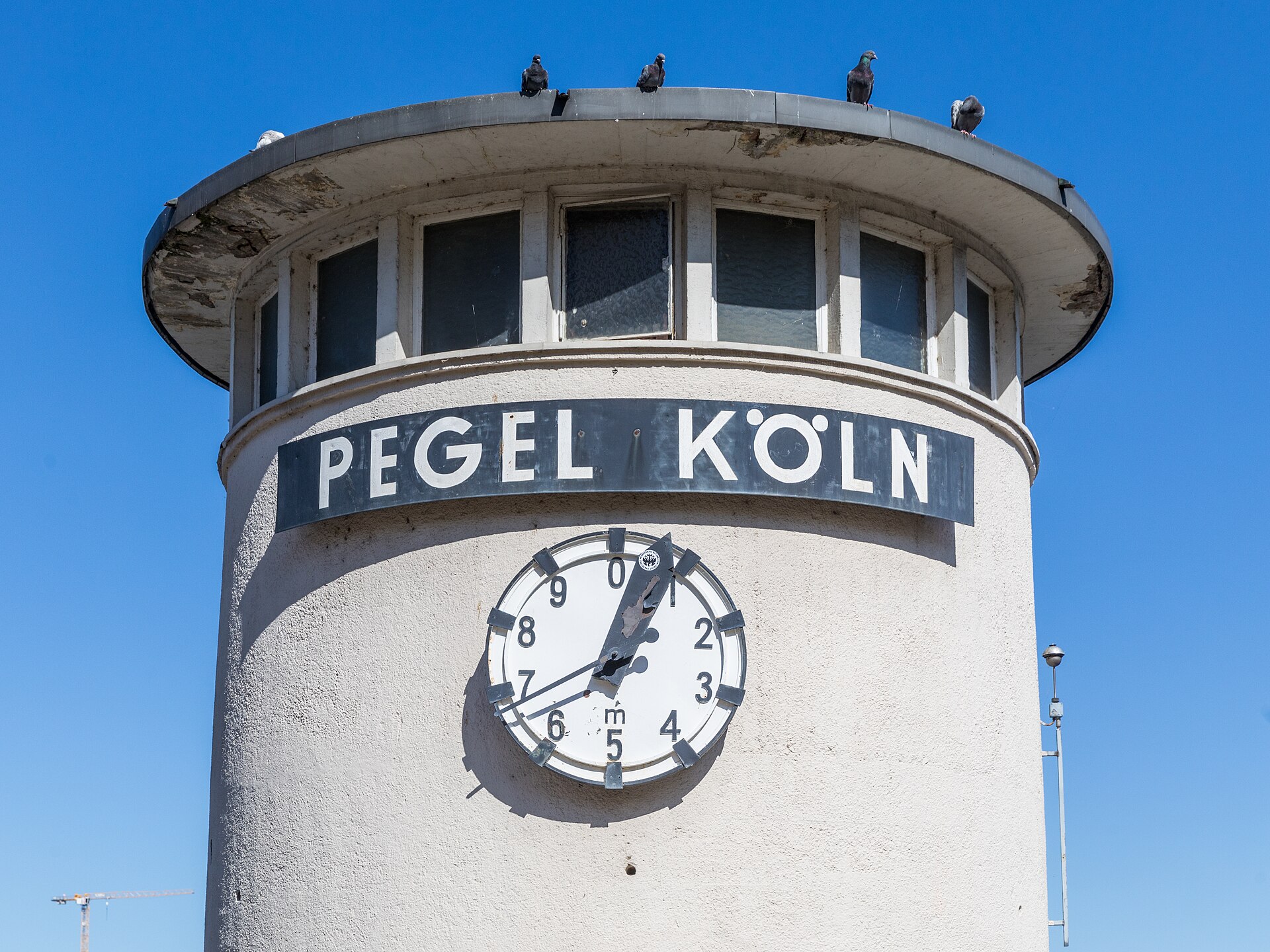
A river gauge is not a dipstick. The “zero” on each one is a fixed height chosen long ago, and the reading tells you where the water surface is relative to that mark. It does not tell you how deep the river is. Wikipedia’s entry on the Kaub gauge puts it plainly: the gauge level “does not directly correspond to the actual depth of the river.”
To turn a reading into a real depth, the German waterways agency publishes two reference numbers for each gauge. One is the equivalent water level (GlW), a statistically defined low-water mark. The other is the channel depth the agency maintains below that mark. On PEGELONLINE, Kaub’s figures are an equivalent water level of 77 cm and a maintained channel depth of 190 cm. So:
- Kaub: reading + 190 cm − 77 cm. At -4 cm, that gives roughly 1.09 metres of channel depth. Travel Market Report independently put Kaub’s real depth at about 1.1 metres.
- Cologne: reading + 250 cm − 139 cm. At 40 cm, that gives roughly 1.51 metres, which matches the “around 1.5 metres of navigable depth” DutchNews reported.
That’s the joke and the problem at once. The river isn’t gone. At Kaub there’s still a metre or so of water in the channel. But Travel Market Report says river ships need 5 to 6 feet (about 1.5 to 1.8 metres), and that metre-and-a-bit leaves almost nothing under a loaded hotel ship’s hull. Stray a few metres from the deepest line, and you’re the Dutch Melody.
Lobith uses a different system, which is why its record sounds so deep. The Dutch measure it in metres above NAP, the national sea-level reference, so 6.10 metres is the river surface’s height, not its depth.
So why is there so little water?
The short answer is the weather upstream. Germany’s Federal Institute of Hydrology (BfG) said in mid-September that the 2026 rainfall shortfall had overtaken the worst deficit of its 1993–2022 reference period, set in 2003, with the Upper Rhine basin hit especially hard. According to Bloomberg, Switzerland had its hottest and driest April-to-August since 1901, and German rainfall was 28% below normal.
Don’t expect a quick fix. The BfG said “no lasting easing of the low-water situation is in sight,” as Travel Market Report quoted it, and its modelling only shows the possibility of a slow rise from mid-October. One hydrologist was blunter. “This will be the impact for every summer going forward,” Silje Eriksen Holmen of Volt Power Analytics told Bloomberg.
What River Cruise Lines Are Doing About It
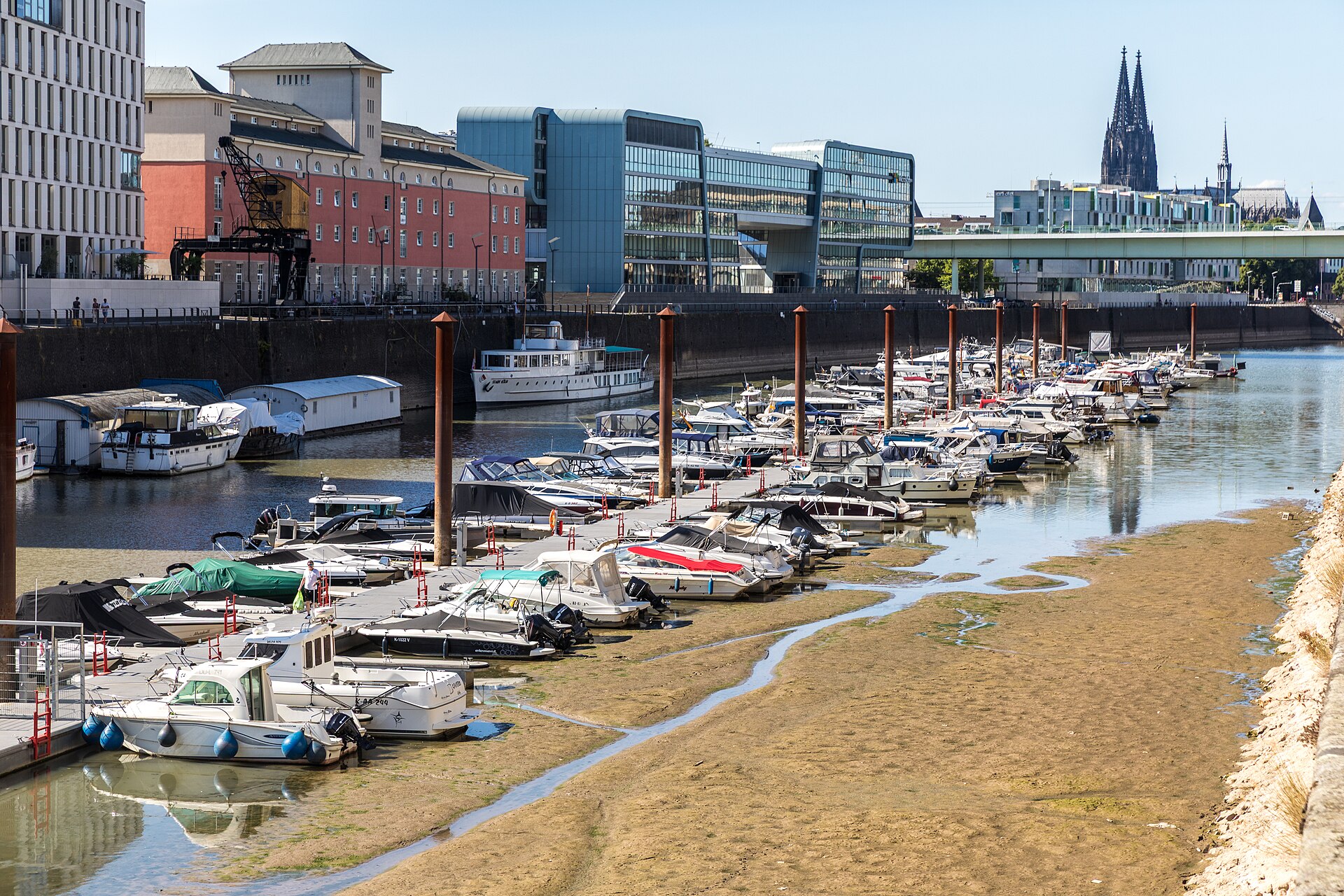
Low water rarely cancels a river cruise outright. Instead, it reshapes it. In practice that means one of four things: a ship swap (you leave one ship at the shallow stretch and board an identical one beyond it), a coach day in place of sailing, a hotel night and a train to a different embarkation city, or a reversed or shortened route. Travel Market Report documented all of these this week, from Riviera Travel offering Rhine guests a rerouted itinerary through the Netherlands and Belgium (or a full refund) to Uniworld guests spending a night in a Budapest hotel and taking the train to join their ship in Vienna.
What you’re owed when that happens varies a lot. Here is what three lines publish, in their own words where we could read them:
| Line | What it does | What it promises you |
|---|---|---|
| Riviera Travel | Waits extra nights at the mooring, runs coach excursions or swaps ships | Coach trips of “no more than 2 hours journey each way,” ship-transfer coach journeys of no more than 4 hours, and “we will automatically compensate you for every complete 24 hours affected.” A pro-rata refund for each full 24 hours lost if the cruise ends early. (Riviera’s River Cruise Assurance FAQ) |
| AmaWaterways | Swaps guests between ships working the same river from opposite ends, reverses routes, adds coach segments | Email notice to guests and advisors at least 14 days before embarkation. AmaWaterways says it hasn’t “canceled a single departure due to this summer’s conditions.” A refund if it cancels the departure entirely, but under its contract unused parts of a trip already under way generally aren’t refunded. (AmaWaterways, River Cruise Advisor) |
| Uniworld | Changes embarkation points, swaps ships, uses hotels and coaches | Its terms say itineraries can change because of water levels and that such changes don’t make you eligible for a refund, per River Cruise Advisor’s review of the published terms. This year’s ship swaps and hotel stays are documented by Travel Market Report. |
That gap is the whole story for your wallet. One line pays you automatically for every full day lost. Another can put you on a coach all afternoon, owing you nothing beyond the trip you already bought.
What to Do If You’re Booked on a Rhine Cruise
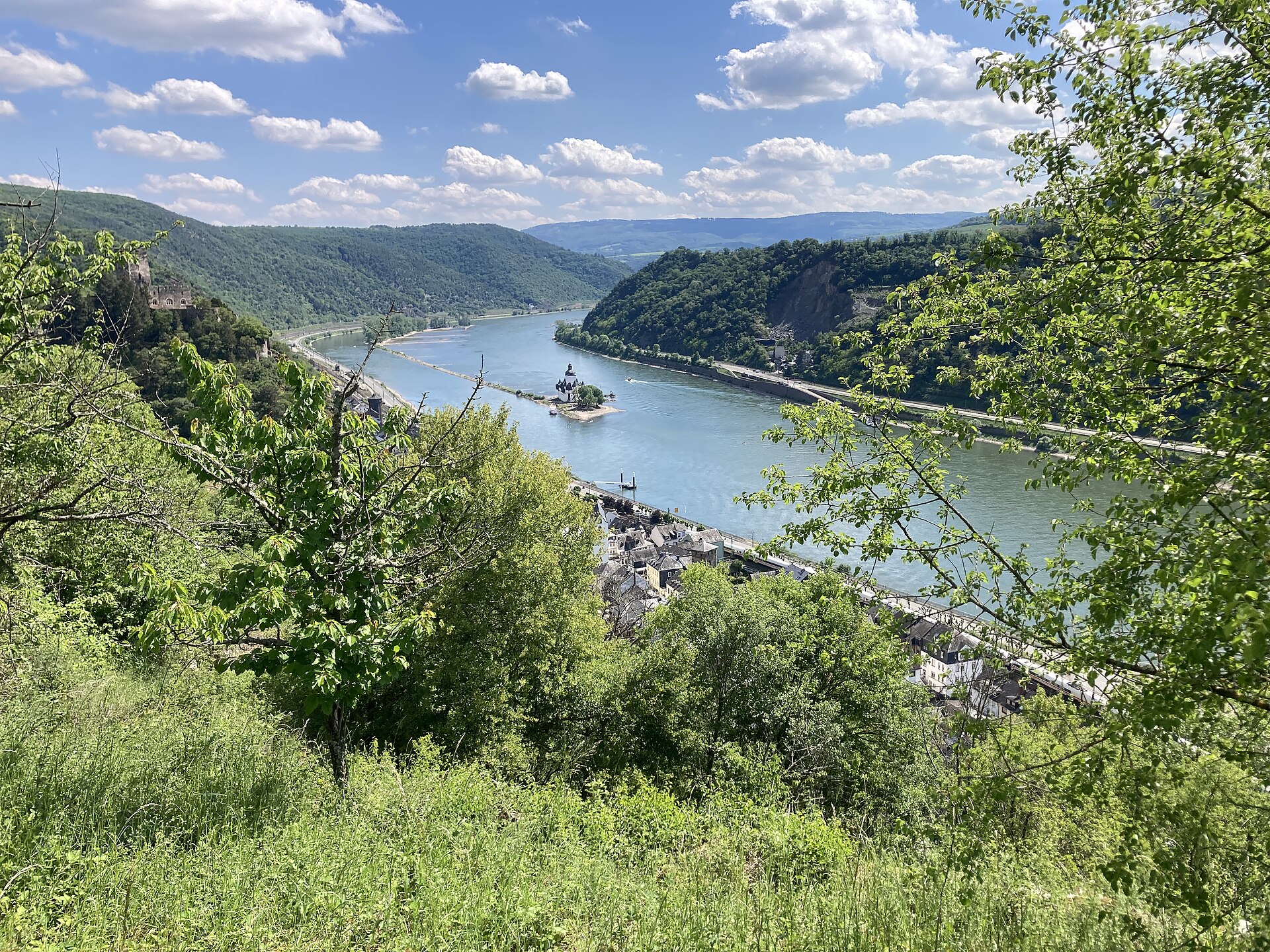
- Watch the gauge yourself. Kaub’s live reading is free on PEGELONLINE. Add about 1.1 metres to get the rough channel depth. If it’s hovering near or below zero a week before you sail, expect your itinerary to change.
- Find your line’s low-water clause before departure, not after. Search your booking conditions for “water levels” or “navigational conditions.” Find out whether the line pays compensation per day lost (as Riviera’s assurance does) or reserves the right to change things without a refund.
- Ask the right question. Not “will my cruise go ahead?” but “if the river is too low, will it be a ship swap, a coach or a hotel, and what do I get back?” Get the answer in writing.
- Leave slack around your flights. If your embarkation city changes (Budapest to Vienna, say), you’ll want time to get there. Avoid tight same-day connections at either end.
- Don’t assume travel insurance covers a changed cruise. River Cruise Advisor warns that standard trip-cancellation policies may not pay out when a cruise still runs in altered form. Ask your insurer in writing whether a coach day replacing a sailing day counts. Our guide to cruise travel insurance covers the basics.
- Think about timing for future bookings. Extreme lows have traditionally come in autumn, and this year they arrived in summer and stayed. If a Rhine cruise is a once-in-a-lifetime trip, a line with published compensation rules is the safer bet.
The Bottom Line
The Rhine has spent the autumn breaking records nobody wanted. Kaub is below zero, Cologne has hit 40 cm, and Lobith is the lowest it’s been since 1866. A hotel ship has already spent two and a half hours on a sandbank by the Deutz Bridge.
None of that means the river is empty. It means about a metre of water at the shallowest point, and a lot of creative planning by the cruise lines. If you’re sailing soon, learn to read the gauge, read your line’s small print, and pack for the possibility of a scenic coach ride. The castles look just as good from the road.
Cruise Chaos earns nothing from cruise lines and doesn’t run booking affiliate links. Gauge readings are PEGELONLINE’s unverified raw data, checked on October 1, 2026, and depths are our own sums from the agency’s published reference values. Sources differ slightly on the exact date and gauge level of the Dutch Melody grounding; we have used the German reports’ timings. If we’ve got something wrong, tell us and we’ll correct it in the open.
Coming up on Cruise Chaos: more chaos from the high seas, and the occasional very shallow river.
🎁 Get our free Cruise Survival Kit. Join the Cruise Chaos crew and we’ll email you our printable packing checklist and money-saving cheat sheet right away, plus the week’s best cruise stories and verified deals every Friday. Send me the free kit →
Got a cruise story like this?
Something wild, strange or funny happened on your sailing? Tell us what happened. We read every story, fact-check it, and email you before anything is published.
Keep Reading
- Cairns Spent A$127 Million to Fit Bigger Cruise Ships. Then the Mud Came Back.
- What Happens When a Cruise Ship Skips a Port? Here’s What You’re Actually Owed
- Packed for Nova Scotia, Sailing to Nassau: The Nor’easter That Scrambled a Fleet of Cruise Ships
Sources
- PEGELONLINE (German Federal Waterways and Shipping Administration): Kaub gauge station data and live readings
- PEGELONLINE: Cologne gauge station data and live readings
- DutchNews: Dutch river cruise stranded as Rhine falls to new record levels
- Schiffe und Kreuzfahrten: Rekord-Niedrigwasser, MS Dutch Melody fuhr sich in Köln fest (German)
- Kreuzfahrttester: Rekord-Niedrigwasser am Rhein, zwei Flusskreuzfahrtschiffe laufen auf Grund (German)
- CruiseMapper: Rhine reaches record low water level as river traffic faces restrictions
- Weeronline: Waterpeil Rijn op laagste punt ooit gemeten (Dutch, September 2026)
- Weeronline: Rijn laagste waterstand ooit (Dutch, August 2022)
- Hart van Nederland: Laagste waterstand Rijn bij Lobith ooit gemeten (Dutch, July 2026)
- TPO: Laagwater, Rijn zakt verder, schepen varen tot 300 km om (Dutch)
- Bloomberg via Swissinfo: Rhine Sinks to Record Low in Further Blow for River Transport
- Binnenschifffahrt Online: Keine nachhaltige Entspannung bei Niedrigwasser in Sicht (BfG update, German)
- Travel Market Report: Record-Low Water Levels on Rhine and Danube Continue to Disrupt River Cruises
- River Water Watch: The lowest water in thirty years on Europe’s cruise rivers
- Wikipedia: Kaub gauging station
- Riviera Travel: European River Cruise Assurance FAQs
- AmaWaterways: Despite historically low water, AmaWaterways keeps your journey moving
- River Cruise Advisor: When Low Water Disrupts a River Cruise, Which Cruise Lines Protect Passengers Best?
You May Also Like
 Cairns Spent A$127 Million to Fit Bigger Cruise Ships. Then the Mud Came Back.
 Packed for Nova Scotia, Sailing to Nassau: The Nor’easter That Scrambled a Fleet of Cruise Ships
 What Happens If Your Cruise Is Cancelled Due to a Hurricane? Refunds, Credits and the Fine Print
 An $80 Million Cruise Dock, a 13-Hour Fire, and No Working Hydrant