
How we work: facts are checked against original sources and linked, cruise prices are verified on the cruise line’s own website the day we publish, and we earn no commissions. Spotted a mistake? Tell us and we will correct it.
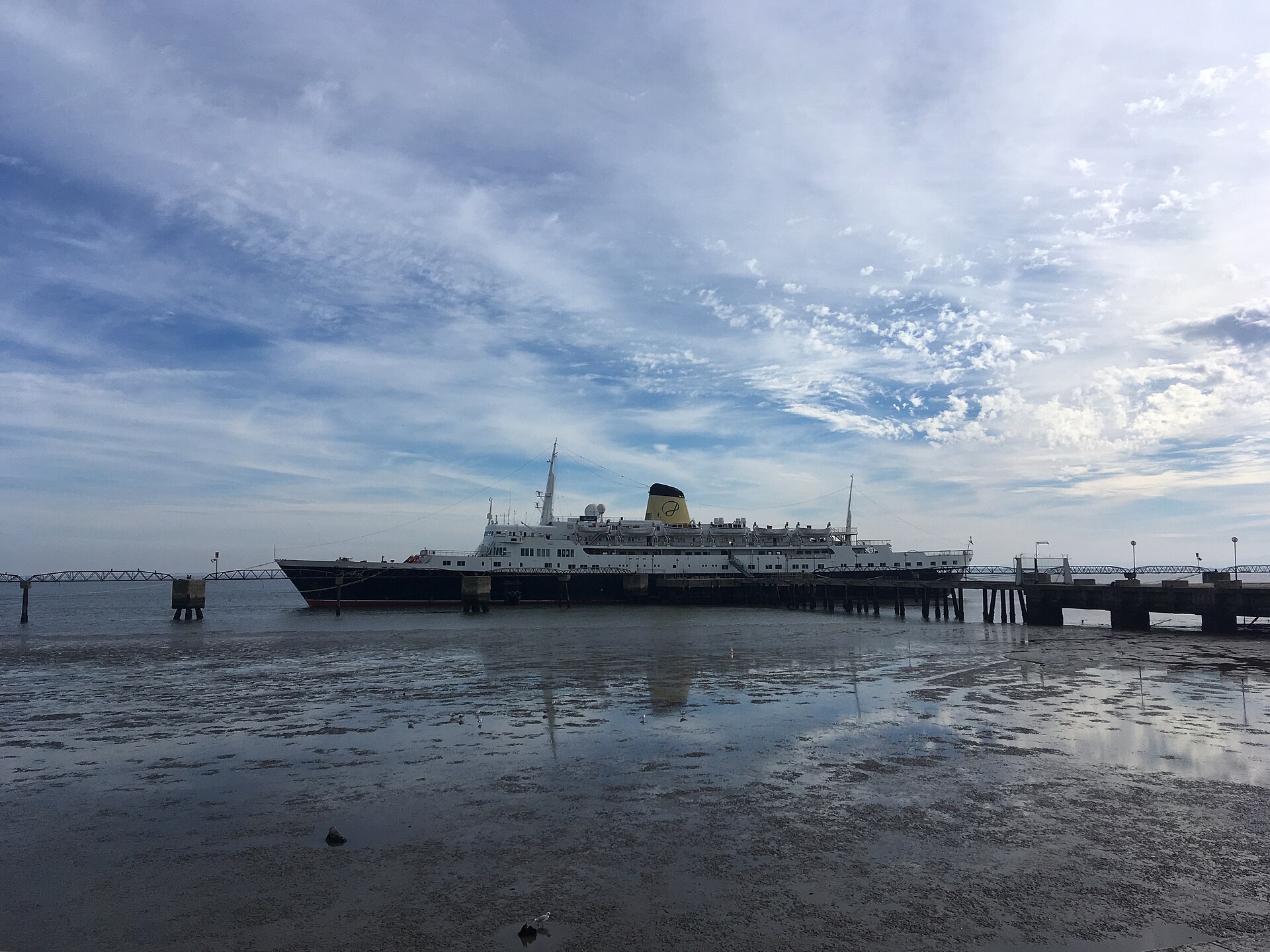
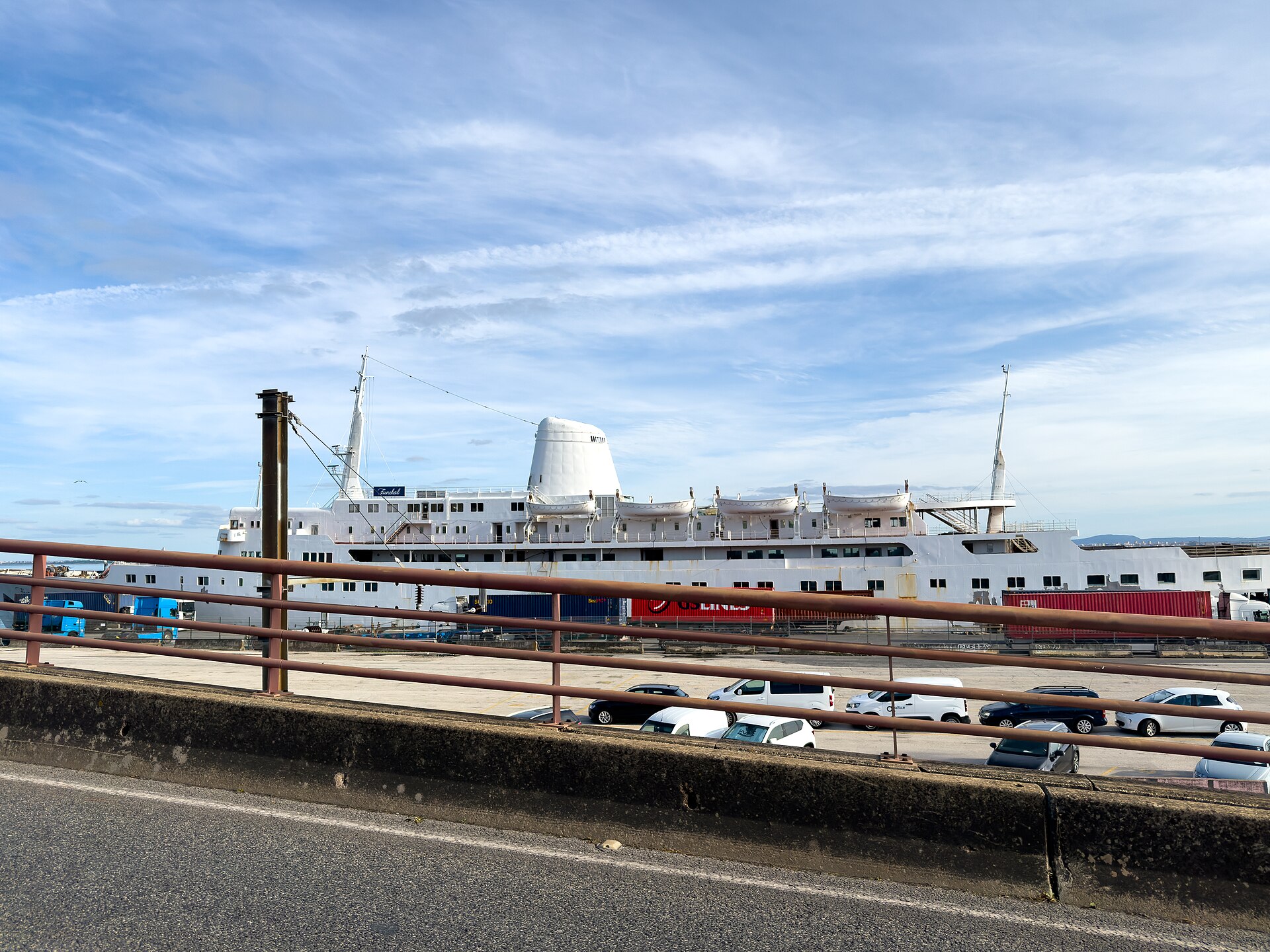
She carried a Portuguese president across the Atlantic. She carried the remains of an emperor home to Brazil. She has been sold to a party-hotel company, a crypto millionaire and a cruise start-up, and was meant to become a beach club, a floating hotel in Liverpool and a five-star hotel in Lisbon.
None of it happened. She hasn’t carried a paying passenger since January 2015.
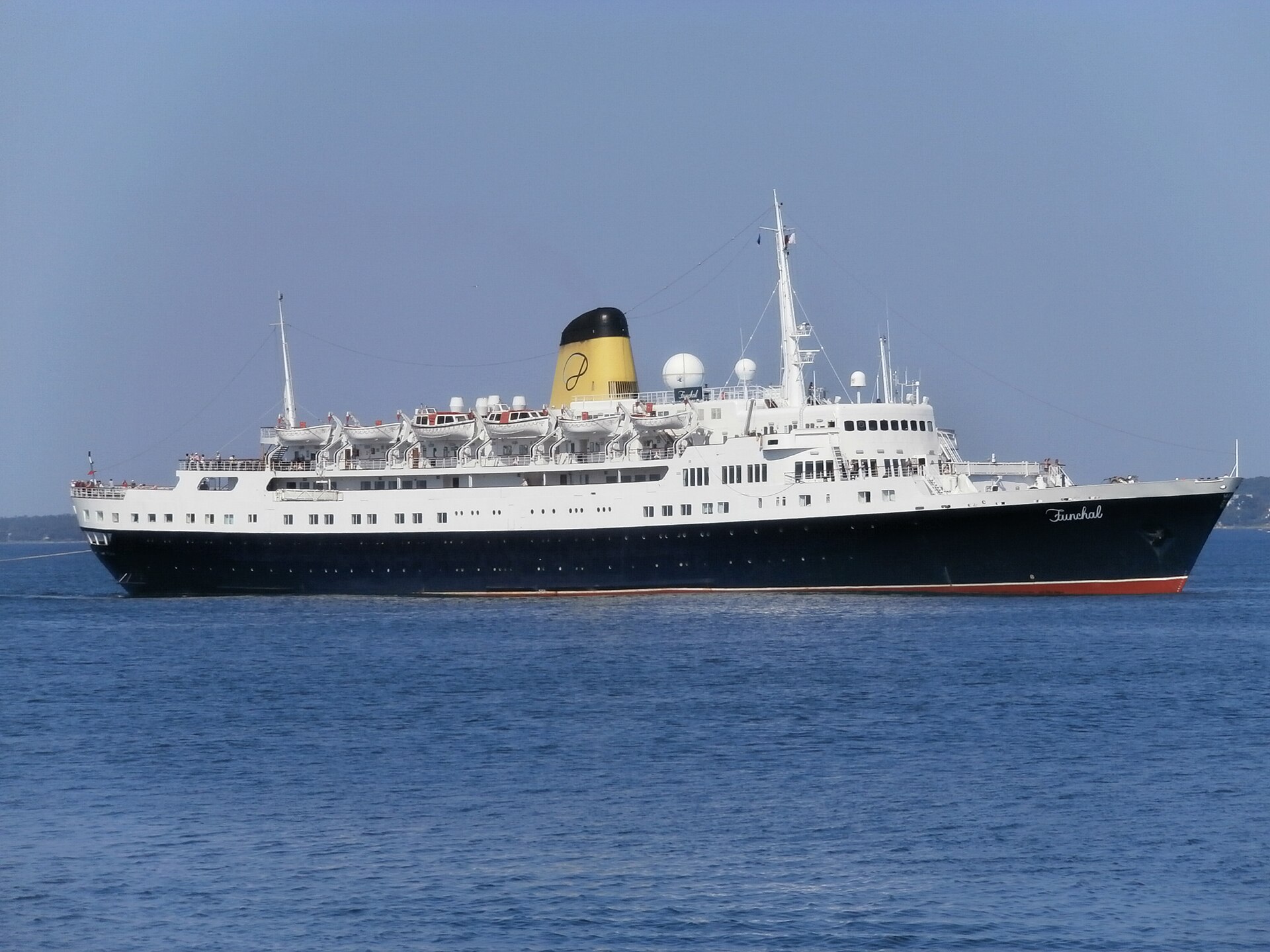
On Friday, October 9, 2026, the 1961 liner Funchal was sold at a court auction in Portugal. The buyer is a Greek shipowner whose yards repair ships and also take them apart. Here’s how a national treasure ended up there, why old liners keep chewing through owners, and what to do if a cruise company you’ve paid goes the same way.
What Happened Today
Funchal belonged to Teamson, a company that a court in Madeira declared insolvent. To pay its creditors, the court ordered the ship sold by sealed bid with a minimum price of €802,354, “as is, where is,” and free of debt, as Cruise Industry News and CruiseMapper reported. Bids were due on September 30, each with a deposit cheque for 10% of the offer, and the envelopes were to be opened aboard the ship on October 9.
English-language trade reports called that opening a “public event.” The insolvency administrator, José Pinto Oliveira, told Jornal Económico something different: “It is not open to the public. It is only for those who submitted proposals.” After the envelopes were opened, the bidders could raise their offers against each other.
🎁 Free: the Cruise Survival Kit
A printable packing checklist and a money-saving cheat sheet, sent to your inbox straight away. Plus the week's best cruise stories and verified deals every Friday.
Send me the free kit →By Friday afternoon there was a winner. Correio da Manhã reported that the ship had been sold above the minimum price and that, according to its own enquiries, the new owner is a Greek shipowner with yards for ship recovery and dismantling. Regional outlet oRegiões reported the same: a Greek owner of yards that do both repair work and scrapping. Neither named the buyer or gave the final price, and oRegiões noted that no official statement on the buyer’s plans had been released.
So, nobody knows yet whether Funchal is about to be restored or cut up. Both kinds of yard belong to the same buyer.
The Two Men Still Living Aboard
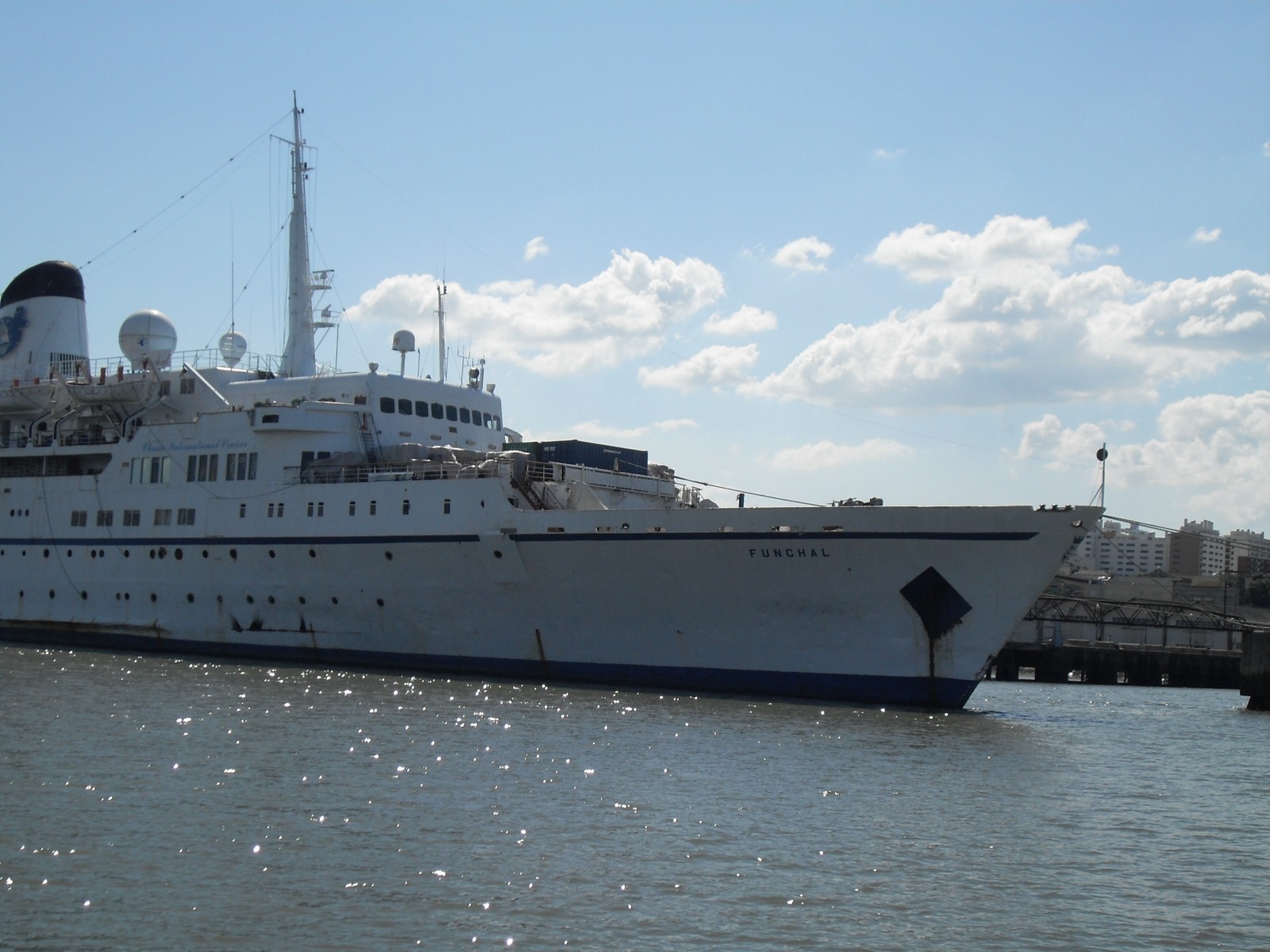
The saddest detail in this story isn’t about steel. A caretaker crew of ten has kept Funchal from being stripped by thieves, and according to Correio da Manhã and The Maritime Executive, they haven’t been paid in 25 months.
Jornal Económico met two of them. Chief engineer Inácio Fernandes, 75, and sailor Tati Sambo, 60, live on the ship and are aboard most days. “This ship has had many lives, it’s a relic,” Fernandes told the paper. Sambo said he has five children and that “surviving is very difficult.”
According to the administrator, wages owed since February this year will be paid out of the sale money. Whether the crew get the earlier months depends on a court ruling expected in several months. Jornal Económico put Teamson’s total debt to creditors at about €550,000.
How a Presidential Ship Became Everybody’s Unfinished Project
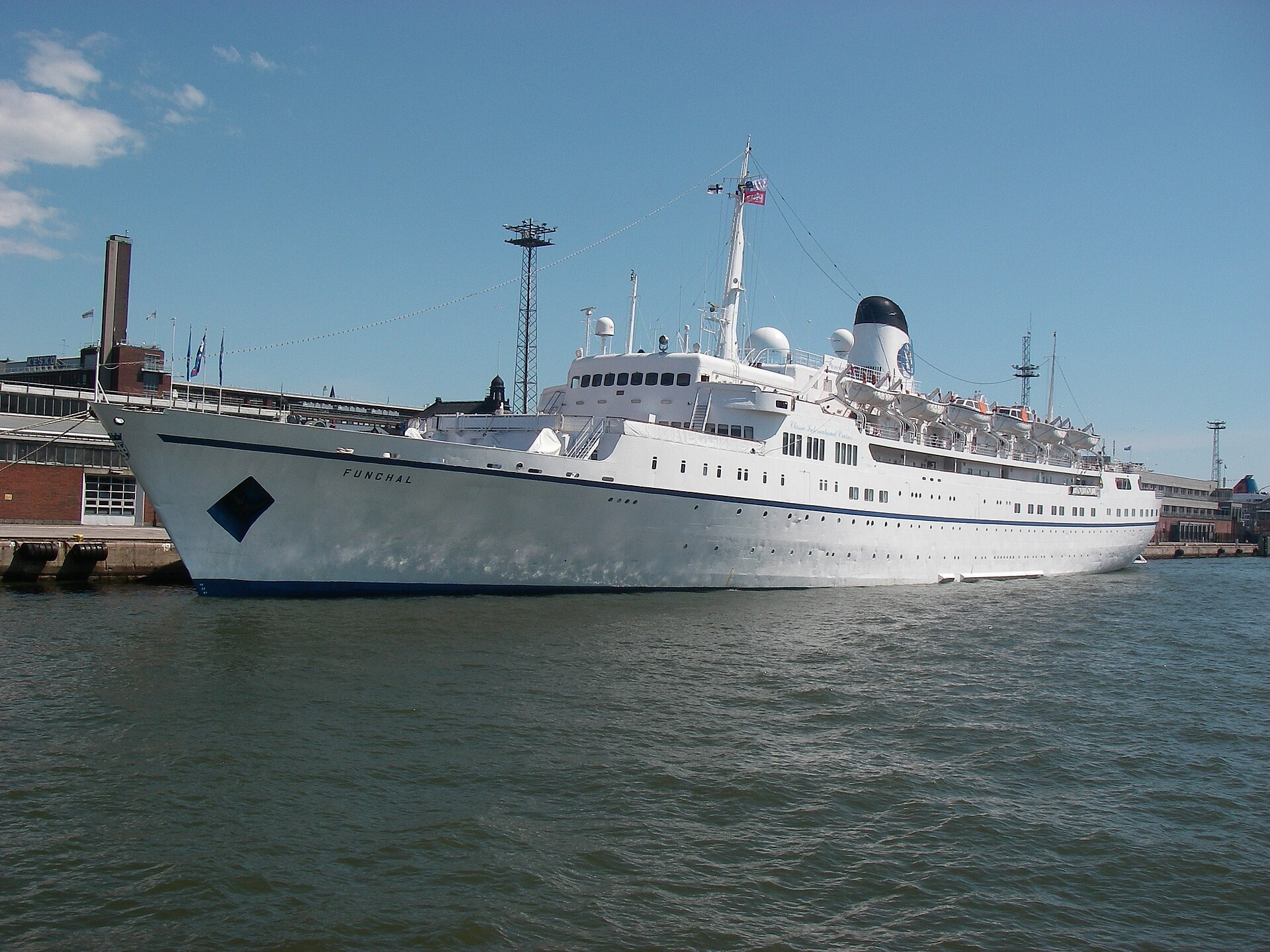
Funchal was built in Denmark for Empresa Insulana de Navegação and launched on February 10, 1961. She was designed to link Lisbon with Madeira and the Azores at a time when Madeira had no airport, as CruiseMapper explains. She also doubled as the Portuguese president’s ship of state.
In 1972 she took President Américo Tomás to Brazil with the remains of Emperor Pedro I. Portuguese reports call him Pedro IV, and they’re both right: he was Pedro I of Brazil and Pedro IV of Portugal. The trip didn’t go smoothly. According to Wikipedia’s history of the ship and CruiseMapper, her steam plant failed on the way, and she was then re-engined in Amsterdam with diesels and rebuilt as a one-class cruise ship.
Greek shipowner George Potamianos chartered her and then bought her at auction in 1985. “When I saw it, I lost my head,” he told Expresso in 2006, as quoted by Jornal Económico. He ran her for more than two decades. Since his death in 2012, she has gone through a lot of owners:
| Year | Owner | The plan | What actually happened |
|---|---|---|---|
| 1961 | Empresa Insulana de Navegação | Lisbon to Madeira and the Azores, plus state voyages | Did exactly that for over a decade |
| 1985 | George Potamianos (Classic International Cruises) | Classic cruising, mainly for British passengers | Worked for more than 20 years. The company closed in 2012 |
| 2013 | Portuscale Cruises | Revive her as a Portuguese cruise ship | Detained in Gothenburg over safety issues in August 2013, the month she returned to service. Last voyage January 2, 2015 |
| 2018 | Signature Living (UK) | A party ship or “floating beach club” off Ibiza, then a floating hotel in Liverpool | Neither happened. The company went into administration in 2020 |
| 2020–21 | Brock Pierce, through Teamson | A five-star hotel with about 200 rooms in Lisbon | A fire in 2021 brought about 20 fire crews. The hotel was never finished and Teamson was declared insolvent |
| 2026 | A Greek shipowner (not yet named) | Not announced | Sold at court auction on October 9 for more than €802,354 |
The crypto chapter has a twist. Pierce, whom Jornal Económico calls a “king of cryptocurrencies,” bought Funchal for about €1.6 million, according to Correio da Manhã and CruiseMapper. His side also bought a second old ship: Astoria. Astoria was originally the Swedish liner Stockholm, the ship that collided with the Andrea Doria in fog off Nantucket in 1956. Wikipedia’s history of the ship says the plan was to put Astoria back into service, but that was dropped after a February 2022 storm broke her loose. She was sold to ship breakers in 2025 and towed to Ghent, Belgium. Cruise Industry News and CruiseMapper both describe her as scrapped.
Why Do Old Liners Keep Ending Up Like This?
It isn’t just bad luck. There’s a rule behind most of it, and it explains why nearly every plan in that table was a hotel.
Passenger ships are governed by SOLAS, the international Safety of Life at Sea convention. As Honest Cruiser explains, an amendment made in 1992 required ships built before 1980 to meet all current SOLAS requirements by October 2010. In practice that meant removing or replacing most combustible materials and fitting a dedicated fire protection system. A European shipyard estimated the conversion at between €4 million and €30 million per ship, and with their thirsty old engines on top, that made many older ships “economically nonviable.” The industry, Honest Cruiser wrote, “has not felt a crushing exit of ships like this since the end of World War II.” The Maritime Executive puts it simply: the SOLAS 2010 rules “put many older ships out of service.”
Funchal was caught in exactly that. Portuscale bought her while she was being updated to meet the newer SOLAS rules, according to Cruise Industry News, and The Maritime Executive says an earlier overhaul stopped before it was finished. Jornal Económico puts the 2013 refit at over €22 million, while Wikipedia gives a reported figure of about €10 million. Either way, it bought her less than two years of sailing. Portuscale had stopped operating by the end of 2015.
The hotel plans weren’t a coincidence. Honest Cruiser lists old ships, among them the former Black Watch and Kungsholm, that became hotel ships to get around the rules instead of being rebuilt. The administrators made sure bidders knew Funchal already has a licence to operate as a hotel, and that her interiors are now free of asbestos.
The other problem is that an idle ship still costs money every day. She needs a crew to guard her, a berth, insurance and maintenance, and the new owner must start paying her expenses immediately, as The Maritime Executive noted. Every owner since 2015 has bought a ship that earns nothing and costs something, and has hoped the hotel would open before the money ran out. So far, the money has always run out first.
What This Means for Your Money
Funchal outlived two cruise companies that folded under her: Classic International in 2012 and Portuscale by the end of 2015. Small lines running old ships are exactly the kind of operator that can disappear. If you’re tempted by a classic ship or a brand-new start-up, here’s what protects you if it fails.
In the US, check whether the ship is covered by the FMC rule. Federal regulations at 46 CFR 540.3 say:
“No person in the United States may arrange, offer, advertise or provide passage on a vessel unless a Certificate (Performance) has been issued to or covers such person.”
That certificate means the operator has posted a bond, insurance, escrow or guaranty that can refund passengers if it doesn’t sail. But look at what counts as a “vessel” in section 540.2: one “having berth or stateroom accommodations for 50 or more passengers and embarking passengers at U.S. ports.” A cruise that starts in Lisbon, Lima or Lerwick isn’t covered, wherever you booked it. Even when it applies, “nonperformance” means a voyage cancelled or delayed by three or more days, and section 540.9(j) caps the amount an operator must hold, so a large failure may not leave enough to refund everyone in full.
- Pay with a credit card, and keep every statement. The Fair Credit Billing Act gives you a dispute process for charges for things “not delivered as agreed,” but your letter must reach the card issuer within 60 days of the first bill showing the charge, according to the FTC. With a cruise paid months ahead, that window may have closed before the line folds, so don’t rely on it alone.
- Check your insurance for the company going bust. Cancellation cover is usually written around you not being able to go. Read whether the policy also pays if the cruise company stops trading. Our cruise insurance guide covers what to look for.
- Look up a small line’s history before you pay. A ship that has changed owners several times, has been laid up for years or has a “relaunch” date that keeps slipping is a warning sign, and so is a plan that keeps changing.
- Don’t pay early unless you have to. The less you’ve paid before sailing, the less you can lose if the company folds.
The Bottom Line
Funchal outlasted the airport-less Madeira she was built for, a revolution, a nationalisation, the man who loved her and at least four owners. What she couldn’t outlast was a fire-safety rule that made her too expensive to carry passengers, and a run of owners who each believed the hotel would open before the money ran out.
We’ll know soon whether her Greek owner wants a hotel or her steel. Either way, the ten caretakers who’ve guarded her without pay for two years should finally be closer to their wages, and that’s the part of this story worth hoping for.
Cruise Chaos earns nothing from cruise lines and doesn’t run booking affiliate links. This story is based on today’s reports in Correio da Manhã and oRegiões, Jornal Económico’s interview with the insolvency administrator and crew, the court auction notice as reported by Cruise Industry News, CruiseMapper and CruiseNews, The Maritime Executive, Honest Cruiser, Wikipedia and US federal regulations. The buyer and final price have not been made public, and we’ll update this story when they are. If we’ve got something wrong, tell us and we’ll correct it in the open.
Coming up on Cruise Chaos: more chaos from the high seas, with every fact checked.
🎁 Get our free Cruise Survival Kit. Join the Cruise Chaos crew and we’ll email you our printable packing checklist and money-saving cheat sheet right away, plus the week’s best cruise stories and verified deals every Friday. Send me the free kit →
Got a cruise story like this?
Something wild, strange or funny happened on your sailing? Tell us what happened. We read every story, fact-check it, and email you before anything is published.
Keep Reading
- The Ship Meant for a Three-Year World Cruise Is Being Auctioned for Scrap
- Do You Need Insurance for a Cruise? What Your Ticket Contract Says You’ll Pay
- Carnival Freedom’s Funnel Caught Fire Twice. Now It Has a Third Whale Tail, and It’s Shorter
Sources
- Correio da Manhã: Paquete Funchal adjudicado acima de 802 mil euros (October 9, 2026, in Portuguese)
- oRegiões: Paquete Funchal adjudicado em leilão a armador grego (October 9, 2026, in Portuguese)
- Jornal Económico: Paquete Funchal à venda: entre uma nova vida e a sucata (October 2, 2026, in Portuguese)
- Correio da Manhã: Paquete Funchal vai a leilão (September 2026, in Portuguese)
- Cruise Industry News: Funchal Ship to be Auctioned in Portugal (September 8, 2026)
- CruiseMapper: MV Funchal ship returns to the market in insolvency sale (September 11, 2026)
- CruiseNews: Madeira Court Orders Funchal Cruise Ship Auction (September 12, 2026)
- The Maritime Executive: Classic Liner Turned Cruise Ship Faces Uncertain Future (September 28, 2026)
- The Maritime Executive: Classic Liner Up for Auction After Cruise Venture Closes Shop (December 29, 2020)
- Cruise Industry News: Funchal to Rise Again? Classic Ship Sold at Auction (December 6, 2018)
- Honest Cruiser: The Departed, Aftermath of Implementing SOLAS 2010 Regulations (2016)
- 46 CFR 540.3, Proof of financial responsibility required (via Cornell LII)
- 46 CFR 540.2, Definitions (via Cornell LII)
- 46 CFR 540.9, Miscellaneous (via Cornell LII)
- FTC: Using Credit Cards and Disputing Charges
- Wikipedia: MV Funchal
- Wikipedia: MS Stockholm (Astoria)
- Wikipedia: Pedro I of Brazil