
How we work: facts are checked against original sources and linked, cruise prices are verified on the cruise line’s own website the day we publish, and we earn no commissions. Spotted a mistake? Tell us and we will correct it.
It’s the first evening at sea. The welcome-aboard cocktail is in your hand, the sun is going down, and then the floor does something floors aren’t meant to do. Your stomach notices before your brain does.
Seasickness is the one cruise problem you can’t fix with a credit card once it starts. The good news: it’s very preventable, and most of it comes down to timing.
We checked the CDC, the FDA, the NHS, the medicine labels and the cruise lines’ own pages on October 16, 2026: where to book, what to pack, when to take it, and what the ship can give you if it goes wrong.

How to Avoid Seasickness on a Cruise: The Short Answer
Book a cabin low and in the middle of the ship, choose a sheltered itinerary if you’re prone to it, and take an anti-motion-sickness medicine before the ship starts moving, not after you feel ill. On board, look at the horizon, get fresh air, skip reading and screens when it’s rough, and go easy on alcohol.
The timing is the part most people get wrong. The CDC’s Yellow Book chapter on motion sickness says medicines work best taken before exposure, because once symptoms start, a slowed-down stomach may stop the pill being absorbed. Royal Caribbean’s seasickness FAQ gives the same advice: use remedies before you start to feel ill.
🎁 Free: the Cruise Survival Kit
A printable packing checklist and a money-saving cheat sheet, sent to your inbox straight away. Plus the week's best cruise stories and verified deals every Friday.
Send me the free kit →Why Do People Get Seasick on a Cruise Ship?
Your senses are arguing. The CDC’s leading explanation is “sensory conflict”: your inner ear feels the ship move while your eyes, inside a cabin moving with you, report that nothing is. Nausea is how your brain complains.
Some people are far more likely to suffer. According to the CDC, susceptibility peaks between ages 7 and 12 and declines through adulthood. People with migraines, vertigo or inner-ear problems are more prone, and twin studies suggest 55 to 70 percent of the risk is inherited. If you get carsick, plan as if you’ll get seasick.
The best cure is also the slowest: your brain adapts. The CDC calls this habituation “the most effective countermeasure,” though it takes time to kick in. Everything else in this guide is about getting you comfortably through that adjustment.
Which Cabin Is Best to Avoid Seasickness?
Low and in the middle. A ship pitches (rocks front to back) around its middle and rolls (side to side) around a point low in the hull, so a cabin near both of those points moves the least. Royal Caribbean’s FAQ says that the lower you are and the closer to the centre of the ship, the less movement you will feel. Carnival’s own seasickness guide says “Head to the Middle,” and the NHS’s motion sickness page advises sitting “in the middle of a boat.”
The place to avoid is the front. The CDC tells cruise passengers to avoid the bow, “where motion is greatest.”
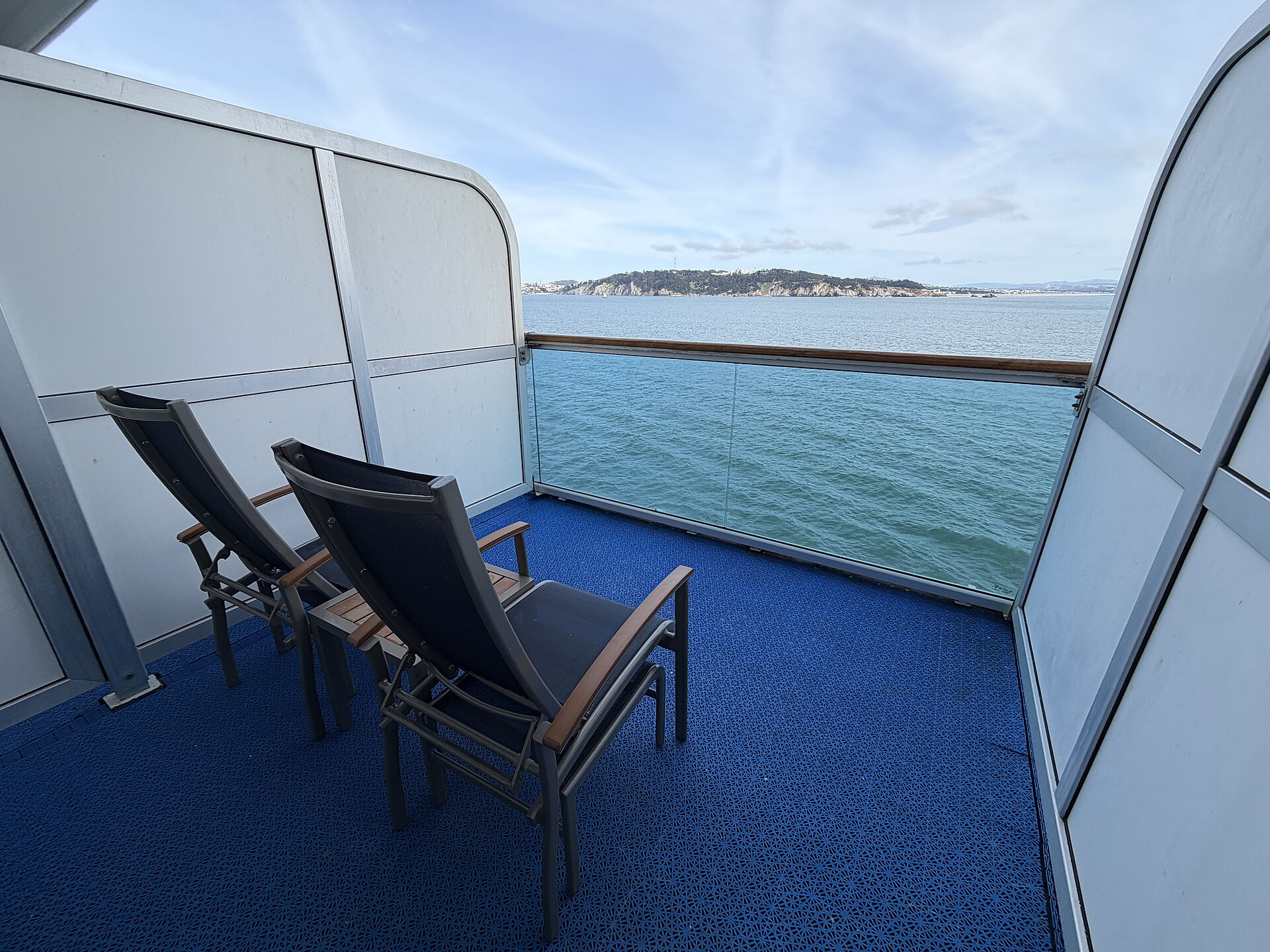
Is a balcony worth it? It doesn’t move any less, but it gives you fresh air and a horizon on demand. Princess’s seasickness article recommends one for that reason, and Carnival’s guide suggests a cabin “with a window.” On a budget, a low midship inside cabin plus trips to an outer deck does much the same job.
Do Cruise Ships Have Stabilizers?
Yes, and they’re why a big ship feels nothing like a ferry. Royal Caribbean says in its hurricane-season guide that “All Royal Caribbean cruise ships have stabilizers that act like airplane wings.” Its seasickness article describes them as “fins built off a ship’s port and starboard sides along the water line” that cut side-to-side motion. Cruise Hive’s guide to rough seas adds that the fins are adjusted in real time by a gyroscopic control system.
Both sources describe the fins as fighting roll, the side-to-side sway. A head-on swell that lifts the bow is a different movement, which is why cabin position still matters on even the biggest ships.

What Is the Best Seasickness Medicine for a Cruise?
For most adults on a cruise, it’s either a once-a-day meclizine tablet or a prescription scopolamine patch. The CDC’s guidance suggests meclizine or dimenhydrinate for mild motion on longer trips, and the scopolamine patch for “moderate-to-intense longer trips.” Here’s how they compare, using the CDC’s onset and duration figures and the timing printed on the labels.
| Medicine (common brand) | Take it | Starts working / lasts | Watch out for |
|---|---|---|---|
| Meclizine 25 mg (Bonine, Dramamine Less Drowsy) | ½ to 1 hour before, per the Dramamine label; 1 hour before, per Bonine’s. Once a day. | About 2 hours / about 8 hours (CDC) | Drowsiness, worse with alcohol. Not for under-12s unless a doctor says so. |
| Dimenhydrinate 50 mg (Dramamine Original) | ½ to 1 hour before, then every 4 to 6 hours. No more than 8 chewable tablets in 24 hours. | About 2 hours / about 8 hours (CDC) | “Marked drowsiness” on the label. Child doses from age 2. |
| Scopolamine patch (Transderm Scop), US prescription only | At least 4 hours before, behind the ear (MedlinePlus) | 6 to 8 hours / 72 hours (CDC) | Dry mouth, blurred vision. FDA heat warning (see below). Not for children or people with glaucoma. |
| Cinnarizine 15 mg (Stugeron, UK) | 2 tablets 2 hours before, then 1 every 8 hours if needed (NHS) | Not given by NHS | Feeling very sleepy is common. |
| Hyoscine 300 mcg tablets (Kwells, UK) | At least 30 minutes before; up to 3 doses in 24 hours (NHS) | Not given by NHS | The NHS says it may not suit people aged 60 or over. |
| Zyrtec, Allegra, Claritin, ondansetron (Zofran) | Don’t bother. The CDC says non-drowsy antihistamines “are not effective” against motion sickness, and nor is ondansetron. | ||
One thing the sources disagree on is how early to take it. The labels say half an hour to an hour before, but the CDC lists meclizine and dimenhydrinate as taking about two hours to kick in. The patch is the same story: MedlinePlus says to apply it “at least 4 hours” ahead, while the CDC puts its onset at 6 to 8 hours. In practice, take tablets a couple of hours before sailaway and put a patch on the evening before. The CDC also suggests a trial dose at home, because side effects vary. Better to find out Dramamine knocks you flat on your sofa than at the muster drill.
The scopolamine patch warning, for warm-weather cruises
On June 18, 2025, the FDA added a warning to Transderm Scōp: the patch “can increase body temperature and cause heat-related complications, resulting in hospitalization or even death in some cases.” Most cases were in children 17 and under and adults 60 and over, and they usually began within 72 hours of first putting the patch on. The FDA says to remove the patch and contact a doctor if your temperature rises, or “if you are not sweating in warm environmental temperatures.” MedlinePlus now carries the same boxed warning and says older adults usually shouldn’t use the patch.
That matters on a Caribbean cruise, where a hot pool deck is the whole point. If you’re over 60, ask your doctor whether the patch is right for you. It “is not FDA-approved for any use in children,” and the CDC says to avoid it in children because it can cause hallucinations and confusion.
Do Ginger and Sea-Bands Work for Seasickness?
Maybe a little, and the experts don’t agree. The NHS suggests trying ginger as a tablet, biscuit or tea, and Royal Caribbean’s medical consultant suggests ginger ale or fresh ginger in its seasickness article. The CDC is cooler, calling the evidence for “diets, supplements, and ginger” weak and contradictory.
Acupressure wristbands get the same split verdict. Carnival’s guide suggests them, the NHS says they “do not work for everyone,” and the CDC says they perform no better than placebo, though placebo effects “can be strong.” Wear one if it helps, but take a proven medicine too if you know you’re prone.

One free trick has numbers behind it: the CDC says slow, controlled breathing is about half as effective as the drugs, with no side effects.
Your Seasickness Game Plan, Step by Step
- When you book: pick a low, midship cabin and avoid the bow. If you’re very prone, choose a sheltered route (see below).
- Two to four weeks before: see a doctor if you want a scopolamine patch (US prescription only) and do a trial dose of whatever tablet you plan to use.
- Packing: seasickness medicine goes in your carry-on, not your checked bag, which may not reach your cabin until evening. It’s on our most forgotten cruise items list for a reason.
- The night before: sleep properly. The CDC lists sleep deprivation, alcohol and smoking as things that make motion sickness worse, and Carnival’s guide says the same about exhaustion. Put a patch on now if you’re using one.
- Embarkation day: eat a light meal, skip the heavy, spicy or greasy stuff (NHS and Carnival agree), and take your tablet a couple of hours before sailaway.
- At the first queasy feeling: go to an outer deck midship, look at the horizon and breathe slowly. Put down the phone and the paperback (NHS and Carnival both list them as triggers), or lie down with your eyes closed.
Which Cruise Routes Are Roughest, and Which Are Calmest?
If you’re very prone to seasickness, the itinerary matters as much as the cabin. Cruise Mummy’s roughest seas guide (January 2026) and Cruise Hive’s list (February 2024) agree on the usual suspects:
- The Drake Passage on Antarctica cruises tops both lists. Cruise Mummy says it can be rough at any time of year.
- The Bay of Biscay, which Cruise Hive calls a common route for Mediterranean-bound ships from the UK and Scandinavia. Cruise Mummy suggests summer for calmer water.
- The North Atlantic on transatlantic crossings. Cruise Hive says to avoid December to February; Cruise Mummy calls November to February the most intense.
- The Gulf of Alaska, crossed on one-way Alaska cruises to or from Seward or Whittier. Both sites point to the island-sheltered Inside Passage as the calm alternative, and Cruise Mummy notes that most Alaska cruises use it.
- The Caribbean in hurricane season, June to November, with Cruise Mummy putting the peak in August and September. Our guide to cruises to avoid covers that one in detail.
Count the sea days too: the more ports, the more time tied up to a dock. The CDC also notes that some cruise lines post the expected sea conditions, so check the app or the daily planner, and take your tablet before a rough day, not during it.
Can You Get Seasickness Pills on a Cruise Ship?
Usually, yes, but don’t count on it being free, open, or in stock at 2 a.m. in a storm. Here’s what each line’s own pages say.
| Line | What its own page says | Free? |
|---|---|---|
| Norwegian | Meclizine is “Available for purchase at the Medical Center, Guest Services, via Room Service, or at vending machines.” Injections “only if active symptoms of vomiting are present.” | No: “for purchase” (NCL medical needs page) |
| Royal Caribbean | Each ship’s Medical Center has meclizine “readily available,” plus stronger prescription options for severe cases. | Meclizine free, per a 2019 article last updated in 2021. Check on board. |
| Carnival | “Head to the Medical Center or call room service for motion sickness pills.” | Not stated (Carnival guide, 2018) |
| Princess | Names Dramamine and Bonine and suggests “store-bought solutions.” It doesn’t say what’s sold on board. | Not stated (Princess blog, 2022) |
A doctor’s visit is a different matter. Norwegian says “Medical services are not included in your cruise fare,” and consultation fees come on top of any treatment. An injection means a medical centre bill, one more reason to read our guide on whether you need insurance for a cruise.
Quick Answers
Where is the best place on a cruise ship to avoid seasickness?
A low deck in the middle of the ship. Royal Caribbean says the lower and more central you are, the less movement you’ll feel, and the CDC says to avoid the bow, where motion is greatest. If you feel queasy, go to an outer deck midship and look at the horizon.
When should I take seasickness medicine for a cruise?
Before you feel sick. Labels say ½ to 1 hour ahead, but the CDC says meclizine and dimenhydrinate take about 2 hours to work, so take them a couple of hours before sailaway. A scopolamine patch needs at least 4 hours; the CDC says 6 to 8.
Can you feel the motion on a big cruise ship?
Sometimes. Stabilizer fins reduce rolling, so on calm itineraries you may feel very little. In rough water, such as the Drake Passage or the North Atlantic in winter, you will feel it.
Why do I still feel like I’m rocking after a cruise?
Your brain adapted to the ship and needs time to adjust back to land. The CDC flags short-lived unsteadiness after getting off a cruise ship, especially as a risk for older travelers. If the rocking feeling lasts for weeks, it may be mal de débarquement syndrome, and the CDC says to see a vestibular specialist.
The Bottom Line
Seasickness is mostly a planning problem. Book low and in the middle, pick a sheltered route if you’re prone, and take a proven medicine early, not once you’re already green. Ginger and wristbands are fine extras, not a plan. And pack the pills in your carry-on: the ship’s supply might cost money, and the medical centre definitely will.
Cruise Chaos earns nothing from cruise lines, pharmacies or booking links. Every fact in this guide links to where we read it, using the CDC, FDA, NHS, official medicine labels and the cruise lines’ own pages wherever they publish one, checked on October 16, 2026. This is general information, not medical advice: talk to a doctor or pharmacist before taking any new medicine, especially for children, during pregnancy, or if you’re over 60. If something has changed, tell us and we’ll correct it.
Coming up on Cruise Chaos: does my phone work on a cruise? Roaming at sea, airplane mode, ship Wi-Fi and how to avoid a shock bill, line by line.
🎁 Get our free Cruise Survival Kit. Join the Cruise Chaos crew and we’ll email you our printable packing checklist and money-saving cheat sheet right away, plus the week’s best cruise stories and verified deals every Friday. Send me the free kit →
Keep Reading
- 5 Most Forgotten Cruise Items
- What Do I Need to Know Before Going on a Cruise?
- What Is Free on a Cruise Ship?
Sources
- CDC Yellow Book 2026: Motion Sickness (John F. Golding, April 23, 2025)
- FDA: FDA adds warning about serious risk of heat-related complications with antinausea patch Transderm Scōp (June 18, 2025; updated April 3, 2026)
- MedlinePlus: Scopolamine transdermal patch (revised July 15, 2025)
- DailyMed drug labels: Dramamine Less Drowsy (meclizine), Bonine (meclizine) and Dramamine (dimenhydrinate)
- NHS: Motion sickness, How and when to take cinnarizine and Hyoscine hydrobromide
- Royal Caribbean: How do I prevent or treat motion sickness?, Cruising during hurricane season (updated February 27, 2026) and The Truth About Seasickness (April 5, 2019; updated January 20, 2021)
- Carnival Cruise Line: How to Avoid Getting Seasick on a Cruise (March 1, 2018)
- Norwegian Cruise Line: Medical needs
- Princess Cruises: Best motion sickness medicine for a cruise (updated October 29, 2022)
- Cruise Mummy: The 8 roughest seas in the world for cruise ships (Jenni Fielding, January 6, 2026)
- Cruise Hive: The 10 roughest seas in the world for cruise ships (Emrys Thakkar, February 18, 2024)
You May Also Like
 Can You Bring Starlink on a Cruise? What Happens When Security Finds It
 Do You Need a Lanyard for a Cruise? Which Ships Still Use Key Cards, and Who Gets One Free
 How Much to Tip on a Cruise? Every Major Line’s Gratuities, Compared
 How Do You Pay for Things on a Cruise? Cards, Holds and the Final Bill, Line by Line