

How we work: facts are checked against original sources and linked, cruise prices are verified on the cruise line’s own website the day we publish, and we earn no commissions. Spotted a mistake? Tell us and we will correct it.
The ship’s Wi-Fi was giving him 3.5 Mbps. His own gear was giving him 140.
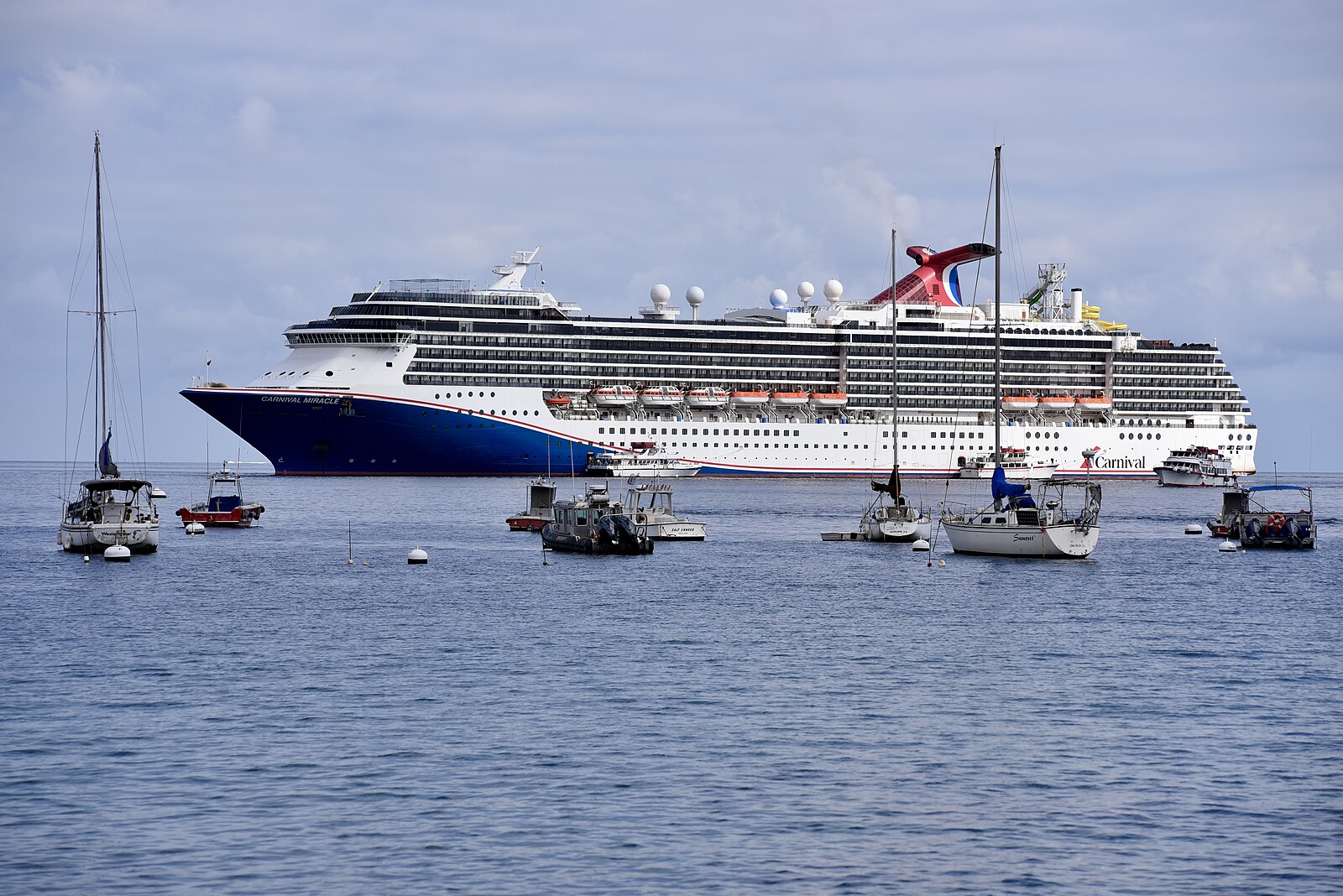
So he filmed it. Of course he filmed it. Fifteen nights from San Francisco to Hawaii aboard Carnival Miracle, a Starlink Mini propped up where it could see the sky, and a speed test that made the ship’s internet look like a fax machine having a bad day.
Then he got invited to the hotel director’s office.
Security was waiting. According to Cruise Fever, Carnival’s chief information officer had watched the video and given the order personally. The dish was going in a locker until San Francisco.
“I’m not going to fight them. I gave it up,” the passenger said. “I just had three simple requests.” Paperwork, an AirTag taped to the box so he could watch where it went, and the right to collect it in port.
Here’s the part that makes the whole thing delicious: the ship that confiscated his satellite dish was, at that exact moment, running its own internet off satellite dishes bolted to the mast.
Can You Bring Starlink on a Cruise?

No. Every major cruise line prohibits passenger satellite equipment, and a Starlink dish in your luggage will be spotted on the terminal scanner and taken off you before you board. Depending on the line, it is either held in a security locker and handed back on disembarkation day, or refused entry to the ship altogether — and at least one line says plainly that it will not store it for you at all.
That’s the short answer. The interesting part is what happens when you read the five biggest lines’ own lists side by side: they say startlingly different things, and only one has the nerve to say “Starlink” out loud.
What Each Line’s Own List Actually Says
We pulled every one of these from the cruise line’s own published page, not from someone else’s summary. The wording matters, because the wording is what a security officer at the pier is working from.
| Cruise line | What the list actually says | Names Starlink? | What happens to the device |
|---|---|---|---|
| Carnival | “Satellite dishes”, “Routers” and “Internet-networking equipment”, under Electronic, Communication, and Signal Equipment | No | Confiscated. The Miracle guest got his back at the end of the cruise |
| Princess | “Communication Devices including Emergency Position Indicating Radio Beacons (EPIRB) ham radios, communication scanners, wide-band receivers, satellite phones, personal satellite dish/receivers, routers, and transformers” | No | “will not be allowed or stored on board the vessel with no exceptions” |
| Virgin Voyages | “Satellite phones, networking gear such as Starlink or routers, EPIRBs, HAM radios and any device that can be used for deliberate electronic or cybersecurity interference” | Yes | Not stated on the page |
| Royal Caribbean | “Electrical items and electronic equipment not designed for personal grooming—including baby monitors… HAM radios, cybersecurity devices, and electronic-crime equipment“. No mention of dishes or routers | No | “denied boarding or removed from the vessel” |
| Norwegian | “satellite phones”, “Portable Modems“, walkie-talkies, EPIRB, ham radios, signal jamming equipment. No mention of dishes or routers | No | Not stated on the page |
Three things jump out of that table, and none of them appear in the guides currently ranking for this question.
1. Royal Caribbean quietly deleted the words everyone quotes
Search this topic and you will be told, over and over, that Royal Caribbean’s list bans “satellite dishes, routers, and other networking equipment.” It did. That line was added between November 22 and December 4, 2024, as Cruise Hive reported at the time, and it was rewritten again after December 10, 2025 to add “any other deliberate electronic interference which would constitute criminal activity.”
But we fetched Royal Caribbean’s prohibited items page on September 22, 2026, and searched the whole thing. The words “satellite”, “router” and “networking” appear zero times. The category has been folded into a much vaguer “cybersecurity devices, and electronic-crime equipment.”
Is a Starlink Mini “electronic-crime equipment”? Obviously not in any normal sense. But the same page also says the exceptions are “explicitly labeled and narrowly defined”, and the only radio transmitter Royal Caribbean explicitly permits is a walkie-talkie “limited to a maximum range of ten (10) miles, a power output of five (5) watts, internal voice communication only, and no external antenna.” A Starlink terminal is, functionally, an external antenna that talks to spacecraft. It is not getting through that gap.
2. Royal Caribbean does not promise to give it back
This is the detail worth knowing before you pack. Royal Caribbean’s list marks certain entries with an asterisk, and explains it: items so marked “may be retained by Security for the duration of the cruise and returned to the guest upon departure.” Knives and tools carry that asterisk.
The electronics entry does not. The plain reading is that prohibited electronics “will be denied boarding or removed from the vessel” with no promise of a locker and no promise of a reunion. That may well be softer in practice than on paper — but the paper is what you would be arguing against.
3. Princess won’t even hold it for you
Princess is the bluntest of the lot: “Prohibited items will not be allowed or stored on board the vessel with no exceptions. Guests are fully responsible for either storing these items ashore or disposing of them prior to embarkation.”
Read that twice. On a Princess sailing, turning up at the terminal with a Starlink kit means your options are a paid luggage locker somewhere in the port city, a very awkward taxi ride back to the hotel, or a bin. And “personal satellite dish/receivers” is named in the list explicitly, so there is no ambiguity to appeal to.
Why Do Cruise Lines Ban Starlink?
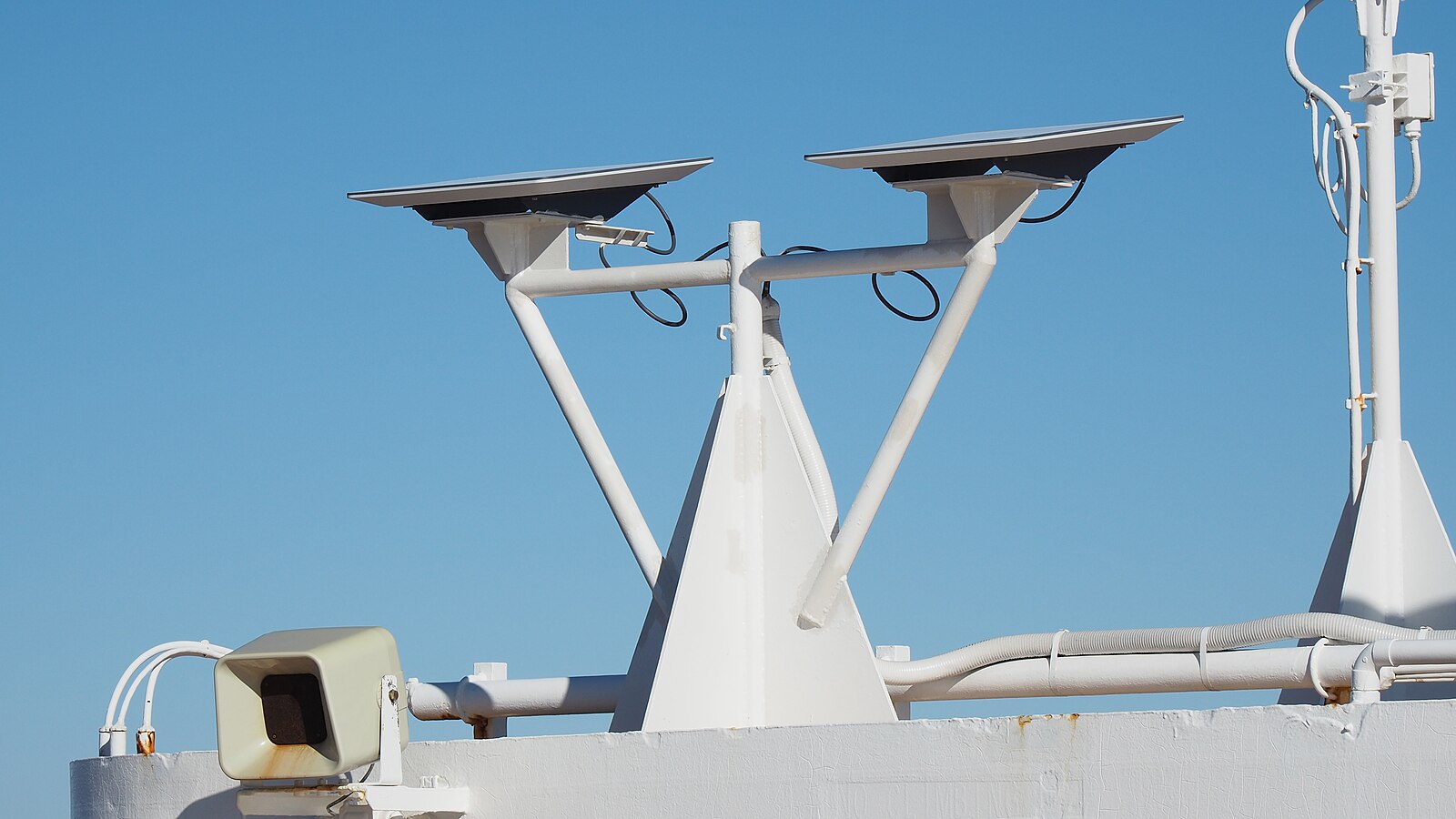
The official reason is cybersecurity, and it is not entirely nonsense — but note what it was written for. The ban that started all this targeted travel routers, not satellite dishes: little boxes that take one paid connection and share it round a cabin full of devices. Royal Caribbean moved on those in December 2024, after guests worked out that one internet package could quietly become four. A rogue access point on a ship’s network is a real headache for the people running it.
But a Starlink Mini isn’t on the ship’s network. It doesn’t touch the ship’s network at all. It talks to satellites.
Which leaves the other reason, the one nobody puts in a policy document. The passenger in the Miracle story put it more directly than any cruise line ever will: “Companies hate competition. This is competition.”
Look at what onboard internet costs now. Carnival’s own plans page lists Social at “$20.40 USD, per day” bought in advance, Value at “$23.80 USD, per day”, and Premium at “$25.50 USD, per day” — rising to $22, $26 and $28 respectively if you wait and buy onboard. And on all of them, “only one device at a time can be used.” For a couple who both want to be online, you are buying two.
The Irony: Your Ship Is Already a Starlink Customer
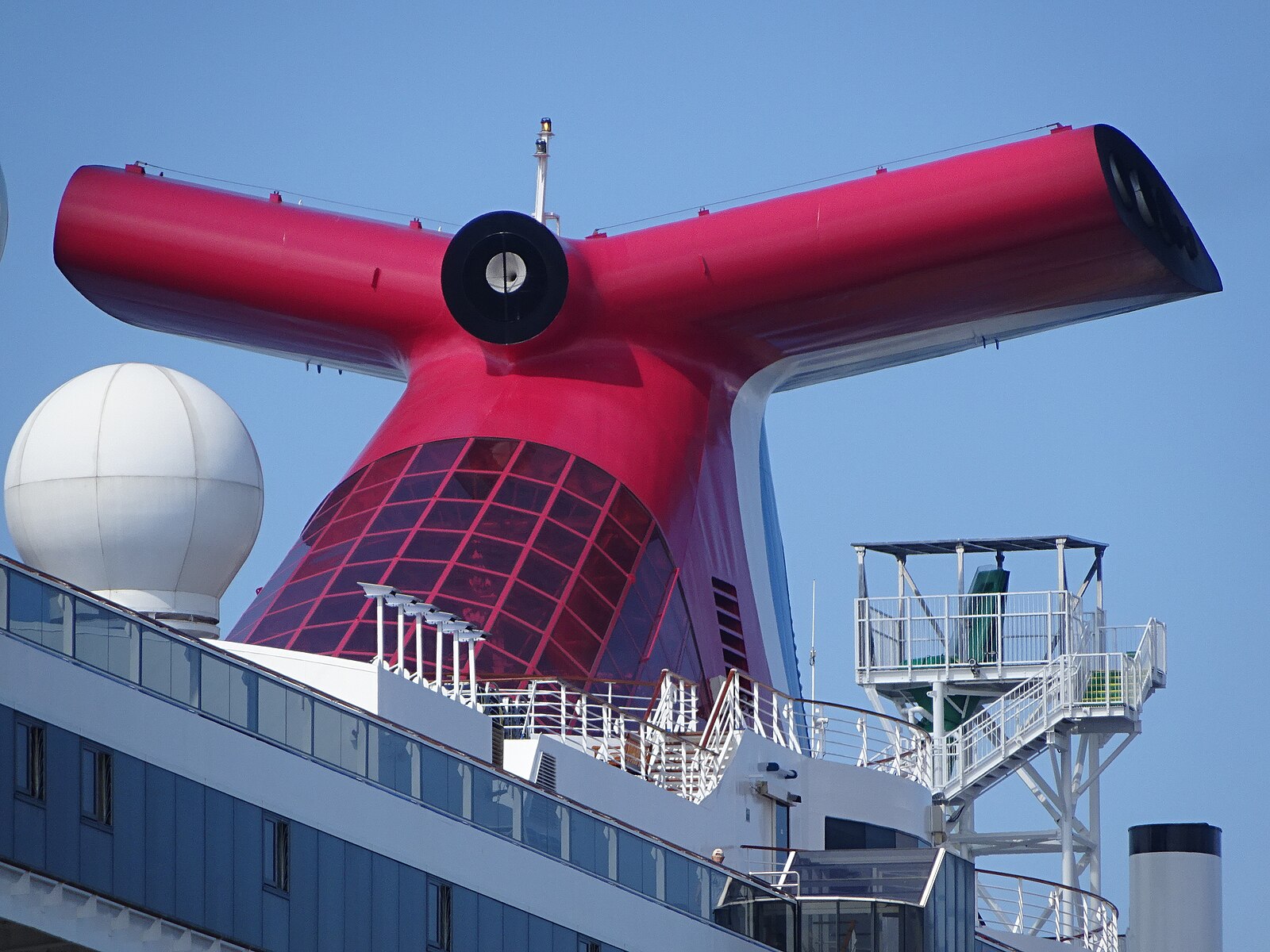
The reason your ship’s Wi-Fi stopped being a punchline somewhere around 2023 is that the lines all bought the same thing you wanted to bring. Royal Caribbean’s Wi-Fi “has improved drastically thanks to the rollout of Starlink,” as Cruise Hive put it, and the same rollout has run across Carnival, Norwegian and MSC.
So the policy, stated plainly, is this: the ship may use Starlink. You may not use Starlink. You may buy Starlink from the ship, at $25.50 a day, one device at a time.
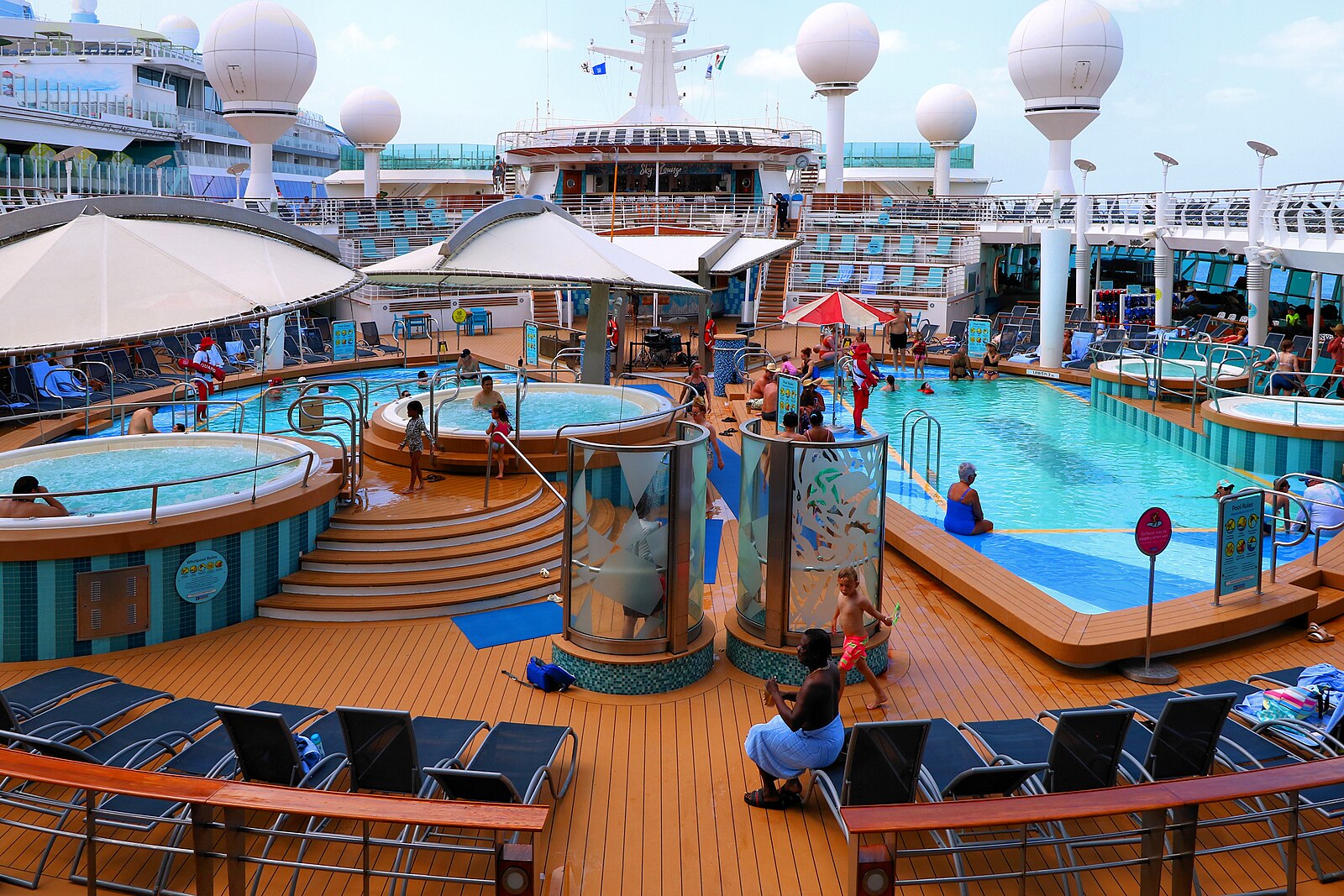
Next time you’re on deck, look up at the mast. Those white spheres are radomes — weatherproof shells housing the satellite antennas. Count them. That’s the internet you’re paying for.
Even If They Let You, It Wouldn’t Work the Way You Think
This is the part the viral speed-test videos skip, and it has got dramatically more important in the last month.
Your consumer plan stops at the coast. Starlink’s Roam plans cover inland waterways and territorial waters — generally defined as 12 nautical miles from the coastline. A cruise ship crosses that line within an hour of leaving port and spends most of the week well outside it. Beyond 12 nautical miles you need Ocean Mode switched on, which is a metered, pay-per-gigabyte add-on rather than part of your monthly plan.
And Ocean Mode just tripled in price. Two specialist outlets that read the terms — the Mobile Internet Resource Center and Steve Mitchell at Seabits — report the same change: Ocean Mode data goes from $2 per GB to $6 per GB on September 27, 2026. That’s five days from now. Starlink also launched a $185-a-month Personal Maritime plan in late August, but it’s aimed at small private boats, not passengers on someone else’s ship. (The two outlets read its vessel size limit differently — 40 feet or 60 — so treat that figure as unsettled.)
And your balcony is the wrong shape. A Starlink terminal needs a wide, clear cone of sky. As one obstruction guide puts it, “nothing should block a cone reaching 25 degrees above the horizon all the way up to zenith, in every direction.” Now picture a standard balcony cabin: there is another balcony directly overhead, a steel bulkhead behind you, and the ship’s superstructure to one side. You have a letterbox of sky, not a cone. Partial blockage doesn’t fail cleanly either — it produces dropouts and ping spikes, which is the worst possible outcome on a video call.
Which is why the people who get impressive numbers do it out on an open deck, in full view of three thousand other passengers and every crew member walking past. Discreet, it is not.
Does It Even Save You Money? Let’s Do the Sums
Back in 2024 the maths looked seductive: a Starlink Mini was $699, and Carnival wanted $1,125 for a 15-night multi-device package. No wonder people filmed themselves.
Run it again for a seven-night cruise in late 2026 and it falls apart. The Mini has come down to $199, which helps. The plan doesn’t: Roam Unlimited is listed at $175 a month (one tracker still shows $165, so the figure moves), and from September 27 every gigabyte beyond the 12-mile line is $6.
- Carnival Premium, bought in advance: $25.50 × 7 nights = $178.50, one device.
- Starlink, ignoring the $199 hardware entirely: $175 for the month, plus Ocean Mode. Ten gigabytes offshore adds $60. Thirty gigabytes adds $180.
Ten gigabytes is not a lot — it’s a couple of evenings of streaming. So for one person on one cruise, the banned option is now the more expensive option, before you count the hardware, the confiscation risk and the conversation with the hotel director.
The picture changes for a family of four all wanting their own connection, or for someone who already owns the kit for an RV. But the specific pitch that made these videos go viral — beat the cruise line’s rip-off Wi-Fi with a $699 gadget — has largely stopped being true.
What To Do Instead
- Buy the package before you sail. This is the single biggest saving available and it takes two minutes. Carnival’s own page shows Premium at $25.50 a day pre-cruise against $28 onboard — roughly 9% off for booking early, and the gap is wider on some lines.
- Check whether your fare already includes it. Norwegian’s Free at Sea bundles and various promotional fares come with Wi-Fi allowances. People buy packages they already own surprisingly often.
- Share one plan, and save the big stuff for port. Most plans allow several devices but only one connected at a time, so a couple can swap a single login. And ashore, normal roaming or a local eSIM beats mid-ocean satellite on speed and price every time.
- Leave the travel router at home too. It’s the device the bans were actually written for, and it’s exactly what the scanner operators have been told to look for.
- If you sail Princess, take the “no storage” line seriously. Other lines may put your gear in a locker. Princess says in writing that it won’t.
Quick Answers
Can you bring a Starlink Mini on a cruise ship?
No. Carnival bans “satellite dishes” and “internet-networking equipment”, Princess bans “personal satellite dish/receivers”, and Virgin Voyages names Starlink directly in its prohibited items list. The Mini’s flat metal panel and electronics are clearly visible on a terminal baggage scanner, so it is usually found at embarkation rather than onboard.
What happens if security finds Starlink in your luggage?
It depends on the line. Carnival confiscated one passenger’s Starlink Mini mid-cruise and returned it at the end. Royal Caribbean’s list says prohibited electronics “will be denied boarding or removed from the vessel”, without the asterisk that marks items held and returned. Princess states it will not store prohibited items at all, leaving you to deal with the device before boarding.
Why do cruise ships ban Starlink if they use it themselves?
The stated reason is cybersecurity, which genuinely applies to travel routers that create rogue networks aboard the ship. A Starlink terminal doesn’t touch the ship’s network, so the more convincing explanation is commercial: onboard Wi-Fi runs from about $20 to $28 per person per day, and every guest running their own satellite link is revenue walking off the ship.
Would Starlink even work from a cruise ship balcony?
Poorly. The terminal needs an unobstructed cone of sky from about 25 degrees above the horizon up to directly overhead, in every direction. A balcony has another balcony immediately above it and the ship’s structure to the sides, so you would be feeding it a narrow strip of sky and getting repeated dropouts. The impressive speed tests you see online were run on open decks.
Is Starlink cheaper than cruise ship Wi-Fi in 2026?
For one person on a seven-night cruise, no longer. Roam Unlimited runs about $175 a month and Starlink’s Ocean Mode data — required beyond 12 nautical miles from shore — rises from $2 to $6 per gigabyte on September 27, 2026. Carnival’s Premium plan bought in advance comes to $178.50 for the week. The saving only reappears for larger groups, and it is still against the rules.
The Bottom Line
Bringing Starlink on a cruise is technically brilliant and practically doomed. The scanner will find it, the policy will catch it, the balcony won’t see enough sky, and as of this month the sums don’t work either.
What’s worth knowing is how thin the written rules are underneath all the confident advice online. Royal Caribbean no longer prints the sentence everyone quotes. Norwegian’s list still says “portable modems”, a phrase from another era. Only Virgin Voyages has updated its list to name the product people are actually packing.
So pack the swimsuit, buy the package early, and enjoy the small pleasure of knowing that the Wi-Fi you just paid $25 a day for is coming off the same constellation as the dish in your garage.
Cruise Chaos earns nothing from cruise lines, insurers or satellite companies, and we don’t run booking affiliate links. If we’ve got something wrong, tell us and we’ll correct it.
Coming up on Cruise Chaos: can you bring alcohol on a cruise? Not just the Royal Caribbean wine rule — every major line’s actual policy, what gets seized at the pier, and what quietly gets waved through.
🎁 Get our free Cruise Survival Kit. Join the Cruise Chaos crew and we’ll email you our printable packing checklist and money-saving cheat sheet right away, plus the week’s best cruise stories and verified deals every Friday. Send me the free kit →
Keep Reading
- Can You Bring Snacks on a Carnival Cruise? The Sealed-Package Rule, Explained
- Can You Bring Alcohol on a Royal Caribbean Cruise? The Wine Rule, the $15 Fee and What Gets Confiscated
- How Much Does a Cruise Cost Per Person? We Did the Sums From the Cruise Lines’ Own Books
Sources
- Carnival Cruise Line: Prohibited Items
- Carnival Cruise Line: Internet Plans and Wi-Fi Prices
- Royal Caribbean: What items are prohibited on a Royal Caribbean cruise ship?
- Princess Cruises: What To Pack for a Cruise (prohibited items)
- Norwegian Cruise Line: What can’t I bring onboard
- Virgin Voyages: Prohibited Items List (updated April 10, 2026)
- Cruise Fever: “I Gave It Up” — Cruise Passenger’s Starlink Confiscated by the Ship
- Cruise Radio: Carnival Takes Starlink From Passenger After He Finds Cheaper Internet Solution
- Cruise Hive: Royal Caribbean Adds Tech Item to its List of Banned Items
- Royal Caribbean Blog: Royal Caribbean adds cyber threat equipment to its list of banned items
- Mobile Internet Resource Center: Starlink Introduces $185/Month Personal Maritime Plan — Ocean Data Jumps to $6/GB
- Seabits (Steve Mitchell): Starlink announces Personal Maritime plan
- SatelliteInternet.com: Starlink Mini review and pricing
- SatSpeedCheck: Starlink Obstruction Guide
You May Also Like
 Can You Bring Alcohol on a Royal Caribbean Cruise? The Wine Rule, the $15 Fee and What Gets Confiscated
 How Much Does a Cruise Cost Per Person? We Did the Sums From the Cruise Lines’ Own Books
 What Happens If Your Cruise Price Goes Down After You Book? The 24, 48 and 72-Hour Rules
 Today’s Best Cruise Deals: 5 Nights From $348, Half-Off Norwegian and More