
How we work: facts are checked against original sources and linked, cruise prices are verified on the cruise line’s own website the day we publish, and we earn no commissions. Spotted a mistake? Tell us and we will correct it.
Booking the cruise was the easy part. Then the emails start. Check in now. Choose an arrival time. Print your luggage tags. Download the app. Finish the health questions. And somewhere in the small print sits a deadline that, if you miss it, means the ship sails without you.
Most first-time cruisers aren’t caught out by the big things. They’re caught out by the small deadlines that come earlier than they expect. We went through the official rules from Carnival, Royal Caribbean and Norwegian and put every deadline in one place, in the order you’ll hit them.
What Do I Need to Know Before Going on a Cruise? The Short Answer
Complete online check-in before your line’s deadline: midnight Eastern time the night before on Carnival, three days before on Norwegian, and by sailing morning in the app on Royal Caribbean. Bring the right ID and citizenship documents, and keep them, your medication and a change of clothes in your carry-on. Leave irons, candles and surge protectors at home. Do the muster drill as soon as you board. Put your phone in airplane mode before the ship sails. In every port, be back aboard by the posted “all aboard” time. That’s usually 30 minutes to an hour before the ship actually leaves.
The Countdown: What to Do, and When
The cruise lines publish their deadlines on their help pages. Laid out in order, they make a timeline.
- 90 days out (Norwegian): specialty dining bookings open. “Starting 90 days prior to your sail date, you can reserve specialty dining for every night of your cruise,” says Norwegian’s cruise countdown page.
- 45 to 90 days out (Norwegian): make any accessibility requests. The same page says they “should be made at least 45-90 days prior to sailing.”
- 45 days out (Royal Caribbean): check-in opens. “You can check in on the app beginning 45 days in advance and up to the morning of your sailing,” says Royal Caribbean’s app check-in FAQ. Cruise.blog gives the same 45-day window.
- 14 days out (Carnival): check-in opens. “Booked guests can check in for their sailing 14 days before embarkation,” Cruise Hive reported, and that’s also when you set up your onboard account. Cruise.blog confirms the 14-day window. Early arrival times go first, so check in early if you want one.
- 4 days out (Norwegian): sort out how you’re getting to the ship. Norwegian sells transfers during online check-in.
- 3 days out (Norwegian): check-in closes. Norwegian’s check-in FAQ says “Online Check-In closes three days prior to departure,” and anyone who misses it “may be subject to an extended check-in procedure at the cruise terminal or may even be denied boarding.” Your eDocs (the boarding pass) appear 24 hours after you check in.
- 48 hours out (Royal Caribbean): website check-in closes. After that, it’s the app or the terminal, according to Royal Caribbean’s check-in FAQ.
- The night before (Carnival): “All guests must complete their Online Check-in process no later than midnight (Eastern time) prior to their sailing date,” says Carnival’s arrival and check-in page.
- Sailing day: arrive in your chosen time slot, and beat the terminal cut-off. That cut-off is earlier than the departure time on every line (see the table below).

Carnival vs Royal Caribbean vs Norwegian: The Rules Side by Side
The three biggest lines for North American cruisers handle the same steps differently. Every cell below comes from the line’s own pages, unless the table says otherwise.
🎁 Free: the Cruise Survival Kit
A printable packing checklist and a money-saving cheat sheet, sent to your inbox straight away. Plus the week's best cruise stories and verified deals every Friday.
Send me the free kit →| Rule | Carnival | Royal Caribbean | Norwegian |
|---|---|---|---|
| Online check-in opens | 14 days before (per Cruise Hive and Cruise.blog) | 45 days before | Not stated on the pages we checked |
| Online check-in closes | Midnight Eastern time, the night before | Website: 48 hours before. App: sailing morning | 3 days before |
| Latest you can be checked in or aboard on sailing day | By the Final Boarding time on your boarding pass | 90 minutes before sailing | Aboard 1 hour before departure |
| Checked-bag drop closes | 2 hours before sailing | Not stated on the pages we checked | Not stated on the pages we checked |
| Back aboard in port | The time in your daily schedule | “Approximately 30 minutes prior to sailing” | 1 hour before departure |
| Power strips | Allowed without surge protection | Banned, including extension cords | See the line’s list |
| Clothing irons and steamers | Banned | Banned | See the line’s list |
| Medication | “Must personally carry-on” | Not stated on the pages we checked | “Hand-carry” recommended |
One wrinkle: Royal Caribbean’s own pages describe its cut-off in two ways. Its check-in FAQ says guests must be “checked in no later than 90 minutes prior to the scheduled sailing time,” and that “Guests arriving late will not be permitted to sail.” Its boarding-time FAQ says guests must be “fully checked in and onboard the ship no later than 90 minutes prior to port operations closing.” Plan around the earlier of the two.
Norwegian’s boarding FAQ asks guests who’ve checked in online to arrive at least an hour before their scheduled embarkation time, and guests who haven’t to arrive two hours early. Everyone must be “onboard the ship no later than one hour prior to the departure time,” or “they will not be permitted to sail.” Carnival puts it just as bluntly: “all guests must be on board by the Final Boarding time printed on your boarding pass or you will not be permitted to sail.”
Which Documents Do You Need to Bring?
Your boarding pass, photo ID and proof of citizenship. Carnival’s check-in page says: “At check-in, you must present your boarding pass, picture ID and citizenship documents (including any necessary visas).” It adds that checking in online doesn’t prove you have the right papers. It’s “still the responsibility of the guest to present the required travel documents at the time of embarkation.”
Whether you need a passport depends on where the ship goes and whether it returns to the port it left from. We checked every common itinerary in our guide to whether you need a passport for a cruise. On Royal Caribbean, the app is where you scan your passport, upload your security photo and answer the health questions that produce your boarding pass, according to the line’s app FAQ.
What Should You Pack in Your Carry-On?
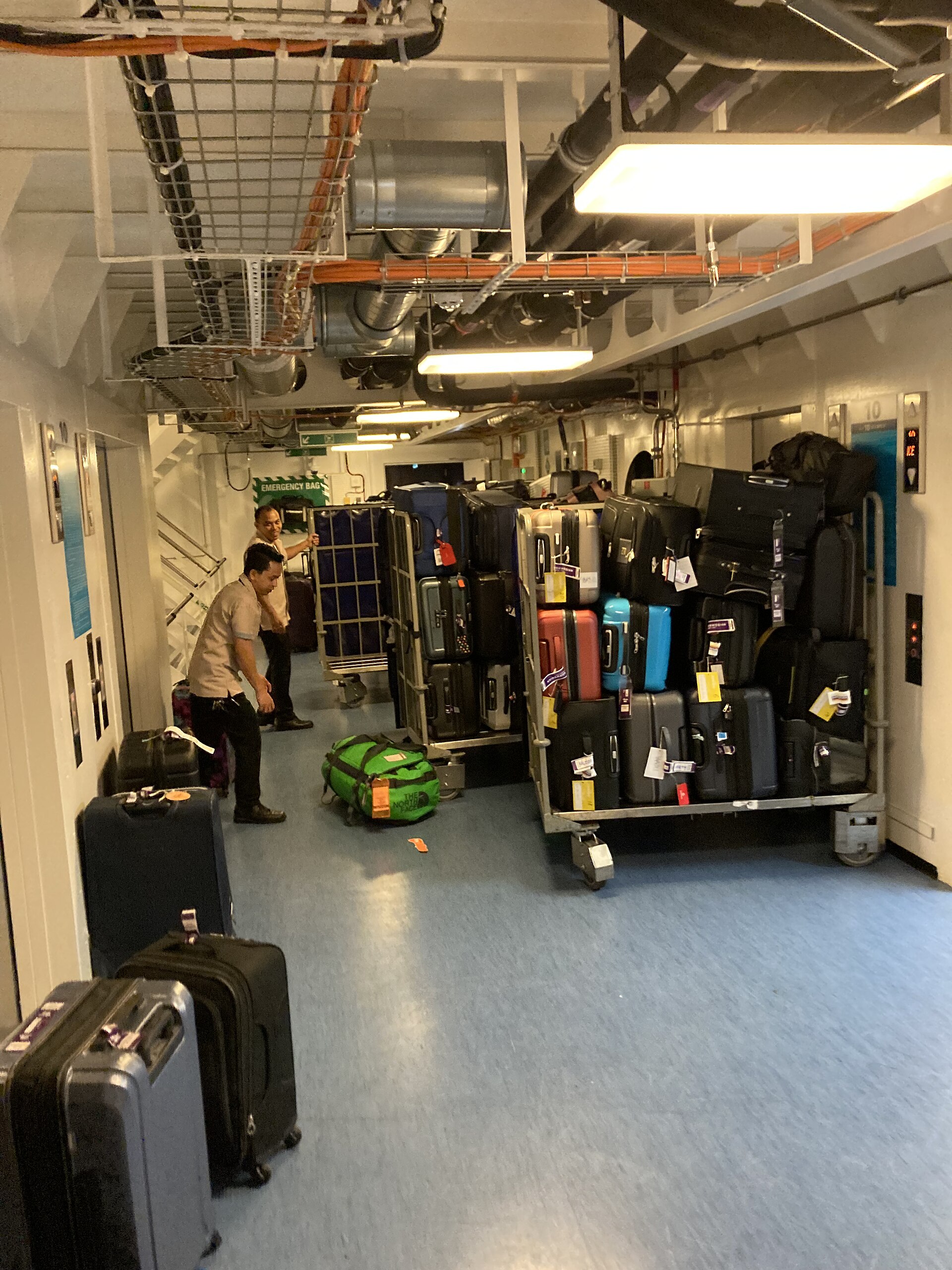
Anything you’d hate to be without for an afternoon. When you hand your suitcase to a porter, it goes off with the crew and arrives at your cabin later in the day. Everything you need before then has to be in the bag you carry.
Norwegian’s carry-on FAQ recommends that guests “hand-carry medication, jewelry, breakables, or other valuables, an extra set of clothes for the first evening on board, and important documents.” Carnival’s luggage and prohibited items page makes it a rule: “you must personally carry-on any boarding documentation (passports, Visas, I.D), valuables, medications and items which require special handling.”
Carnival’s page has other rules worth knowing before you pack:
- Bag size: each suitcase “should not exceed 50 pounds,” and lying flat it can’t be more than 16 inches high by 24 inches wide.
- No wagon totes: “Hulken rolling totes, wagon-style bags, and other similar totes are prohibited onboard.”
- Power banks: these “must be carried onboard in carry-on luggage only,” as must CPAP machines.
- Luggage tags: they come with your eDocs once you’ve checked in, and you don’t need to print them in colour. Attach them before you reach the terminal.
- Porters: “Curbside porters are customarily provided a $1 tip per bag.” They aren’t Carnival employees.
What Can’t You Bring on a Cruise?
Anything that heats up, burns or overloads a socket is the usual problem. Clothing irons and garment steamers are banned by both Carnival and Royal Caribbean, and Carnival names candles too. The Points Guy’s list of items not to pack adds candles and incense, coffeemakers, electric kettles and Wi-Fi routers, and says surge-protected power strips “are banned on most cruise lines and will be confiscated.”
Power strips are where the lines split, and it’s the rule most likely to catch out someone who has sailed on another line. Carnival lists “Power strips,” “Multi-outlet adapters” and “Extension cords without surge protection” as generally permitted. Royal Caribbean’s prohibited items policy bans “extension cords, power strips, multi‑plug outlets” outright, along with baby monitors. It does allow curling and flat irons for hair.
What happens to a banned item differs too. Carnival says that if prohibited items are found, “they will be removed and disposed of and no compensation will be given.” Royal Caribbean says some items “may be retained by Security for the duration of the cruise and returned to the guest upon departure.” Our guide to cruise packing don’ts covers the rest, and vapers should read our vape rules guide before packing.
What Happens on Your First Day Aboard?
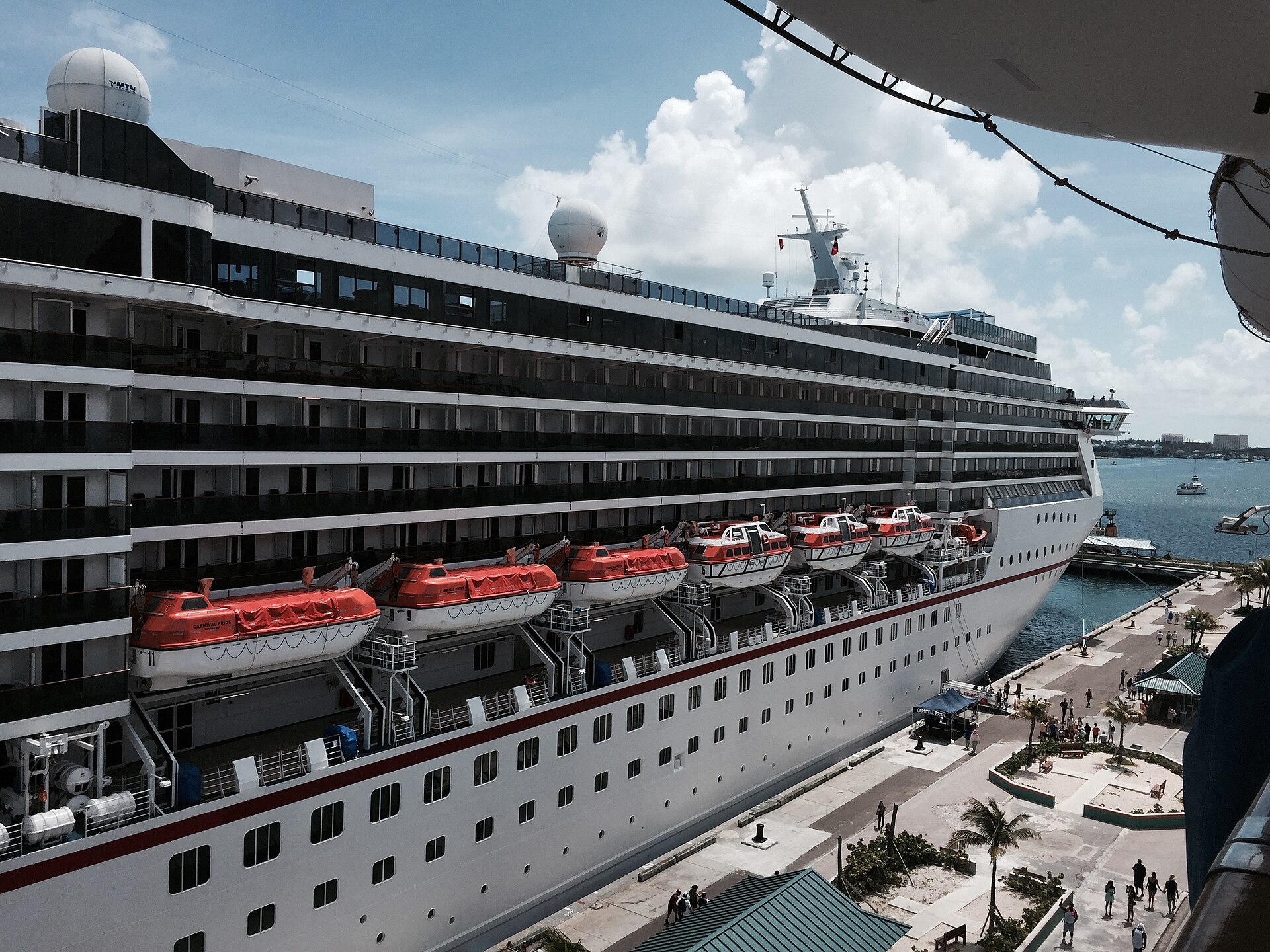
The safety drill comes first, and it’s the law. Since January 1, 2015, the International Maritime Organization says, “passengers must undergo safety drills, including mustering at the lifeboat stations, before the ship departs or immediately on departure.” Before that, the muster only had to happen within 24 hours of boarding. The IMO adopted the change “in the wake of the Costa Concordia incident.”
These days most of the drill happens on your phone. Royal Caribbean’s check-in page says you tap the Safety icon in the app to start the briefing, and then visit your station. Carnival tells guests to “navigate to your assigned muster station to check-in with a team member upon boarding.” Do it straight away, before the bar and the buffet. Our guide to boarding a cruise ship walks through embarkation day step by step.
Your cabin may not be ready yet. Carnival notes that guests arriving before 1:30 p.m. usually check their bags “so they can be free to enjoy lunch on Lido Deck before access to their stateroom is granted.” Bring a swimsuit in your carry-on and use the time.
Will My Phone Work on a Cruise?
Yes, and that’s the problem. Out at sea, your phone may connect to the ship’s own cellular network, which is billed at roaming rates. The Points Guy’s guide to phones on cruises advises putting your phone in “airplane mode” “sometime between boarding and when the ship sets sail.” It warns that background data keeps “racking up charges” even when you’re not using the phone. AT&T’s own cruise guide gives the same advice: keep airplane mode on and connect to the ship’s Wi-Fi instead, “to prevent your phone from defaulting to the cruise’s cellular coverage.”
Forget, and the bill can be steep. AT&T’s cruise terms list standard international rates, from May 6, 2026, of “$2.05/MB data, $4/min talk, $1/msg sent.” Carriers sell cruise day passes instead. Check yours before you sail, because prices differ by carrier and change often. Ship Wi-Fi isn’t free on the big mainstream lines either, as we found in our guide to what’s included in a cruise.
How Do You Stay Healthy on a Cruise?
Wash your hands with soap. The CDC’s Yellow Book chapter on cruise ship travel (reviewed April 2025) advises: “Wash hands frequently with soap and water; if soap and water are not available, use ≥60% alcohol-based hand sanitizer.” Sanitiser is the fallback, not the first choice. That matters on ships, where norovirus spreads easily, as we saw in the AIDAdiva outbreak.
Plan for seasickness before you feel it. The CDC’s motion sickness chapter says medication “is most effective when taken before exposure, rather than after the onset of symptoms.” A scopolamine patch takes 6 to 8 hours to start working, so it goes on well before you sail. The CDC also suggests looking at the horizon and avoiding “locations such as the bow of a ship.” The most common side effect of these medicines “is drowsiness or sedation.” Ask your doctor or pharmacist which one suits you.
Know that the ship’s doctor isn’t free. Royal Caribbean’s and Carnival’s ticket contracts both list onboard medical services as an extra. The CDC suggests travellers “consider purchasing additional insurance coverage for overseas health care and medical evacuation.” Our guide to whether you need insurance for a cruise explains what that can cost.
What Time Do You Need to Be Back on the Ship in Port?
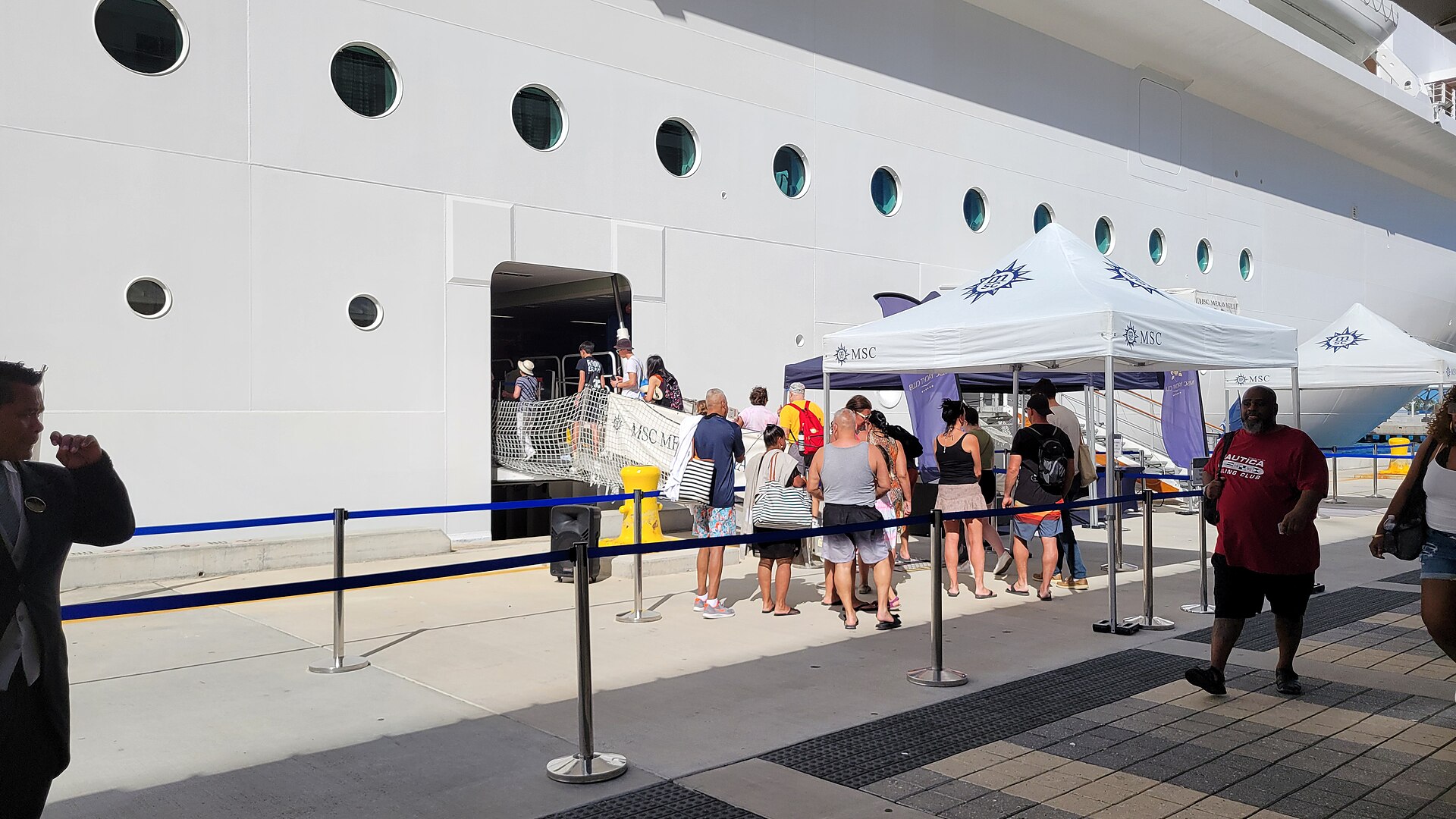
By the “all aboard” time, which isn’t the departure time. Royal Caribbean’s shore excursion FAQ says the all aboard time “is scheduled approximately 30 minutes prior to sailing,” and it’s posted by the gangway. Norwegian is stricter: in all ports, “it is also the guest’s responsibility to be back onboard the ship no later than one (1) hour prior to the ship’s scheduled departure time,” its boarding FAQ says.
Cruise lines “usually have the all aboard time 30 minutes before they actually leave,” Cruise Fever explains, and it recommends getting back to the pier at least an hour before departure. The Points Guy’s pier-runner guide adds a trap: in some ports, the ship doesn’t switch to local time. “Make sure your phone or watch stays on ship time.”
Miss it and the ship can leave without you, with the cost of catching up falling on you. Our guide to what happens if a cruise leaves you behind adds up that bill.
Your Before-You-Sail Checklist
- Put your line’s check-in dates in your calendar today: the day it opens and the day it closes.
- Check in as early as the window allows, so you get a good arrival time and spot any document problems early.
- Read the boarding cut-off on your boarding pass, not just the departure time.
- Pack a carry-on with ID, citizenship documents, medication, valuables, power banks, a swimsuit and a change of clothes.
- Take out the iron, steamer and candles, and on Royal Caribbean leave the power strip at home too.
- Attach your luggage tags before you leave home.
- Turn on airplane mode before the ship sails, and check your carrier’s cruise options.
- Do the muster drill first once you’re aboard.
- In every port, note the all aboard time and keep your watch on ship time.
Quick Answers
When should you check in for a cruise?
As soon as your line’s window opens. Royal Caribbean opens check-in 45 days before sailing and Carnival 14 days before. Norwegian closes online check-in three days before departure, and Carnival closes it at midnight Eastern time the night before.
How early do you have to be at the cruise port?
Arrive in the time slot you chose at check-in. The hard cut-offs are earlier than departure: Royal Caribbean requires guests to be checked in 90 minutes before sailing, Norwegian requires guests aboard an hour before departure, and Carnival’s is the Final Boarding time printed on your boarding pass.
Can you bring a power strip on a cruise?
It depends on the line. Carnival allows power strips and extension cords without surge protection. Royal Caribbean bans extension cords, power strips and multi-plug outlets. Surge-protected strips are banned on most lines.
Should you put your phone on airplane mode on a cruise?
Yes, unless you’ve bought a cruise plan from your carrier. At sea, phones can connect to the ship’s cellular network at roaming rates. AT&T’s standard rates are $2.05 per MB and $4 a minute. Switch on airplane mode before the ship sails and use the ship’s Wi-Fi instead.
The Bottom Line

Almost everything that goes wrong before a cruise comes down to a deadline that’s earlier than people think. Check-in closes days before sailing on Norwegian. Boarding closes before the ship leaves on every line. And “all aboard” comes before “departure” in every port. Put the dates in your calendar, pack your carry-on as if your suitcase won’t turn up until dinner, and leave the iron at home. The rest of the cruise is the easy part.
Cruise Chaos earns nothing from cruise lines, phone carriers or booking links. Every fact in this guide links to where we read it. Rules were checked on the lines’ own pages on October 7, 2026, and they change often. If something has changed, tell us and we’ll correct it.
Coming up on Cruise Chaos: what documents do you need for a cruise? Passports, birth certificates, visas and the name-match rule, line by line.
🎁 Get our free Cruise Survival Kit. Join the Cruise Chaos crew and we’ll email you our printable packing checklist and money-saving cheat sheet right away, plus the week’s best cruise stories and verified deals every Friday. Send me the free kit →
Keep Reading
- 10 Things to Know Before You Book Your Cruise
- Boarding a Cruise Ship: The Deadlines That Catch People Out
- What Is Included in a Cruise, and What Is Not? Four Big Lines Compared
Sources
- Carnival: What time should I arrive at the port? and Carnival: Prohibited items and luggage
- Royal Caribbean: When can I check in with the app?, Online check-in and boarding pass, Cruise boarding time, Prohibited items policy and Do I need to book a shore excursion?
- Norwegian Cruise Line: Cruise countdown checklist, What is Online Check-In?, Boarding times and Should I bring a carry-on bag?
- Royal Caribbean: Cruise/CruiseTour Ticket Contract (US) and Carnival: Ticket Contract
- Cruise Hive: Carnival Cruise Line fixes online check-in glitch (June 2024)
- Cruise.blog: Carnival Cruise Line check-in process (February 2025) and Royal Caribbean check-in process (June 2023)
- International Maritime Organization: SOLAS amendments in force from January 1, 2015
- CDC Yellow Book 2026: Cruise ship travel and Motion sickness (both reviewed April 23, 2025)
- AT&T: Using your phone on a cruise and Cruise Day Pass terms
- The Points Guy: Using your cellphone on a cruise (May 2026), What not to pack for a cruise (February 2025) and How to avoid becoming a pier runner (September 2024)
- Cruise Fever: What happens when your cruise ship leaves without you?