
How we work: facts are checked against original sources and linked, cruise prices are verified on the cruise line’s own website the day we publish, and we earn no commissions. Spotted a mistake? Tell us and we will correct it.
By late Friday night, the ship had gone.
Odyssey of the Seas had circled the same patch of the Ionian Sea for about 14 hours, then turned for Italy. The Greek coast guard’s boats, a helicopter and a handful of passing merchant ships kept looking.
Then, in the small hours of Saturday, the crew of a cargo ship saw something in the water about 70 nautical miles southwest of Zakynthos.
It was the missing guest, a 44-year-old woman from El Salvador, alive and conscious inside a lifebuoy, after an estimated 19 to 20 hours in the sea. This is what happened, what’s still unknown, and the little-known rules behind why she could be found at all.
What Happened on Odyssey of the Seas
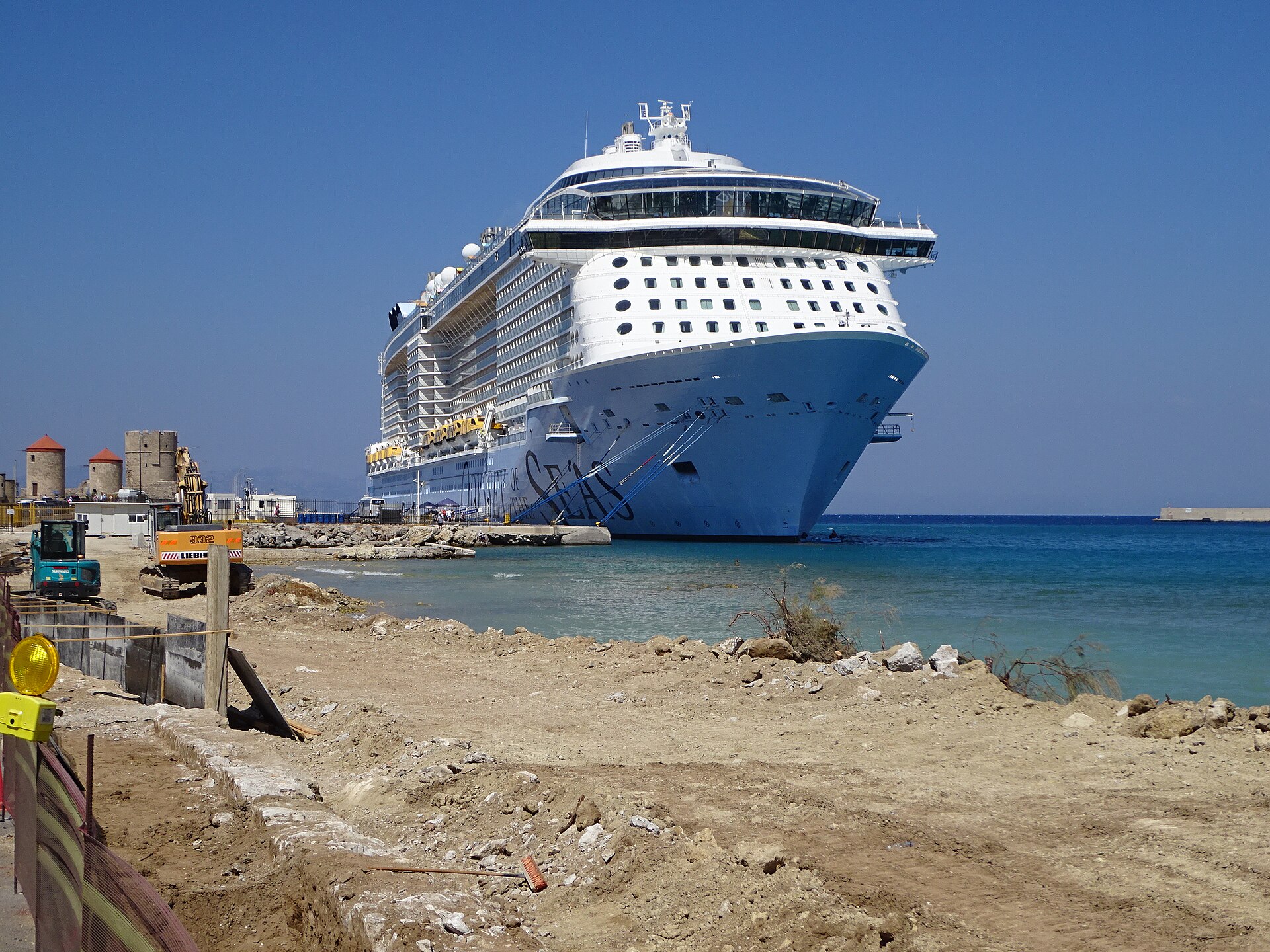
Royal Caribbean’s Odyssey of the Seas, 167,704 gross tons with room for 4,198 guests, left Civitavecchia, the port for Rome, on October 4 on a seven-night Greek Isles round trip, according to Cruise Hive. On Friday, October 9, she was on a sea day between Mykonos and Naples.
🎁 Free: the Cruise Survival Kit
A printable packing checklist and a money-saving cheat sheet, sent to your inbox straight away. Plus the week's best cruise stories and verified deals every Friday.
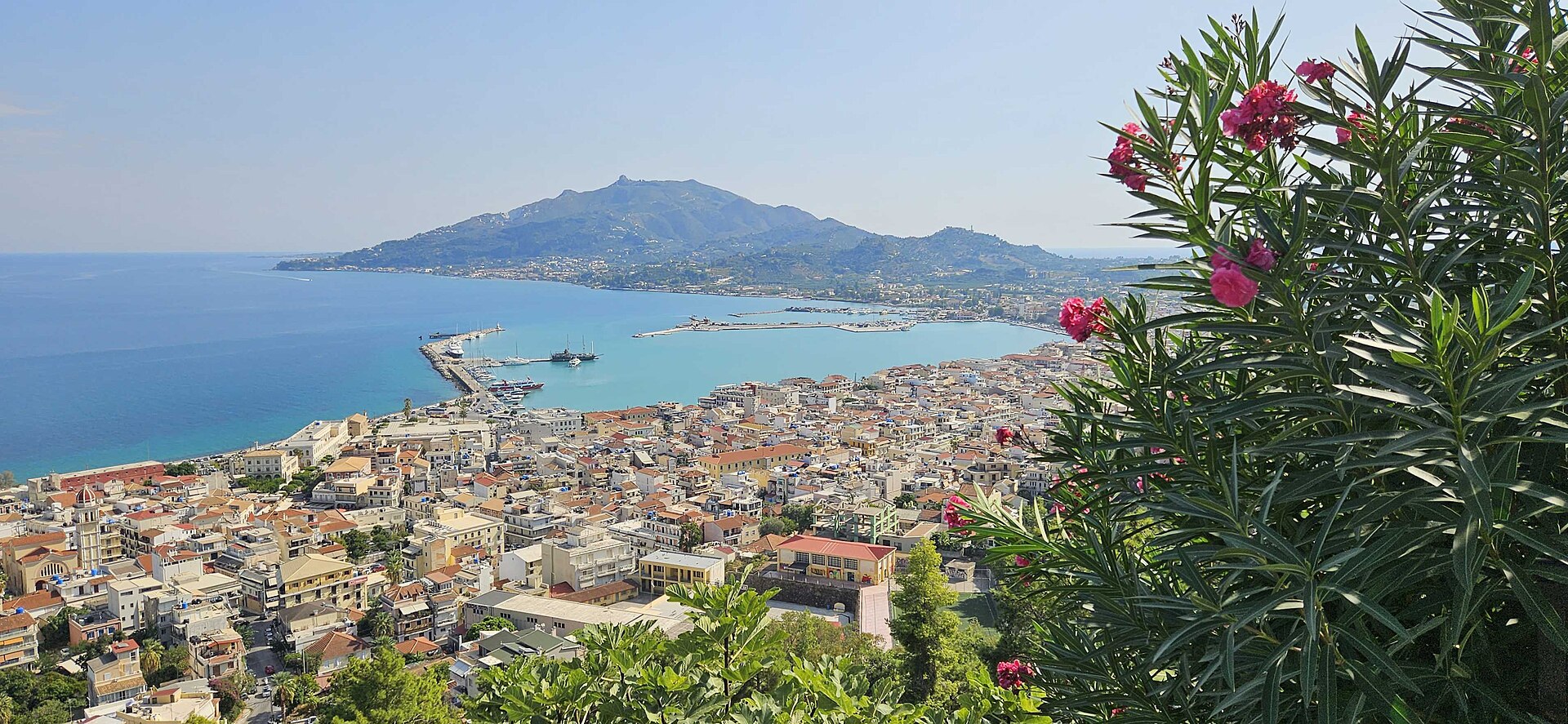
Send me the free kit →Passengers say a woman went overboard in the early hours, around 6 a.m. by their accounts, as reported by both Cruise Hive and Cruise Mummy. Greek state broadcaster ERT and in.gr, reporting the Hellenic Coast Guard’s information, put the position at about 72 nautical miles southwest of Zakynthos, and said she was a 44-year-old citizen of El Salvador. The Greek reports don’t name the ship, only that it flies the Bahamas flag. Cruise Hive, Cruise Mummy and CruiseMapper all identify it as Odyssey of the Seas.
According to Cruise Fever, the crew checked security camera footage to confirm she had gone over the side, about four hours after it happened. At around 10 a.m., the captain told guests. Ship-tracking data cited by Cruise Law News shows the ship turning around between 10 and 11 a.m., and still circling at 7 p.m.
Royal Caribbean’s statement, given to Cruise Mummy and quoted by Cruise Fever, was short: “We immediately launched a search and rescue effort and are working with authorities.” The line added that its Care Team was supporting the guest’s loved ones and that, for their privacy, it had no more to share.
The search
Greece’s Joint Rescue Coordination Centre, known as EKSED, alerted the port authorities of Zakynthos, Katakolo and Pylos on Friday morning, Proto Thema and Zougla report. A coast guard lifeboat, a coast guard patrol boat, three passing ships and a Hellenic Air Force Super Puma helicopter joined in. ERT put the wind at 3 to 4 on the Beaufort scale: a moderate breeze, not a storm.
Early on, searchers found an overturned ring lifebuoy with a light attached, both Greek outlets say. Passengers told Cruise Fever that the first announcements spoke of finding only the light. Either way, there was no sign of her.
After about 14 hours, per Cruise Hive and Cruise Mummy (Cruise Fever says more than 12), Odyssey of the Seas left the area and headed for Civitavecchia. The Saturday call at Naples was cancelled.
The find
In the early hours of Saturday, October 10, the Madeira-flagged cargo ship MSC Rossella III, one of the vessels helping in the search, found her alive in a lifebuoy, according to Proto Thema and Zougla. Ellada24 and in.gr, citing the coast guard, place the spot about 70 nautical miles southwest of Zakynthos, close to where she went in. CruiseMapper reports that the merchant crew spotted a flashing light attached to her lifebelt.
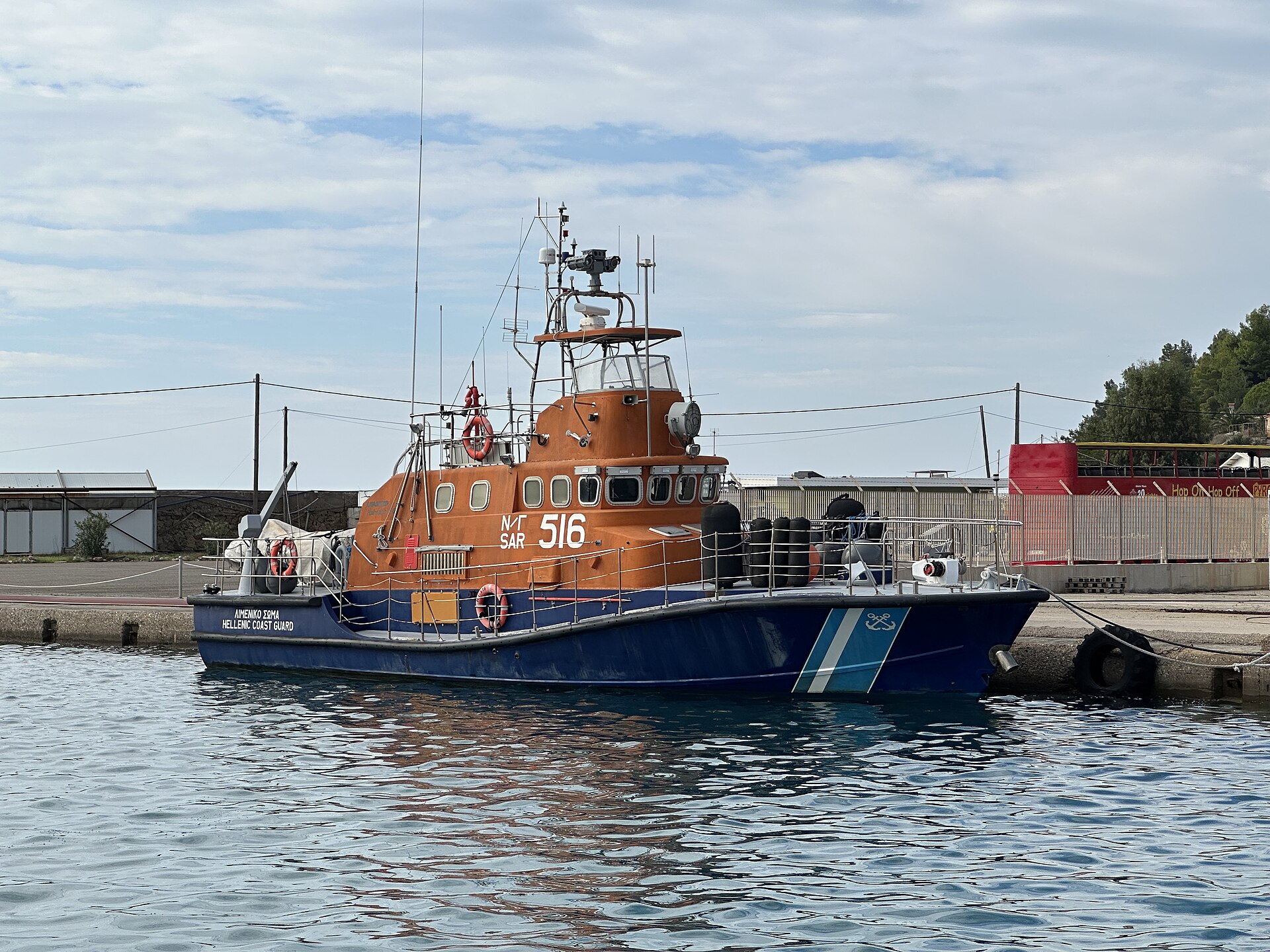
A coast guard rescue boat took her aboard. She was conscious, and the crew gave her first aid. She was landed at Katakolo, and an ambulance took her to the Andreas Papandreou General Hospital in Pyrgos for tests and observation, per Proto Thema, Zougla and Pelop News. Passengers relaying the captain’s update said she was being treated for hypothermia. Pelop News credits rescue boat 516 with a decisive role.
What the reports don’t agree on
- When she was found. Cruise Mummy has “shortly before 1am,” from Greek reports passengers shared; Cruise Fever says about 2:30 a.m.; Pelop News says around 3 a.m.
- Who lifted her out. Cruise Fever says the cargo ship pulled her from the water and handed her over. The Greek reports say the coast guard boat picked her up after the cargo ship found her.
- The lights. Searchers found an overturned lifebuoy with a light on Friday, yet she was found in a lifebuoy on Saturday, with, per CruiseMapper, a flashing light. Whether that was one buoy or two hasn’t been explained.
One more thing nobody official has said: how she came to be in the water, or how she came to have a lifebuoy. The Katakolo Port Authority is carrying out a preliminary investigation, Proto Thema and Zougla report. Passenger posts online have offered theories; TheTravel notes a post, which it couldn’t verify, from someone saying they were a family member and asking people to stop speculating. We won’t.
The Rescue, Hour by Hour
Pieced together from Greek and English-language reports. Times are local Greek time and, where marked, come from passengers rather than officials.
| When | What happened | Reported by |
|---|---|---|
| Sun. Oct. 4 | Odyssey of the Seas leaves Civitavecchia on a seven-night Greek Isles round trip | Cruise Hive |
| Fri. Oct. 9, about 6 a.m. (passengers) | Guest goes overboard on a sea day, Mykonos to Naples, about 72 nm southwest of Zakynthos | Cruise Hive, Cruise Mummy; position from the Hellenic Coast Guard via ERT and in.gr |
| Friday morning | Crew confirm it on camera footage, about four hours later; EKSED alerts the Zakynthos, Katakolo and Pylos port authorities | Cruise Fever; Proto Thema, Zougla |
| About 10 a.m. | Captain informs guests; ship turns back between 10 and 11 a.m. | Cruise Hive, Cruise Fever, Cruise Law News |
| Friday daytime | Coast guard lifeboat and patrol boat, three passing ships and an Air Force helicopter search; an overturned lifebuoy with a light is found; wind 3–4 Beaufort | ERT, in.gr, Proto Thema, Zougla |
| 7 p.m. | Ship still circling | Cruise Law News (tracking data) |
| Late Friday | After about 14 hours, the ship leaves for Civitavecchia; Naples is cancelled | Cruise Hive, Cruise Mummy, Cruise Fever |
| Sat. Oct. 10, roughly 1–3 a.m. (accounts differ) | MSC Rossella III finds her alive in a lifebuoy about 70 nm southwest of Zakynthos; coast guard boat takes her to Katakolo; ambulance to Pyrgos hospital | Proto Thema, Zougla, Pelop News, in.gr, Ellada24 |
| About 10 a.m. | Captain tells guests she has been found alive | Cruise Fever, TheTravel |
| Sun. Oct. 11 | Ship due back in Civitavecchia; disembarkation unchanged | Cruise Hive |
Why She Could Still Be Found: Three Rules
Survival here owed a lot to luck, to her and to the people who kept searching. But three pieces of maritime law shaped how it played out, and they explain a lot about overboard cases in general.
1. The lifebuoy has a legal spec, and it’s built for a day
Those orange rings on every cruise ship’s rail aren’t decoration. They’re made to the International Life-Saving Appliance (LSA) Code, which sits under the SOLAS safety treaty. Section 2.1.1 says every lifebuoy must:
“be capable of supporting not less than 14.5 kg of iron in fresh water for a period of 24 h”
That’s from the Code text published by the UK government’s treaty series and the Dutch government. The same section says the ring must survive being dropped from its stowage height or 30 metres, whichever is greater. A 24-hour float test, and a woman found after roughly 20 hours: the numbers sit uncomfortably close together.
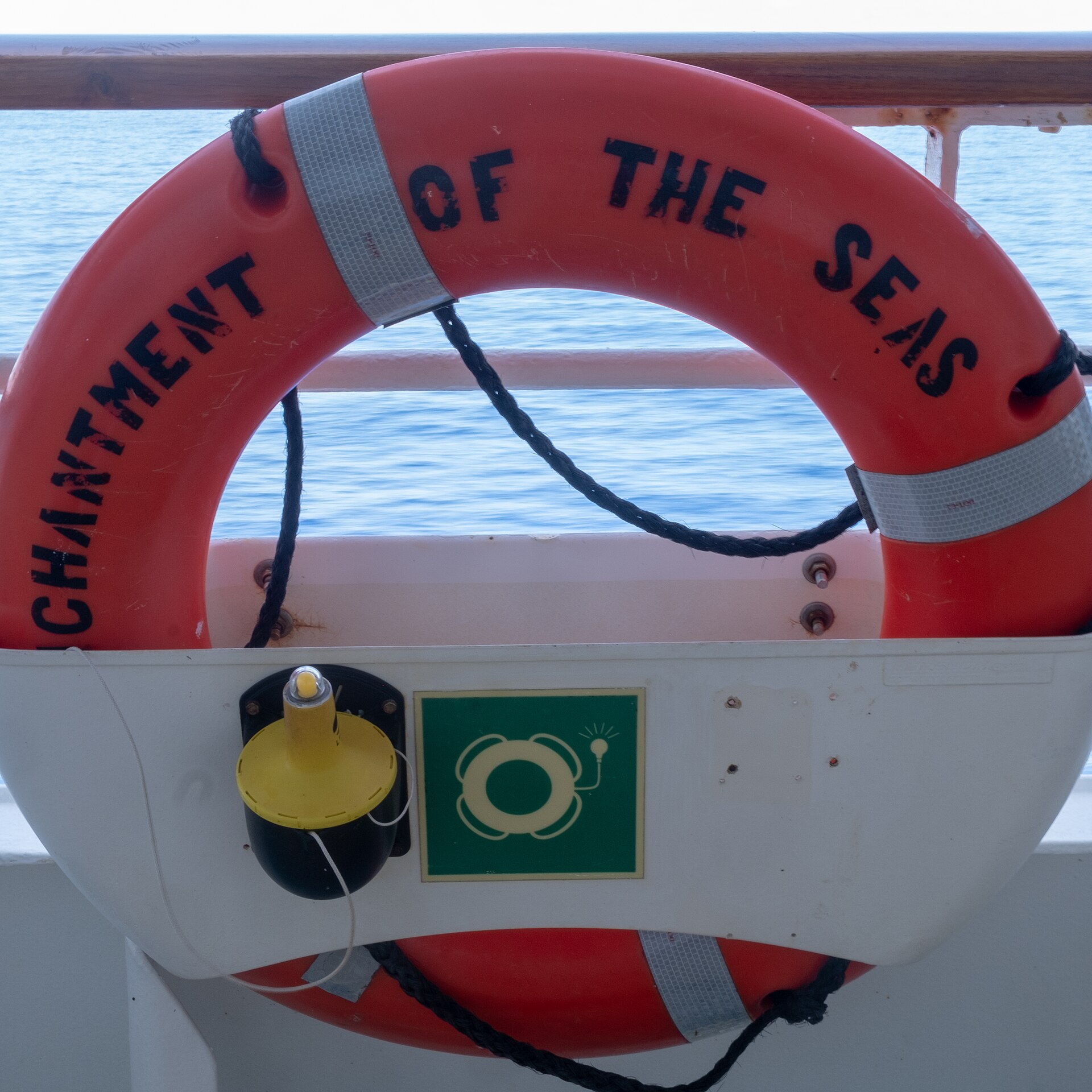
Some of those rings carry a light on a line. SOLAS requires them on part of a ship’s lifebuoys, and LSA Code section 2.1.2 says each one must:
“be such that they cannot be extinguished by water; be of white colour and capable of either burning continuously … or flashing (discharge flashing) at a rate of not less than 50 flashes and not more than 70 flashes per min … be provided with a source of energy capable of meeting the requirement … for a period of at least 2 h”
Note the last part. The rule guarantees two hours of light, not twenty. Whether the light CruiseMapper describes was still working when the cargo ship arrived, or helped in some other way, hasn’t been reported in detail. What’s clear is that a person in a ring with a flashing light is a far bigger target at night than a head in the water.
2. Cameras that detect a fall are only required “to the extent” available, and not here
The four-hour gap before the crew confirmed what had happened is the part that matters most for search odds. Every hour widens the area a person or a buoy can drift across.
The US Cruise Vessel Security and Safety Act of 2010, now 46 U.S.C. § 3507, says a covered ship “shall integrate technology that can be used for capturing images of passengers or detecting passengers who have fallen overboard, to the extent that such technology is available.” Read literally, cameras that capture images can satisfy it, and fall-detection technology is required only “to the extent” it is available. And the law only covers ships on a voyage that “embarks or disembarks passengers in the United States.” A round trip from Civitavecchia isn’t one.
Cruise Law News says no reports indicate Odyssey of the Seas has an automatic man-overboard system, the kind that alerts the bridge the moment someone falls. Royal Caribbean hasn’t said either way.
3. Every passing ship has a legal duty to help
The ship that found her wasn’t a rescue vessel. It was a cargo ship on its own voyage. The UN Convention on the Law of the Sea, Article 98, makes that its business. Every country must require the master of a ship flying its flag, as far as it can be done without serious danger to the ship or the people aboard:
“to render assistance to any person found at sea in danger of being lost; to proceed with all possible speed to the rescue of persons in distress, if informed of their need of assistance…”
The same article requires coastal states to run “an adequate and effective search and rescue service.” That’s EKSED’s job, and it explains why the search didn’t stop when the cruise ship sailed away. Three merchant ships were in the search, and one of them made the find.
What This Means for You on Your Next Cruise
- If you see someone go over, shout first. Irish Sailing’s man-overboard guidance starts with shouting “Man overboard!” to alert everyone. On a cruise ship, call out which side and get the nearest crew member, fast. The four hours on Odyssey show what a late alarm costs.
- Throw the nearest lifebuoy. The same guidance says to throw one “immediately.” The rings along the rails are there for anyone to use, and the light goes with them.
- Point, and don’t stop pointing. Irish Sailing advises giving one person the only job of pointing at the person in the water. Note the time and where you are on the ship. Those are the details searchers need.
- Don’t jump in after them. The US National Park Service calls jumping in “the last option.” From a cruise ship’s height, it isn’t really an option at all.
- Know the H.E.L.P. position. If you’re ever in the water with something that floats, the NPS advice is not to exhaust yourself “by flailing and thrashing,” and to draw your knees to your chest and hug the flotation to hold in body heat.
- If your port is dropped for a search, that’s the law working. Odyssey’s guests lost Naples. None of the reports we read mention compensation for the missed port, and none says the end date changed. Our guide to what you’re owed when a ship skips a port covers your rights.
The Bottom Line
A guest went into the Ionian Sea before dawn on a Friday. The alarm came hours later, and the ship searched for about 14 hours before sailing on. The search carried on without it, and some time after midnight a cargo ship’s crew spotted her in a lifebuoy, alive.
How she came to be in the water is for the Katakolo Port Authority to establish, not for us. What the story does show is that the plain orange ring on the rail, built to float for a day, and the old rule that every passing ship must help, both did their jobs. Next time you walk past a lifebuoy on deck, notice where it is.
Cruise Chaos earns nothing from cruise lines and doesn’t run booking affiliate links. This story is based on the Hellenic Coast Guard’s information as reported by ERT, in.gr, Proto Thema, Zougla, Pelop News and Ellada24; Royal Caribbean’s statement; reporting by Cruise Hive, Cruise Fever, Cruise Mummy, CruiseMapper, Cruise Law News and TheTravel; and the primary texts of the LSA Code, US law and the UN Convention on the Law of the Sea. Some times come from passengers, and we’ve said where reports disagree. Royal Caribbean and the Greek authorities haven’t said how the guest entered the water, and we haven’t guessed. If we’ve got something wrong, tell us and we’ll correct it in the open.
Coming up on Cruise Chaos: more chaos from the high seas, with every fact checked.
🎁 Get our free Cruise Survival Kit. Join the Cruise Chaos crew and we’ll email you our printable packing checklist and money-saving cheat sheet right away, plus the week’s best cruise stories and verified deals every Friday. Send me the free kit →
Got a cruise story like this?
Something wild, strange or funny happened on your sailing? Tell us what happened. We read every story, fact-check it, and email you before anything is published.
Keep Reading
- What Happens When a Cruise Ship Skips a Port? Here’s What You’re Actually Owed
- Cruise Disasters: What the Official Reports Actually Found
- 10 Cruise Nightmares That Aren’t Your Fault (and How to Protect Yourself)
Sources
- ERT News (in Greek): Woman fell from cruise ship off Zakynthos; coast guard searching (October 9, 2026)
- in.gr (in Greek): 44-year-old who fell from cruise ship found alive (October 10, 2026)
- Proto Thema (in Greek): Frame by frame, the rescue of the 44-year-old tourist (October 11, 2026)
- Zougla (in Greek): Video of the rescue of the 44-year-old (October 11, 2026)
- Pelop News (in Greek): The coast guard rescue of the 44-year-old (October 11, 2026)
- Ellada24: The 44-year-old woman who fell into the sea from a cruise ship southwest of Zakynthos was found alive
- Cruise Hive: Urgent Search Underway for Woman Overboard From Royal Caribbean’s Odyssey of the Seas (October 9, 2026)
- Cruise Hive: Woman Found Alive After Royal Caribbean Overboard (October 10, 2026)
- Cruise Fever: Miracle Rescue: Overboard Passenger from Odyssey of the Seas Found Alive (October 9–10, 2026)
- Cruise Mummy: Woman rescued alive after going overboard from Royal Caribbean cruise ship (October 10, 2026)
- CruiseMapper: Odyssey OTS passenger rescued after ~24 hours in the sea off Zakynthos, Greece (October 11, 2026)
- Cruise Law News: Woman Reportedly Overboard From Odyssey of the Seas as Ship Circles Ionian Sea for Hours (October 2026)
- TheTravel: Royal Caribbean Captain Confirms 14-Hour Guest Search Ends After Miraculous Rescue
- UK Treaty Series: International Life-Saving Appliance (LSA) Code, sections 2.1.1 and 2.1.2 (PDF)
- Government of the Netherlands: LSA Code text, chapter II (lifebuoys)
- 46 U.S.C. § 3507, Passenger vessel security and safety requirements (via Cornell LII)
- United Nations Convention on the Law of the Sea, Part VII (Article 98)
- Irish Sailing: Man Overboard Guidance (May 2026)
- US National Park Service: Man Overboard
You May Also Like
 Scarlet Lady Ran From a Storm Into Rhodes. Then Its Ropes Snapped.
 A Catamaran Tried to Arrest Scarlet Lady. An Insurer’s Letter Set Her Free.
 Why Do Cruise Ships Need a Pilot? The Law, the Ladder and Who’s Really in Charge
 Packed for Nova Scotia, Sailing to Nassau: The Nor’easter That Scrambled a Fleet of Cruise Ships