
How we work: facts are checked against original sources and linked, cruise prices are verified on the cruise line’s own website the day we publish, and we earn no commissions. Spotted a mistake? Tell us and we will correct it.
It started with a joke.
Somewhere near the nightclub, in the small hours, a young man from Puglia said something to a young woman from Sicily. Nobody has published exactly what it was. We can safely assume it did not land.
Within minutes, the furniture was airborne.
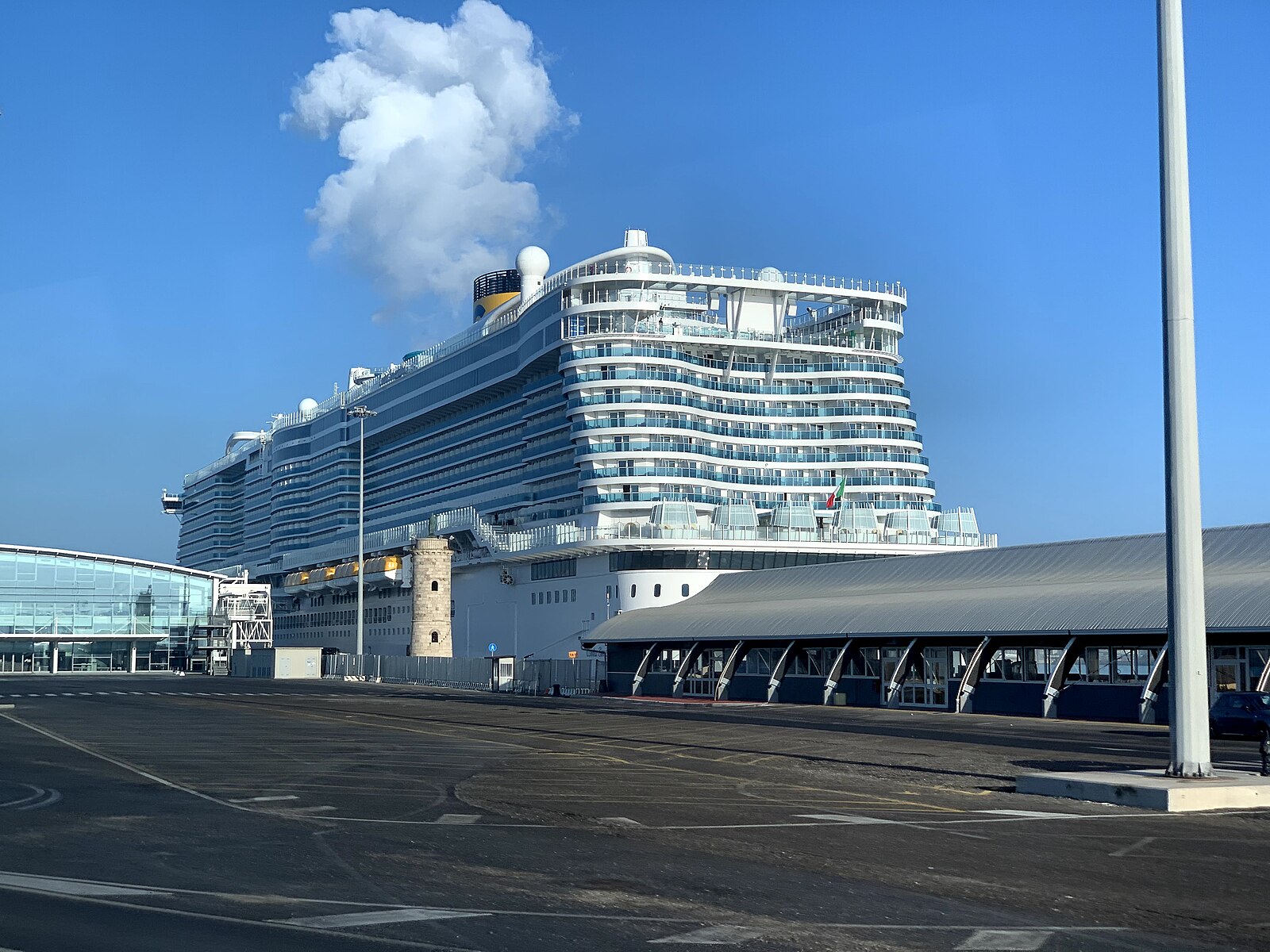
Tables. Chairs. Whatever else wasn’t bolted down. Two groups of holidaymakers, all of them between 18 and 20 years old, went at each other across the club, out into the corridors and into the lift lobby of Costa Smeralda — a 185,010-ton LNG-powered flagship carrying up to 6,554 people, most of whom were presumably asleep.
By morning the ship was in Palermo, the police were on the quay, and thirteen passengers were in front of a prosecutor.
Which makes this genuinely unusual. Cruise ship brawls happen. They almost never end in court. This one did, and why is a small masterclass in who owns the law when you’re floating between two countries at three in the morning.
What Happened on Costa Smeralda
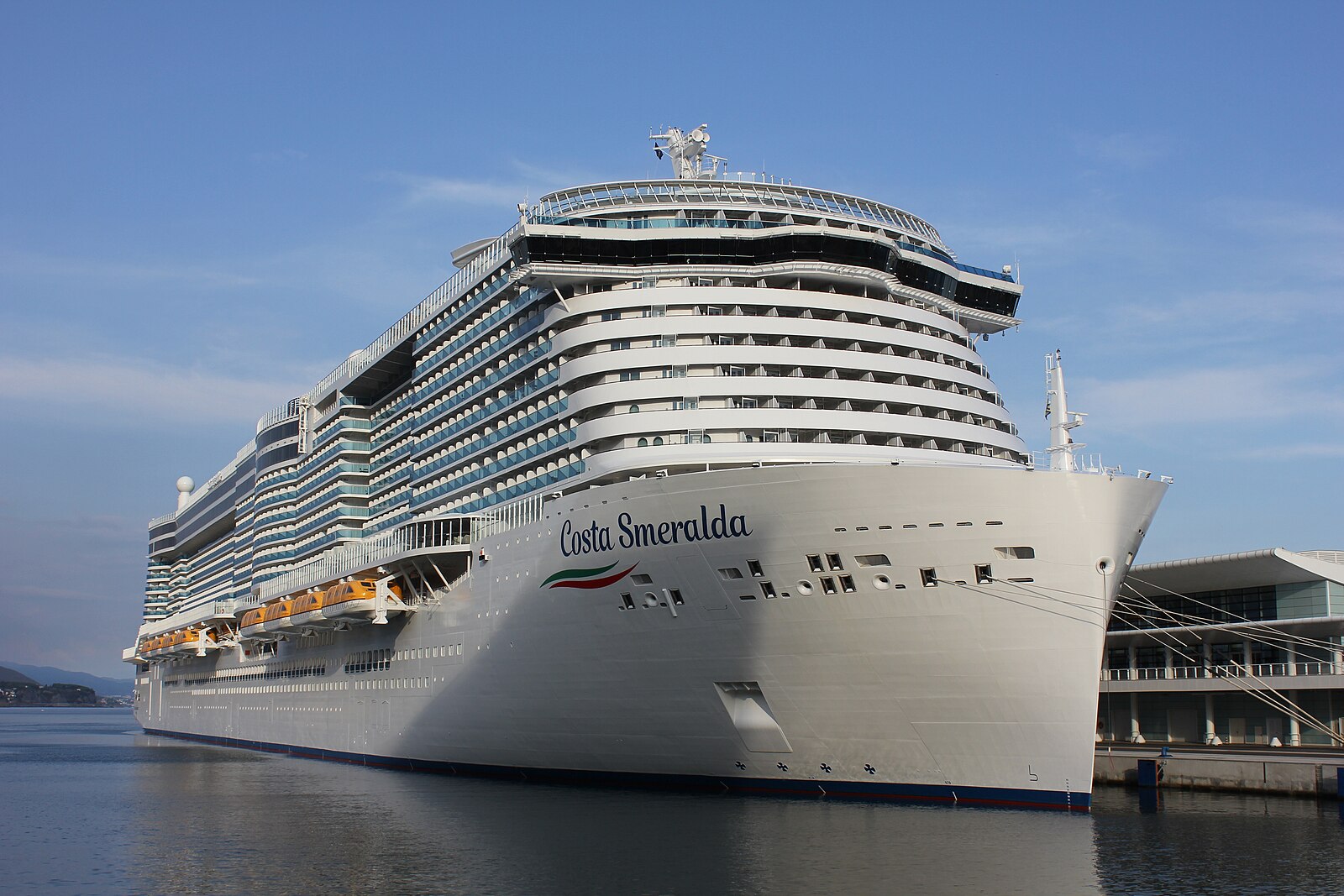
Costa Smeralda runs a seven-night western Mediterranean loop that guests can join at several different ports — which is how two very different holiday parties ended up on the same ship. One group had boarded at Civitavecchia, the port for Rome, and came from Salento, the heel of Italy. The other had boarded at Palermo and were Sicilian.
According to Palermo’s Giornale di Sicilia, the trouble kicked off over what police described as futile motives: a remark aimed at a Sicilian girl during the overnight run from Naples to Palermo. Words became shoving, and shoving became the ship’s own furnishings being used as weapons. IlSicilia reported small tables, chairs and fittings going into the fight, and the whole thing rolling out of the club and down the passageways.
Then it stopped being funny. In the lift lobby one young man was knocked unconscious and — while he was on the floor and not moving — was kicked in the head by more than one person. He was taken off in Palermo for hospital checks. Doctors, thankfully, ruled out serious injuries. That’s the part of this story with no joke in it, and we’re not going to pretend otherwise.
The Morning After: Police, Cameras and a Very Short Investigation
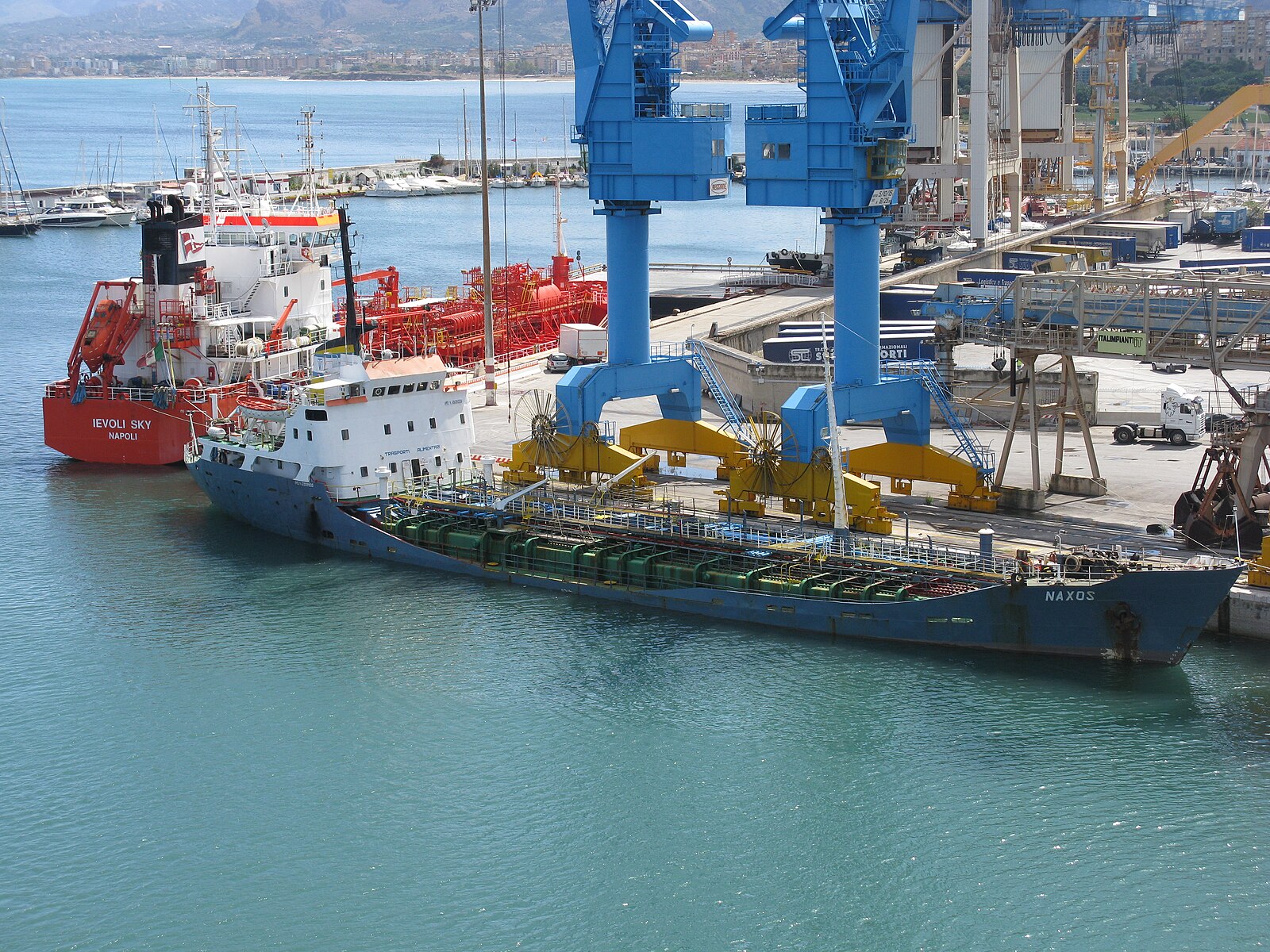
When Costa Smeralda tied up in Palermo, officers from the Polizia di Frontiera Marittima — the maritime border police — came aboard.
They did not have to knock on 2,600 cabin doors. They asked for the CCTV.
A modern megaship is one of the most comprehensively filmed places a holidaymaker will ever walk through. Police pulled the footage, cross-referenced it with crew statements, and — per the Giornale di Sicilia account — fully identified all thirteen people involved.
All thirteen were reported to the Public Prosecutor’s Office at the Court of Palermo for rissa aggravata — aggravated brawling. Nobody was arrested: in Italian procedure they were reported in stato di libertà, referred while free, which Cruise Fever rightly flagged, because several early English write-ups implied handcuffs that never existed.
Two honest caveats. The police statement did not date the incident — Italian outlets said only “in recent days.” Cruise Hive, working from the ship’s movements, points to the Palermo call on Thursday, September 10, 2026, which fits the overnight leg from Naples; treat that as likely, not confirmed. And Costa Cruises has issued no public statement, with no source establishing whether alcohol was a factor. We’re not going to guess.
What “Aggravated Brawling” Actually Means
Rissa is not the same as assault, and the difference is the whole story. Article 588 of the Italian penal code makes it a crime simply to take part in a brawl. You don’t have to land a punch. You don’t have to start it. Participation is the offence.
On its own that’s cheap: “chiunque partecipa a una rissa è punito con la multa fino a euro 2.000” — anyone who takes part is punished with a fine of up to €2,000. Annoying, survivable, roughly the cost of the cruise.
The second paragraph is the one with teeth. If somebody is killed or suffers personal injury in the brawl, then for the mere fact of having taken part, the penalty becomes imprisonment from six months to six years.
So the man who was kicked on the floor is the reason the charge against everyone else stopped being parking-ticket-sized. Under settled Italian case law the aggravated form can attach even to a participant who was himself injured, on the logic that joining collective violence — rather than purely defending yourself — carries its own consequences. Whoever did the kicking faces separate charges on top.
Thirteen people. One nightclub remark. A six-year ceiling. It is, to put it mildly, an expensive way to be witty.
Why This Brawl Got Prosecuted and Most Cruise Brawls Don’t

Here’s why the Costa Smeralda thirteen are in the system while most viral cruise fights evaporate into a shaky phone video and nothing else. A ship at sea is not a legal vacuum, but it is a legal knot. Article 92 of the UN Convention on the Law of the Sea sets the default: “Ships shall sail under the flag of one State only and… shall be subject to its exclusive jurisdiction on the high seas.” Whoever’s flag is on the stern generally owns what happens on board.
Now look at this case. Costa Smeralda is Italian-flagged, registered in Genoa, sailing between two Italian ports, with everyone involved Italian, arriving at an Italian port where Italian police were already on the quay. Italy doesn’t even need the international-law route: Article 4 of the Italian Navigation Code says Italian ships on the high seas “sono considerati come territorio italiano” — are considered Italian territory. For criminal purposes that club was, effectively, a room in Italy.
That is about the cleanest jurisdictional set-up a cruise incident can have. Compare it with the ordinary Caribbean case:
| Costa Smeralda, September 2026 | A typical Caribbean cruise brawl | |
|---|---|---|
| Flag state | Italy (registered in Genoa) | Bahamas, Panama, Malta or Bermuda |
| Where it happened | Between Naples and Palermo | Often international waters |
| Passengers’ nationality | All Italian | Mostly US, sometimes mixed |
| Next port | Palermo, Italy | A foreign island with no appetite for it |
| Who investigates | Italian maritime border police, same morning | Ship’s security, then maybe the FBI |
| Typical outcome | 13 referred to a prosecutor | A lifetime sailing ban, no charges |
That last row isn’t a guess. On June 22, 2026, a fight broke out during debarkation from Carnival Conquest at PortMiami — punches, hair-pulling, luggage flying through the customs hall. Carnival put 16 guests on its Do Not Sail List, permanently. Arrests? None reported.
The United States does reach onto foreign ships, via 18 U.S.C. § 7(8), which covers “any foreign vessel during a voyage having a scheduled departure from or arrival in the United States with respect to an offense committed by or against a national of the United States.” It’s real. It’s just narrower and slower than people assume.
The Numbers Nobody Collects
Want to know how many fights happen on cruise ships? You can’t. The US Department of Transportation publishes quarterly crime figures under the Cruise Vessel Security and Safety Act, and they are startling for how small they are. For Q2 2026, the entire US-facing cruise industry reported 50 crimes — of which exactly one was an assault with serious bodily injury, as Cruise Law News set out from the DOT data. One. Across every line, for three months.
That’s not because cruising is crime-free. The reporting rules are narrow: only certain categories count, incidents involving non-US nationals largely fall outside the requirement, and the lines themselves decide what gets passed to the FBI. A thirteen-person brawl on an Italian ship between Naples and Palermo would never appear in that table at all, and Europe publishes no equivalent. So when a cruise line tells you incidents like this are vanishingly rare, remember it helped decide the number.
The Captain Is Still the Law (And He Can Ban You From Dinner)

Long before any prosecutor gets involved, there’s the master. Article 186 of the Italian Navigation Code is one line long and absolute: everyone on board is subject to the authority of the ship’s master.
And tucked away in Articles 1256 and 1257, Italian law lists the disciplinary offences a passenger can commit — disrespect toward the master, “recare molestia agli altri passeggeri” (bothering other passengers), and “turbare in qualsiasi modo il buon ordine della nave”, disturbing the good order of the ship in any way. The penalties the master can hand down, in escalating order: a simple warning, a public warning, exclusion from the common table, and disembarkation at the next port.
Yes. Italian maritime law, on the statute book, includes being banned from dinner. It is the single most Italian sentence in seafaring and we love it unreservedly.
Costa’s own contract is blunter. Under clause 11.2 of its general conditions, if in the master’s sole opinion a passenger’s behaviour “may affect the enjoyment of other Passengers”, he can refuse passage, “order the disembarkation of the Passenger at any port”, or “confine the Passenger to a certain area of the ship” — and no refund or compensation will be due for the holiday you no longer get. Clause 10.4 makes the passenger liable for “any damages caused to the ship, its furnishings and equipment”.
They threw the furniture. They signed the clause that makes them buy it.
What This Means for Your Next Cruise
You are overwhelmingly unlikely to be in a cruise brawl. You are much more likely to be standing near one. Here’s what actually matters.
- Walk away, and keep walking. Under Italian law, taking part is the offence — not winning it, not starting it. Stepping in to “break it up” can put you inside the same charge. Get clear and call it in.
- Report it to the ship, not just to your friends. Guest services and the security officer are the ones who preserve the CCTV. In Palermo that footage did the entire investigation. If nobody flags it, it may simply be overwritten.
- Know whose flag you’re under. It’s on the stern, and it decides a lot. An Italian ship between Italian ports is the strict end of the scale; a Bahamas-flagged ship in international waters with passengers from six countries is the loose end.
- Assume you’re on camera everywhere but your cabin. Public rooms, corridors, stairwells and lift lobbies are filmed. That protects you. It also convicts you.
- Read the conduct clause before you sail. Every major line has one, and every one lets the captain put you ashore with no refund — Costa’s is 11.2. After that, flights, hotels and luggage are your own expense, and your insurance almost certainly excludes losses caused by your own misconduct.
The Bottom Line
Thirteen people are dealing with an Italian prosecutor because of one remark near a nightclub door at sea. The reason they are — and the reason sixteen people in Miami in June got a permanent ban and a taxi home instead — has nothing to do with how bad the fight was. It’s about which flag was flying, which water the ship was in, which passport everyone held, and which country’s police were standing on the quay at eight in the morning.
Cruise ships feel like a bubble. Legally, they’re anything but. You are inside somebody’s jurisdiction at every moment of your holiday — you just don’t get told whose.
On Costa Smeralda that night, it was Italy’s. And Italy had the security tapes.
Coming up on Cruise Chaos: more chaos from the high seas — the incidents, the arguments and the gloriously daft mishaps that cruise lines would rather you scrolled past, all fact-checked and sourced.
🎁 Get our free Cruise Survival Kit. Join the Cruise Chaos crew and we’ll email you our printable packing checklist and money-saving cheat sheet right away, plus the week’s best cruise stories and verified deals every Friday. Send me the free kit →
Keep Reading
- “They Took My Balcony Handle”: What Carnival Actually Does When a Guest Drinks Too Much
- “Where’s My $1,100?” The Cruise Hot Tub Showdown and the Booking Trap Behind It
- When a Cruise Vacation Goes Viral: How to Protect Your Privacy and Reputation at Sea
Sources
- Giornale di Sicilia: Palermo, rissa a bordo di una nave da crociera: 13 denunciati
- IlSicilia: Rissa a bordo di una nave da crociera diretta a Palermo, denunciati tredici giovani
- Cruise Hive: Police Investigate 13 Guests After Brawl on Costa Smeralda
- CruiseMapper: 13 passengers charged after fight aboard Costa Smeralda
- Cruise Fever: 13 Cruise Passengers Charged After Fight Breaks Out on 6,500-Passenger Ship
- Cruise Mummy: 13 Young Passengers Charged After Fight On Costa Smeralda
- Codice penale, Art. 588 — Rissa
- Codice della navigazione, Art. 4 — Navi e aeromobili italiani in località non soggette alla sovranità di alcuno Stato
- Codice della navigazione, Art. 186 — Autorità del comandante
- Codice della navigazione, Artt. 1256–1257 — Infrazioni e pene disciplinari dei passeggeri
- Costa Cruises: General Contract Conditions (clauses 10.4 and 11.2)
- United Nations Convention on the Law of the Sea, Article 92
- 18 U.S.C. § 7 — Special maritime and territorial jurisdiction of the United States
- Cruise Law News: Cruise Crime Report — Q2 2026 (US DOT / CVSSA data)
- Cruise Hive: Brawl at PortMiami Terminal Lands 16 Carnival Guests on Do Not Sail List
Cruise Chaos earns nothing from cruise bookings. We link no booking affiliates, we licence every photo we publish, and we correct anything we get wrong — tell us if you spot an error.