
How we work: facts are checked against original sources and linked, cruise prices are verified on the cruise line’s own website the day we publish, and we earn no commissions. Spotted a mistake? Tell us and we will correct it.
Embarkation day on a megaship has a familiar rhythm. Bags roll through the terminal, guests race up to the pool deck, someone claims the best lounger with a towel, and the waterslides start to hum.
On Monday, October 12, 2026, Royal Caribbean’s Utopia of the Seas had one group of early arrivals who hadn’t checked in at all. They hadn’t shown a passport or bought a drink package. A whole swarm of them had simply moved in under a shade umbrella on Deck 15.
They were bees. And the person sent to evict them turned up in beekeeping gear, armed with a vacuum.
Nobody was reported stung, and the ship left on time. But the swarm wasn’t a fluke. It’s a piece of bee biology that happens to collide with how cruise ships work, and it isn’t the first time insects have joined a cruise.
What Happened on Utopia of the Seas
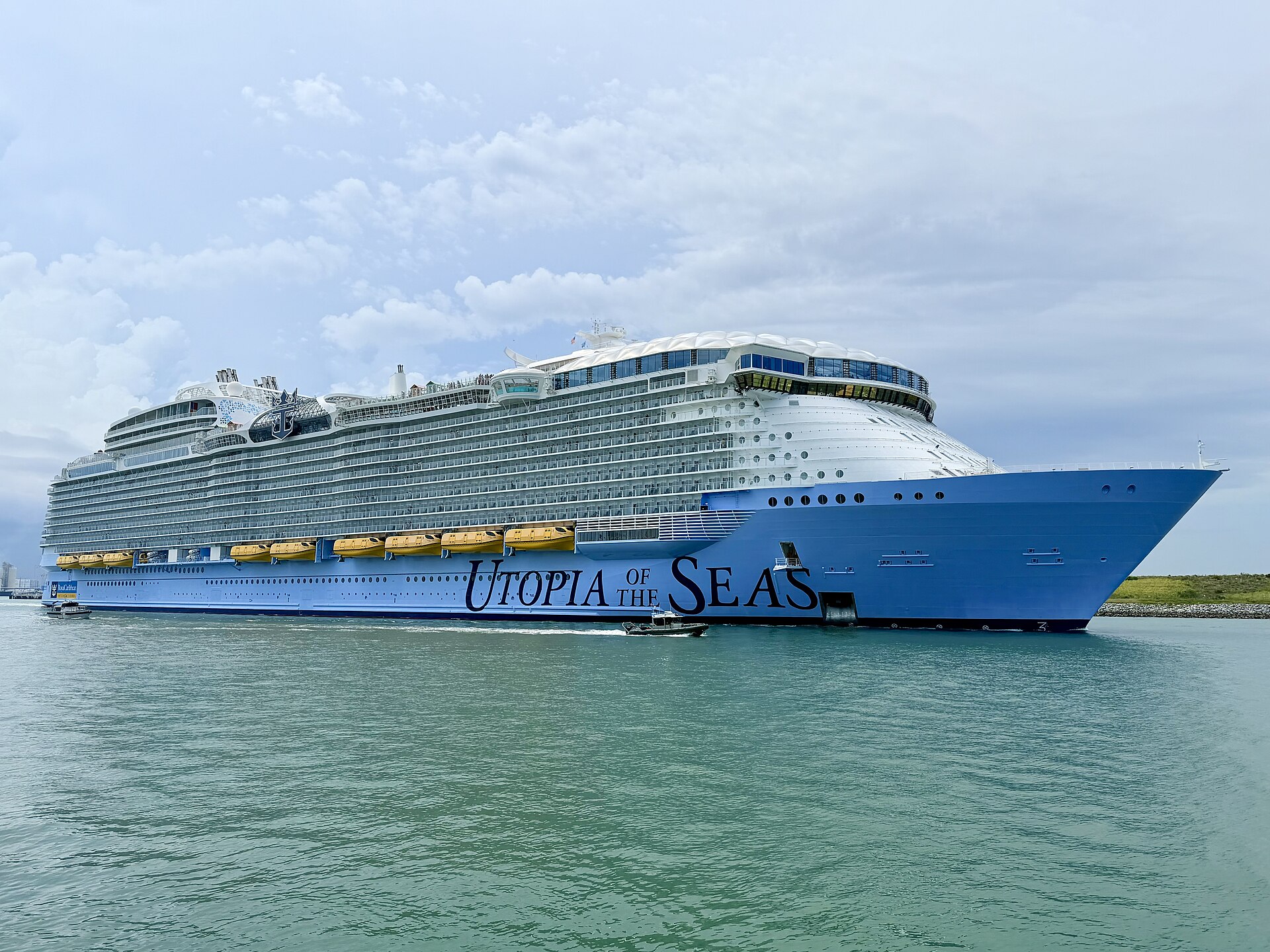
Utopia of the Seas was in Port Canaveral, Florida, turning around between sailings. As guests boarded for a four-night Bahamas cruise, a swarm of bees was being removed from underneath a shade umbrella on the port side of Deck 15, near the waterslide exits, Cruise Hive reported on October 13.
🎁 Free: the Cruise Survival Kit
A printable packing checklist and a money-saving cheat sheet, sent to your inbox straight away. Plus the week's best cruise stories and verified deals every Friday.
Send me the free kit →A passenger’s video of the removal was posted to Reddit’s r/royalcaribbean under the title “The pool deck on Utopia has some uninvited guests”. According to Cruise Hive, it shows someone in beekeeping gear carefully vacuuming up the bees. It isn’t clear whether that person was a crew member or a contractor brought on board while the ship was in port.
The internet did what the internet does. “Ship has been renamed Uto-bee-a of the Seas,” one Reddit commenter wrote, as quoted by Cruise Hive. Another suggested the bees just wanted to visit CocoCay.
If they did, they picked a good sailing. CruiseMapper’s schedule shows the October 12 departure leaving Port Canaveral at 4 p.m., calling at Nassau on October 13 and Perfect Day at CocoCay on October 14, and returning to Florida on the morning of October 16, which matches Cruise Hive’s account. Cruise Hive also reports that there was no delay and no change to the itinerary. No guests were reported stung.
Royal Caribbean hasn’t commented. One caution: at the time of writing, Cruise Hive is the only outlet to have reported the swarm. It’s based on a passenger’s video, not an official statement, and Reddit blocked our attempts to open the original post. Treat the details as what passengers saw, not as a confirmed account.
Why Would Bees Land on a Cruise Ship?
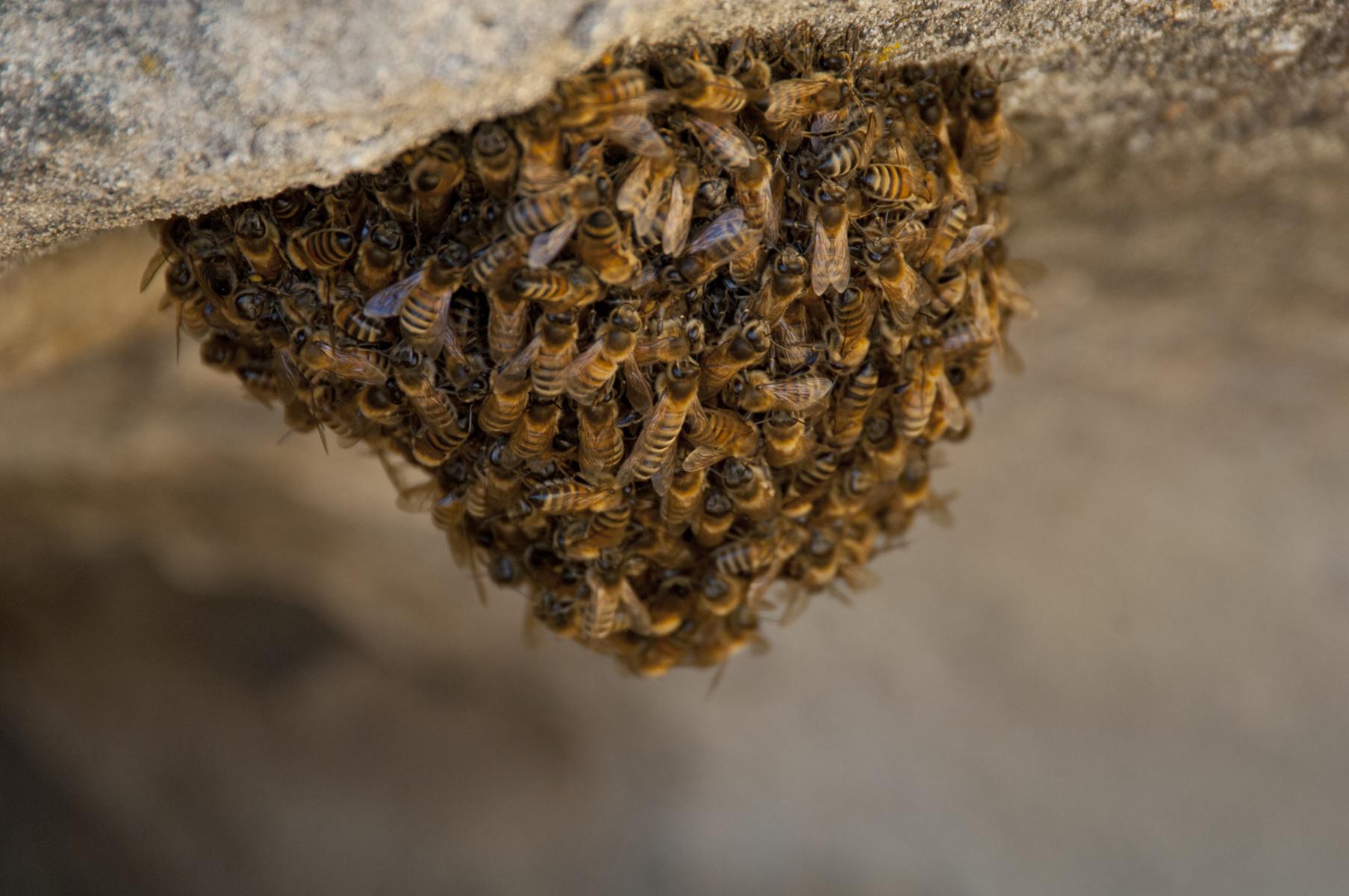
Bees didn’t target the ship. They needed a place to wait, and the ship had one.
A swarm is how honey bees reproduce as a colony. When a colony grows large, it splits, and about 60 percent of the bees leave to find a new home, according to the University of Florida’s consumer guide What to Do About African Honey Bees (UF/IFAS ENY-141). The departing bees don’t fly straight to a new address. They gather in a dense ball on whatever is handy while scout bees go house-hunting.
“Whatever is handy” covers a lot. UF/IFAS Extension in Volusia County lists “a tree branch, fence post, or other structures”, and says the clusters “can last for a few hours or up to a couple of days before the bees move on.” A shady spot under a big umbrella, on a ship tied up near the shore, fits that description well enough.
Here’s the slightly reassuring part. A swarm is usually the calmest a honey bee colony ever gets. Bees in swarms are “generally docile and not defensive because they have not yet established a colony to defend,” says the UF/IFAS guide. They have no honey, no brood and no home to protect yet.
Here’s the less reassuring part: this was Florida. African honey bees became established in Florida in 2001 and have since spread throughout the state, mixing with the European honey bees that beekeepers manage, according to UF/IFAS. The Florida Department of Agriculture and Consumer Services says it is “impossible to visually distinguish” Africanized honey bees from European ones; only genetic testing can tell them apart.
So nobody on that pool deck could have known which kind of bee was under the umbrella, and nothing we’ve read says which kind it was. That uncertainty is exactly why you call in a professional with protective gear rather than a deckhand with a broom.
European vs. Africanized Honey Bees: What the Experts Say
We put the two Florida agencies’ figures side by side. They don’t always agree on the numbers, and the table shows where they differ.
| Behaviour | European honey bee | Africanized honey bee |
|---|---|---|
| How often colonies swarm | 1 or 2 times a year (UF/IFAS; FDACS) | “10 or more times a year” (UF/IFAS); “as many as 16 times per year” (FDACS) |
| Guard bees sent out when disturbed | 10 to 20, for disturbances up to 20 feet away (UF/IFAS ENY-147) | Several hundred, for disturbances up to 120 feet away (UF/IFAS ENY-147) |
| How long they stay agitated | Usually calm within 1 to 2 hours | “May remain defensive for days” |
| Stings from a disturbed colony | 10 to 20 | 100 to 1,000 |
| Where they nest | Larger cavities, around 10 gallons | Smaller cavities of 1 to 5 gallons; FDACS says they “will quickly inhabit empty spaces, holes or cavities” |
| Venom | No difference in strength. UF/IFAS says Africanized venom “is no more potent” than the European bee’s; the difference is the defensive response. | |
Look at the top row. A colony that swarms ten or more times a year spends a lot of time house-hunting, and a port full of ships with shady spots on top gives it plenty of places to rest.
Bees, Beetles and Cruise Ships: A Short History
Utopia’s visitors joined a small but growing list of cruises interrupted by insects. Here is the record, with the outlet behind each entry.
| When | Where | What happened | Reported by |
|---|---|---|---|
| November 2023 | P&O Australia’s Pacific Encounter | Passengers reported swarms of plague soldier beetles indoors and out; P&O sent an apology letter | Yahoo News Australia; Cruise Hive |
| January 16, 2024 | Vanuatu | Vanuatu files an official report on the coconut rhinoceros beetle, including a curfew for ships leaving Efate | International Plant Protection Convention |
| October 30, 2024 | Carnival Valor, Cozumel | Bees settle on a lounge chair at the back of the lido deck; the ship still sails at about 4 p.m. | Cruise Hive |
| July 2025 | Celebration Key, Grand Bahama | Guests report bees around Carnival’s new destination within its first two weeks | Cruise Hive |
| July 11, 2026 | Carnival Adventure, Vanuatu | A late departure plus the beetle rule cancels the Mystery Island call | Cruise Hive; Cruise Passenger |
| October 12, 2026 | Utopia of the Seas, Port Canaveral | A swarm under a Deck 15 umbrella is vacuumed up during embarkation | Cruise Hive (from a Reddit video) |
Carnival Valor: “Not Harmed and Protected”
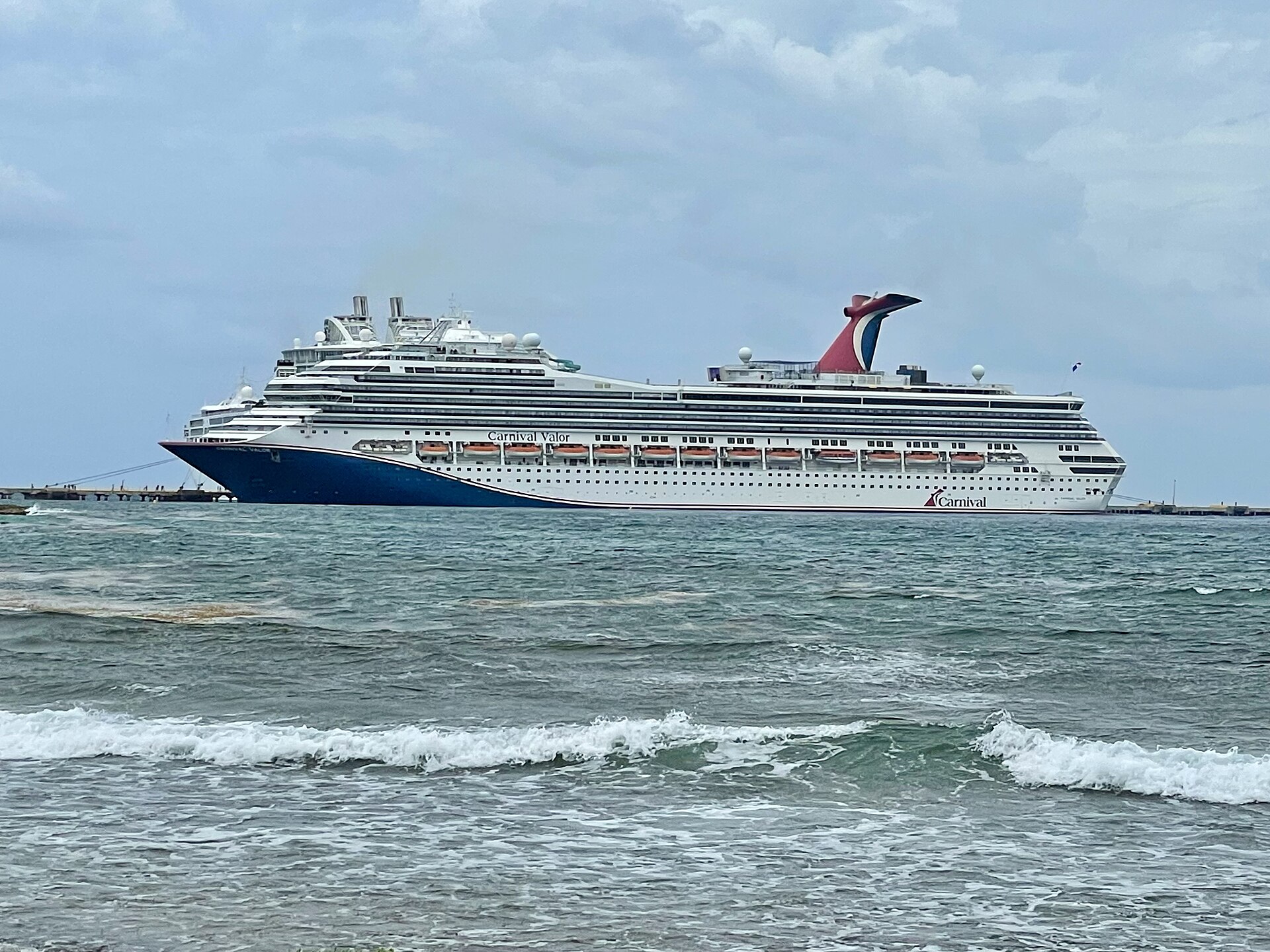
The closest match to Utopia came almost exactly two years earlier. On October 30, 2024, while Carnival Valor was docked in Cozumel on a five-night cruise from New Orleans, a swarm settled on a lounge chair toward the back of the lido deck, Cruise Hive reported. According to witness accounts, experts came aboard and found the queen bee, which Cruise Hive calls the key to removing an unwanted swarm.
Carnival’s brand ambassador, John Heald, addressed it publicly: “We had a nest of bees on the Lido deck of the Carnival Valor this cruise,” he said, thanking the crew “who made sure that these these bees were not harmed and protected while the nest was removed” (the doubled “these” is in the quote as Cruise Hive printed it). Cruise-tracking data showed the ship left Cozumel on time, at about 4 p.m.
Celebration Key: A Whole Island’s Worth of Bees
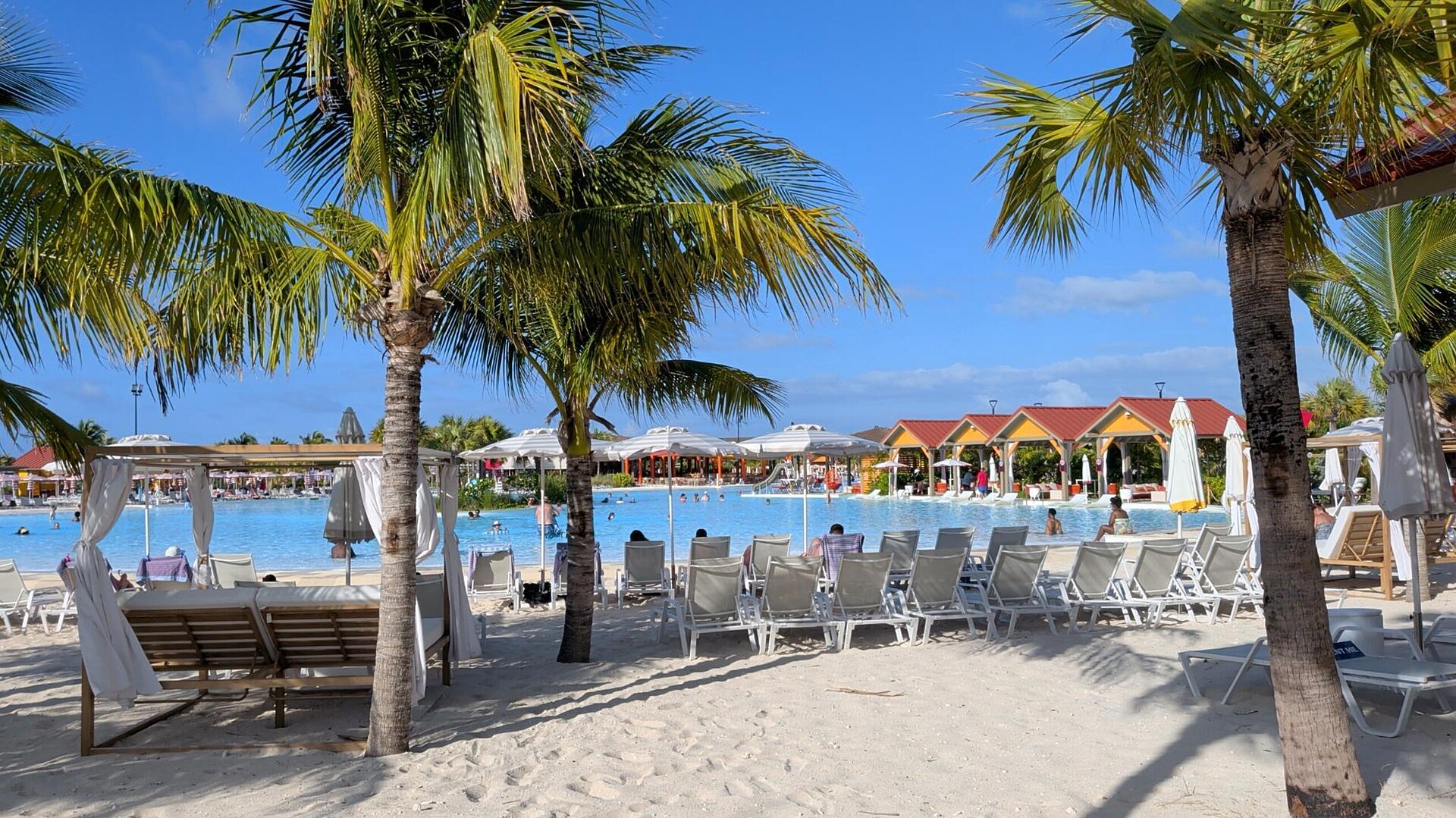
Ships can sail away from a swarm. A private island can’t. When Carnival’s Celebration Key on Grand Bahama had been open for less than two weeks in July 2025, guests started asking about bees near the public areas, Cruise Hive reported. Heald’s answer: “We are aware of bee colonies around the property and have implemented numerous mitigation measures.”
Carnival didn’t list those measures. What Heald did point to was medical help: a staffed first aid station near the shore excursion departures that carries epinephrine for severe allergies, and Pharmabox vending machines selling over-the-counter medicines.
The Island Where Insects Set the Ship’s Schedule
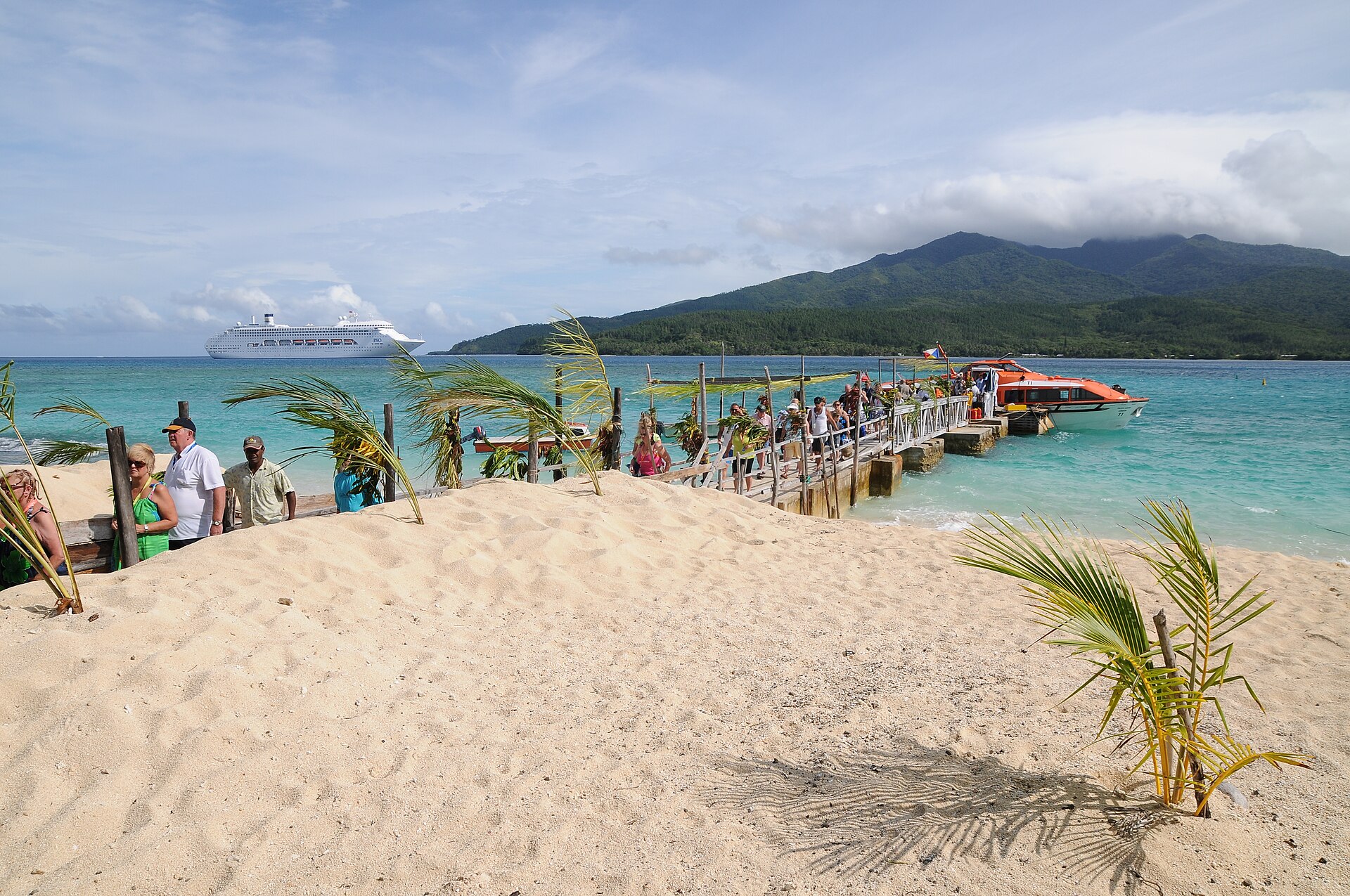
If you think bees on a sun lounger are disruptive, consider Vanuatu, where a beetle can cancel your beach day.
The coconut rhinoceros beetle, which eats young coconut fronds, was first found on the island of Efate in 2019. Vanuatu’s official pest report to the International Plant Protection Convention, dated January 16, 2024, says coconuts are central to the country’s economy and food security. It also sets out a rule aimed squarely at ships. Here is the clause:
“The Ministerial Order also states that ships should leave Efate wharfs by 4.00 pm.”
Ships that can’t leave in time must berth with “low or deem lights” and be inspected by biosecurity officers before they leave the next day. The reason is light. The beetle is thought to be attracted to cruise ships’ lights and then carried to other islands, Cruise Passenger explains. The official report says the same thing in its own way: the ships that stay late have to turn their lights down.
That’s what caught out Carnival Adventure on July 10, 2026. A fault with the ship’s pontoon door delayed her departure from Port Vila, on Efate, Cruise Hive reported. On another itinerary, the ship might have arrived late and made a shortened call. Here, the captain’s letter to guests said Vanuatu’s biosecurity rules meant “vessels are unable to travel to another island within Vanuatu after dark.” So the next day’s call at Mystery Island was cancelled and replaced with a sea day. Both Cruise Hive and Cruise Passenger report the guests’ compensation as $100 in onboard credit per stateroom; Cruise Hive specifies Australian dollars and says prepaid Mystery Island excursions were refunded.
Note the wording gap: the 2024 order says 4 p.m., while the 2026 letter says “after dark.” Cruise Passenger reports that Biosecurity Vanuatu adjusted vessel departure times in a statement in April 2026, which may explain the difference, but we couldn’t find that statement to check it.
What to Do If You Meet a Swarm on Deck
Bees joining your sailing is rare, but pool decks and private islands are outdoors in bee country. Here’s the expert advice, mostly from the UF/IFAS consumer guide and the CDC’s National Institute for Occupational Safety and Health (NIOSH).
- Don’t touch it, swat it, spray it or film it from close up. UF/IFAS is blunt: “Never disturb a swarm or colony of bees!” Don’t try to move it or spray anything on it.
- Back away and tell the crew. On land, UF/IFAS says to call a registered beekeeper or pest control operator. At sea, that’s the crew’s job, so find the nearest staff member and let them clear the area.
- One bee buzzing around you? Stay still. NIOSH: “Remain calm and still if a single stinging insect is flying around.” Swatting makes things worse.
- If bees start stinging, run, and go indoors. UF/IFAS says to run in a straight line to shelter, protecting your face as you go, rather than zig-zagging. On a ship, “shelter” means the nearest door inside.
- Do not jump in the pool. This is the one a pool deck tempts you into. NIOSH says: “Do not jump into water since some insects will hover above water.” UF/IFAS gives the same advice. The bees will simply wait for you to come up for air.
- Scrape, don’t squeeze. To get a stinger out, NIOSH says to “wipe gauze or scrape a fingernail over the area” and to “never squeeze the stinger or use tweezers.”
- Allergic? Pack your epinephrine and keep it with you. Both UF/IFAS and NIOSH say people with a history of severe reactions should carry an epinephrine auto-injector. Bring it in your carry-on, keep it in your day bag in port, and know where the ship’s medical centre is. Severe reactions are an emergency: get help immediately.
The Bottom Line
A swarm of bees on a pool deck sounds like the opening scene of a disaster film. In reality, it was a colony doing what honey bee colonies do, in some cases ten or more times a year: stopping to rest while scouts searched for a new home. They chose a quiet, shady umbrella on a ship that, for a few hours, was close to shore and not going anywhere.
Someone in a bee suit vacuumed them up, nobody was reported stung, and Utopia of the Seas sailed for Nassau on schedule. The bees, sadly, did not make it to CocoCay.
If you see a dark, humming lump under your umbrella on your next sea day, leave it alone, tell the crew, and whatever you do, don’t dive into the pool.
Cruise Chaos earns nothing from cruise lines and doesn’t run booking affiliate links. This story is based on Cruise Hive’s report of the Utopia of the Seas swarm, which drew on a passenger’s Reddit video, plus CruiseMapper’s schedule for the sailing. Royal Caribbean hasn’t commented, and no other outlet had reported the swarm when we published. The bee science and safety advice come from University of Florida IFAS Extension publications, the Florida Department of Agriculture and Consumer Services and the CDC’s NIOSH. The Vanuatu rule is quoted from the country’s official pest report to the International Plant Protection Convention. If we’ve got something wrong, tell us and we’ll correct it in the open.
Coming up on Cruise Chaos: more chaos from the high seas, with every fact checked.
🎁 Get our free Cruise Survival Kit. Join the Cruise Chaos crew and we’ll email you our printable packing checklist and money-saving cheat sheet right away, plus the week’s best cruise stories and verified deals every Friday. Send me the free kit →
Got a cruise story like this?
Something wild, strange or funny happened on your sailing? Tell us what happened. We read every story, fact-check it, and email you before anything is published.
Keep Reading
- They Came Back From a Cruise to a Car Full of Baby Spiders. Nobody Owes Them a Thing.
- The Whale on the Bow: Why Alaska Cruise Ships Keep Docking With Dead Fin Whales
- What Happens When a Cruise Ship Skips a Port? Here’s What You’re Actually Owed
Sources
- Cruise Hive: Bee Swarm Removed From Utopia of the Seas Pool Deck in Port Canaveral (October 13, 2026)
- Reddit r/royalcaribbean: The pool deck on Utopia has some uninvited guests (original video, as cited by Cruise Hive)
- CruiseMapper: Utopia of the Seas itinerary and schedule
- UF/IFAS Extension: What to Do About African Honey Bees: A Consumer Guide (ENY-141, revised October 2014; copy hosted by Texas A&M AgriLife Extension)
- UF/IFAS Extension: Differences Between European and African Honey Bees (ENY-147, revised April 2019)
- UF/IFAS Extension Volusia County: Honey Bees and Swarming: Understanding This Natural Phenomenon (February 26, 2025)
- Florida Department of Agriculture and Consumer Services: Africanized Honey Bees
- CDC NIOSH: Insects and Scorpions at Work (reviewed September 28, 2026)
- Cruise Hive: Carnival Guests Buzzing Over Swarming Bees During Cruise (October 31, 2024)
- Cruise Hive: Carnival Working to Address Stinging Problem at Celebration Key (July 30, 2025)
- Yahoo News Australia: Aussie couple’s anniversary cruise ruined by ‘revolting’ infestation (November 11, 2023)
- International Plant Protection Convention: Vanuatu pest report, Coconut Rhinoceros Beetle (January 16, 2024)
- Cruise Hive: Carnival Ship Cancelled Port Due to a Technical Issue and Local Regulations (July 15, 2026)
- Cruise Passenger: How the Coconut Rhinoceros Beetle made 3000 Carnival passengers miss their port (July 19, 2026)
You May Also Like
 It Rained Inside Anthem of the Seas: Why Cruise Ships Keep Springing Indoor Waterfalls
 They Came Back From a Cruise to a Car Full of Baby Spiders. Nobody Owes Them a Thing.
 Oasis of the Seas Is Switching Off Its Toilets Again. Here’s Why a Cruise Ship Has To
 Carnival Freedom’s Funnel Caught Fire Twice. Now It Has a Third Whale Tail, and It’s Shorter