
How we work: facts are checked against original sources and linked, cruise prices are verified on the cruise line’s own website the day we publish, and we earn no commissions. Spotted a mistake? Tell us and we will correct it.
At 10:56 on a Monday morning in September, somebody in Whittier, Alaska picked up a phone and reported a fire on the cruise dock.
The dock was two years old. It cost $80 million. It had a cruise ship tied to it.
Thirteen and a half hours later, firefighters finally put it out. By Wednesday the Alaska State Fire Marshal’s Office had a verdict on the newest, shiniest piece of cruise infrastructure in Prince William Sound: total loss.
And the single detail that has Alaska arguing about it a week later isn’t the flames, or the ship, or the money. It’s this: when the crews arrived at an $80 million marine terminal, the hydrants on it didn’t work.
What Happened in Whittier
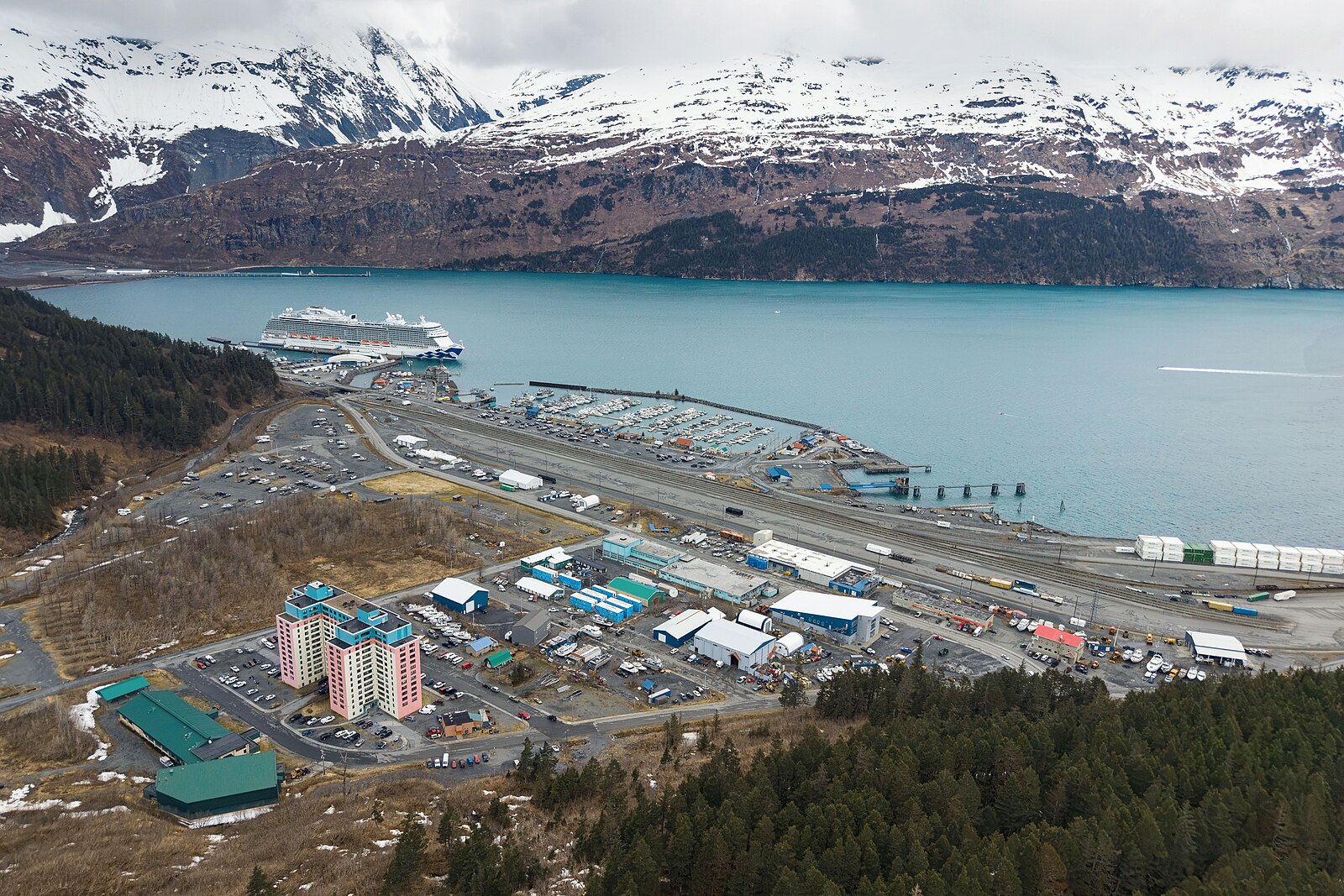
Whittier is a strange and wonderful place. It sits at the head of Passage Canal, about 90 minutes by road from Anchorage, and a few hundred people live there, most of them in the same apartment building. The only road in runs through the Anton Anderson Memorial Tunnel: one lane, shared with trains, on a timetable, and the longest combined vehicle-railroad tunnel in North America.
That is the town that had to fight this fire.
The blaze broke out at the Glacier Gateway Terminal, the double-berth facility built about a mile and a half from Whittier’s older cruise dock by a partnership of Huna Totem Corporation and Norwegian Cruise Line Holdings. It opened in September 2024, and the Anchorage Daily News reports that its 500-foot dock sits within a 20-acre site that also holds a brand-new terminal building.
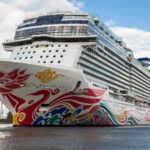
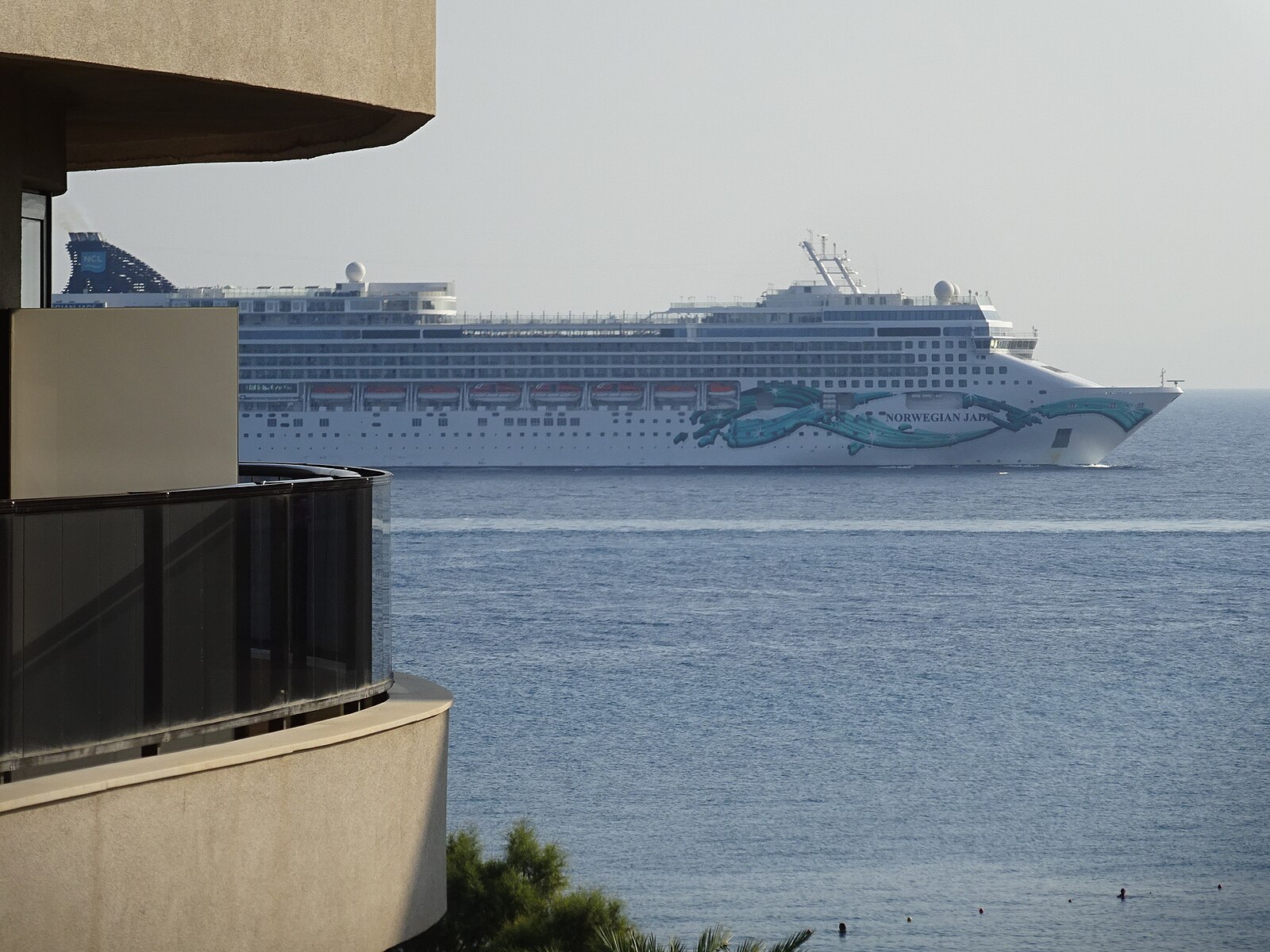
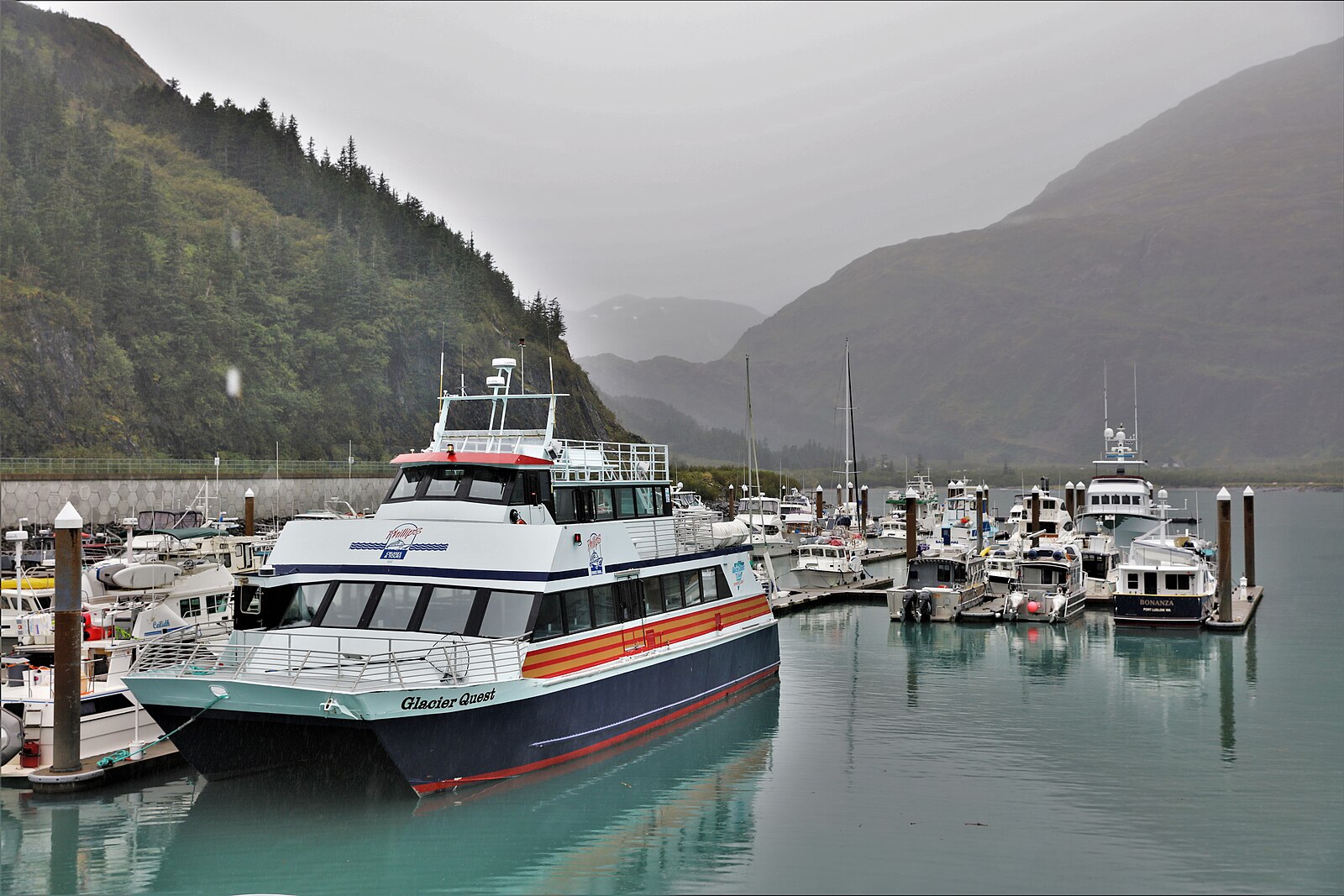
Alongside it that morning was Norwegian Jade. Below her, the high-speed tour catamaran Klondike Express was moored with nobody aboard.
The Coast Guard got the call at about 11 a.m. Sector Western Alaska watchstanders sent a response boat from Station Valdez, and crews from Whittier, Girdwood, Anchorage, Moose Pass, Bear Creek and Cooper Landing converged on the town. The one-lane tunnel was closed for about three hours so responders could get through without waiting for their slot.
Norwegian Jade let go and moved clear, undamaged. Her embarkation was shifted to Whittier’s older Cruise Terminal 1, a mile and a half away, and her passengers got on with their holiday.
The Klondike Express had a worse morning. She took melting damage to her port side amidships plus flame and smoke damage to the upper deck exterior before being released from the pier and towed clear to stop the fire spreading. Her 2,000 gallons of diesel were all accounted for, NOAA’s incident record notes, with no sheen reported on the day.
Nobody was hurt. Not a firefighter, not a crew member, not a passenger. That is the headline that matters, and it’s why the rest of this story is allowed to be funny.
What Actually Burned (It Wasn’t the Expensive Bit)
Here’s the part the wire copy skipped. A modern cruise berth is two structures pretending to be one.
Underneath, this one stands on steel — and we know exactly how much, because building it needed a federal permit to make underwater noise near marine mammals. The Federal Register notice for the Whittier Head of the Bay cruise ship dock project lists it in unglamorous detail: 72 permanent steel piles, up to 48 inches across, driven and where necessary drilled into bedrock over roughly 129 days of pile work.
On top of all that steel sat a timber deck. The Anchorage Daily News describes the dock as having “a wooden top with metal supports,” and Alaska’s News Source reports that roughly 70% of the timber decking was destroyed.
So what burned for half a day was the wooden lid on a steel table — and that is also why it burned for half a day. The Los Angeles Fire Department’s history of its underwater firefighters puts the century-old problem bluntly: a wharf’s open construction “invites rapid spread of fire beneath the decking where it can travel out of reach of hose streams from above.”
“Total loss” is a damage assessment of the dock, not a demolition order for the whole $80 million site, and Huna Totem says it is still assessing. But you cannot walk several thousand passengers across a deck that is 70% gone, and the clock to May is already running.
The Water Problem: Four Ways to Fight a Dock Fire, Three of Them Unavailable
A dock fire should be the easiest fire in the world to put out. The structure is standing in an infinite supply of water. Here is how that went.
| Normal water supply | What happened in Whittier |
|---|---|
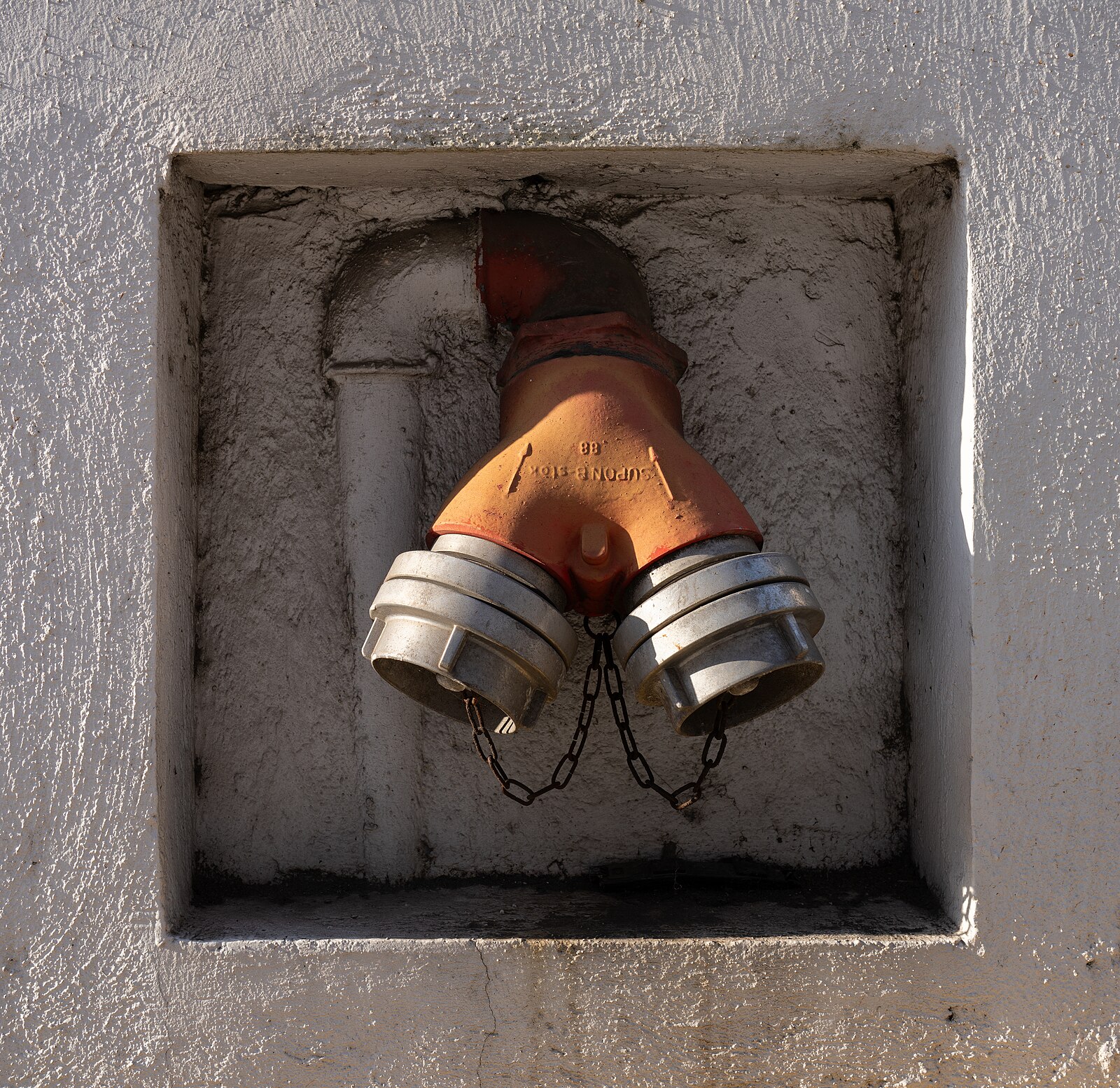
| Hydrants on the dock itself | Not working. Crews had to connect to a hydrant farther away in town. |
| A fireboat pumping from alongside | No fireboat appears in any account of the response. The Coast Guard sent a response boat and crew from Station Valdez. |
| Drafting seawater straight off the dock edge | Blocked. The dock is a secure facility ringed by heavy fencing with “no access points to the ocean water for fire apparatus,” per Anchorage Fire Department. |
| Shuttling water in by tender | What they did. One engine on a distant hydrant, three tenders running 10-minute loops, more than 112,000 gallons moved. |
Anchorage Fire Department spokesperson Megan Peters told Alaska Public Media how the shuttle worked: “If there’s not that hydrant there, you have to figure out a way to get water there. In this case, we established an engine at a hydrant that was located a good distance away from where the incident was happening, and we utilized three tenders working in tandem.”
Answering a week of social-media second-guessing, Peters added the detail nobody had considered: “One of the things that I think a lot of people don’t realize is the dock is a secure facility, and it’s surrounded by heavy fencing, providing no access points to the ocean water for fire apparatus.” She also noted that while you can run salt water through a fire pump, it isn’t kind to the equipment.
Read that again. A fire truck parked at the edge of the Pacific Ocean could not reach the Pacific Ocean, because of a fence.
Nobody has publicly explained what was wrong with the dock’s own hydrants. Whittier city officials referred the ADN’s questions about them to the state fire marshal — whose spokesperson, Department of Public Safety’s Austin McDaniel, said flatly: “There’s been lots of conversations about the fire hydrant. However, that’s not something that we are looking at or investigating.”
The Gap Nobody Noticed Until It Was On Fire
McDaniel said something else, almost in passing, that is the most important sentence in the story.
Generally, he told the ADN, the fire marshal’s office conducts building plan reviews for facilities under construction — but not for docks.
So the terminal building gets its plans checked against the fire code before anyone cuts a ribbon. The 500-foot timber-decked pier that the building exists to serve does not automatically get the same treatment. Only now, as part of this investigation, will the office go back and review the plans submitted when the terminal was built. “We are certainly taking a look at the entire file just to help illuminate any questions and answers that have come up as a result of the fire,” McDaniel said — an investigation “triggered when major infrastructure is significantly damaged or destroyed in a fire. This dock certainly meets that criteria.”
Which is a slightly alarming way to run a fire-safety system: the plans get read after the thing burns down.
Where the Fire Started Is Still Anyone’s Guess
Be careful with what you’ve read elsewhere. The origin and cause remain undetermined, McDaniel confirmed on Wednesday, and the investigation is ongoing.
That hasn’t stopped the coverage from quietly picking a culprit. Cruise Hive reports the fire started at the Klondike Express‘s mooring. Cruise Fever goes further and says it broke out on the catamaran. Phillips Cruises & Tours says the opposite — that it originated on the dock, not on their boat. Until the fire marshal reports, all three are guesses.
Two other numbers drift about, so: the water figure is Anchorage Fire Department’s own more than 112,000 gallons, not the 161,000 one cruise site estimates. And while most reports round the fire to “more than 12 hours,” the 10:56 a.m. call to the roughly 12:30 a.m. all-clear is nearer 13 and a half. On pollution the accounts don’t match either: NOAA’s day-one record says no sheen was reported, while Alaska’s News Source says damaged inflated fenders produced a small sheen that has since cleared. The Coast Guard is running both a pollution assessment and a marine casualty investigation.
Alaska’s Very Bad Year for Brand-New Cruise Docks
Here’s the bit that makes this properly absurd. Back in May, Southcentral Alaska’s other new cruise dock had its own problem: Seward’s replacement pier, part of a $140 million project featuring the largest floating pier in the state, missed its May 14 opening date because contractors still had underwater piles to remove. Ships were rerouted.
Rerouted where? Whittier.
So in a single Alaska season, the new dock at Seward wasn’t ready and pushed ships up the coast to Whittier — and four months later the new dock at Whittier burned and pushed ships back onto the old one. Between them those projects are about $220 million of shiny new cruise infrastructure, and in 2026 both fell over.
Passengers paid for the first one in cash. Brian Stewart told Alaska Public Media the May switch came “pretty late in the day,” and his group of twelve spent roughly $500 rearranging transport to the right port.
What This Means If You’re Sailing From Whittier
The timing was almost comically kind: the fire came with about two weeks left in the 2026 Alaska season. Cruise Hive lists Seven Seas Explorer on October 5 as the year’s last scheduled call at Whittier, with no other ship due that day — she will almost certainly use Cruise Terminal 1, the older city dock a mile and a half away that Princess Cruises and Holland America Line already use.
The real question is 2027, when Cruise Hive’s port schedule shows calls resuming in early May. Huna Totem’s position, given to Seatrade Cruise News, is careful: “We are still assessing the full extent of the damage to the dock, and we do not yet have enough information to make determinations about repairs and future operations. However, our goal is to be operational for the 2027 season.”
If you’re booked out of Whittier next year, that’s no reason to panic. It is a reason to do four things:
- Don’t buy non-refundable transfers early. Whittier has two cruise terminals a mile and a half apart. Which one you use may change, and the line will tell you late.
- Take the ship’s own transfer if you arrive on cruise day. It costs more than the train or a shuttle, but if the pier moves, the coach moves with it and the line owns the problem.
- Respect the tunnel. The only road in is one lane, shared with trains, running on a timetable — and it closes when emergency services need it, as it did on the day of the fire. Independent transport into Whittier has no slack in it.
- Watch for a swap to Seward, and read your policy now. Seward is about 90 road miles away, so a change of embarkation port means new flights, hotels and transfers — exactly the cost the May reroute landed on passengers. A terminal change isn’t a cancelled cruise, so look for trip interruption, missed connection and “additional transport costs” wording rather than trip cancellation. Our guide to what you’re actually owed when a cruise changes its plans walks through the same fine print.
One more casualty worth noting: the commissioning of the US Navy destroyer USS Ted Stevens, set for October 3 in Whittier, has been moved to the Princess Cruises terminal, according to the ADN. Even the Navy had to find another pier.
The Bottom Line
An $80 million cruise dock, two years old, burned for the better part of fourteen hours while crews drove water to it in trucks, ten minutes at a time, because its hydrants didn’t work and a security fence stood between their pumps and an entire ocean.
Nobody was injured. A cruise ship sailed. A tour boat will be repaired. The steel is presumably still standing. And a state fire marshal is now reading the building file of a pier his office does not normally review, to work out whether a structure that no longer exists was built to code.
Cruising’s weak points are rarely the ones you worry about on board. They’re the concrete, steel and paperwork the ship ties up to.
Coming up on Cruise Chaos: more chaos from the high seas — whatever the ocean, the weather and several thousand people in swimwear manage to produce next.
🎁 Get our free Cruise Survival Kit. Join the Cruise Chaos crew and we’ll email you our printable packing checklist and money-saving cheat sheet right away, plus the week’s best cruise stories and verified deals every Friday. Send me the free kit →
Keep Reading
- The Whale on the Bow: Why Alaska Cruise Ships Keep Docking With Dead Fin Whales
- Snap, Drift, Crunch: Why Cruise Ships Keep Breaking Free From the Dock
- What Happens When a Cruise Ship Skips a Port? Here’s What You’re Actually Owed
Sources
- Anchorage Daily News: Alaska fire marshal’s office declares Whittier cruise ship dock a ‘total loss’
- Alaska Public Media: Whittier’s new $80M dock considered total loss after fire
- Alaska Public Media: Thousands of gallons of water used to extinguish Whittier dock fire
- Alaska Public Media: Officials battle fire at Whittier’s new cruise ship terminal
- Alaska Public Media: Snag with Seward cruise dock reroutes ships to Whittier
- Alaska’s News Source: Investigation into Whittier dock fire begins
- Alaska’s News Source: New cruise ship terminal dock in Whittier catches fire
- Seatrade Cruise News: Fire seriously damages new Whittier cruise dock
- NOAA IncidentNews: Whittier Pier and Vessel Fire, Whittier, Alaska
- Federal Register: Taking Marine Mammals Incidental to the Whittier Head of the Bay Cruise Ship Dock Project
- The Maritime Executive: Fire on Cruise Dock in Whittier Damages Harbor Tour Catamaran
- Cruise Hive: Whittier Cruise Ship Dock Declared Total Loss Following Fire
- Cruise Fever: Alaska’s Brand-New $80M Cruise Terminal Declared Total Loss After Fire
- Alaska DOT&PF: Whittier Tunnel
- Alaska.org: Whittier destination guide
- Los Angeles Firemen’s Relief Association: LAFD History – Pioneering Underwater Firefighters
- US Navy: The Future USS Ted Stevens to be Commissioned in October