
How we work: facts are checked against original sources and linked, cruise prices are verified on the cruise line’s own website the day we publish, and we earn no commissions. Spotted a mistake? Tell us and we will correct it.
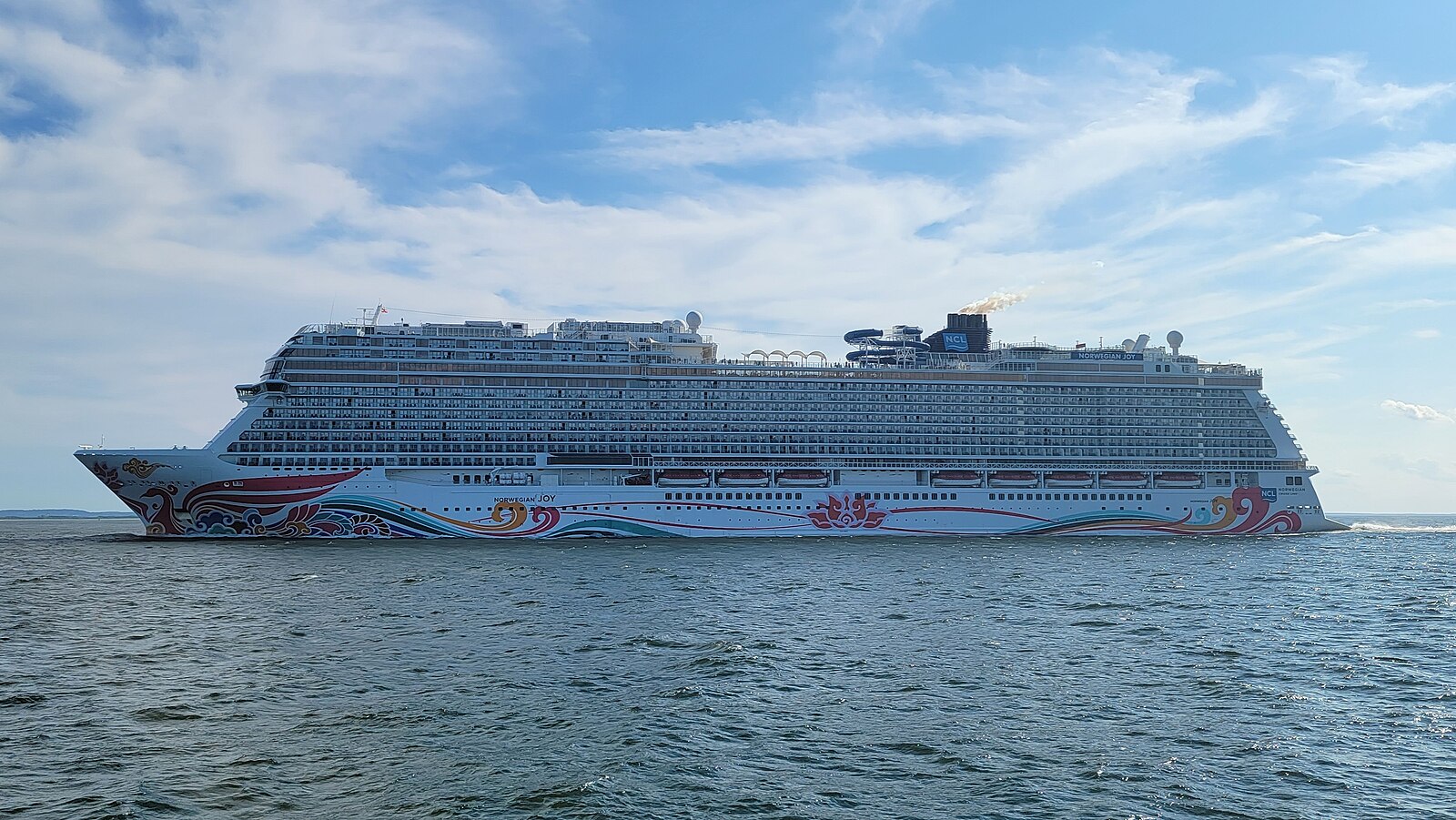
The Norwegian Joy was running late into Sitka, and nobody on board knew why.
Eight in the morning came and went. Then nine. Somewhere below the balconies and the go-kart track and 3,800 people waiting to go ashore in Alaska, a tugboat named Banner was working alongside the bow, trying to get something off it.
That something was a fin whale. Dead, belly-up, and draped across the bulbous bow of a 167,725-ton cruise ship that had carried it into Sitka Sound without anyone aboard feeling a thing.
Here’s the part that should stop you: this was the second time in one Alaska season that a cruise ship has docked with an endangered fin whale on its nose. It is at least the fourth time since 2016. And in the waters where it keeps happening, there is no speed limit at all.
What Happened Off Sitka
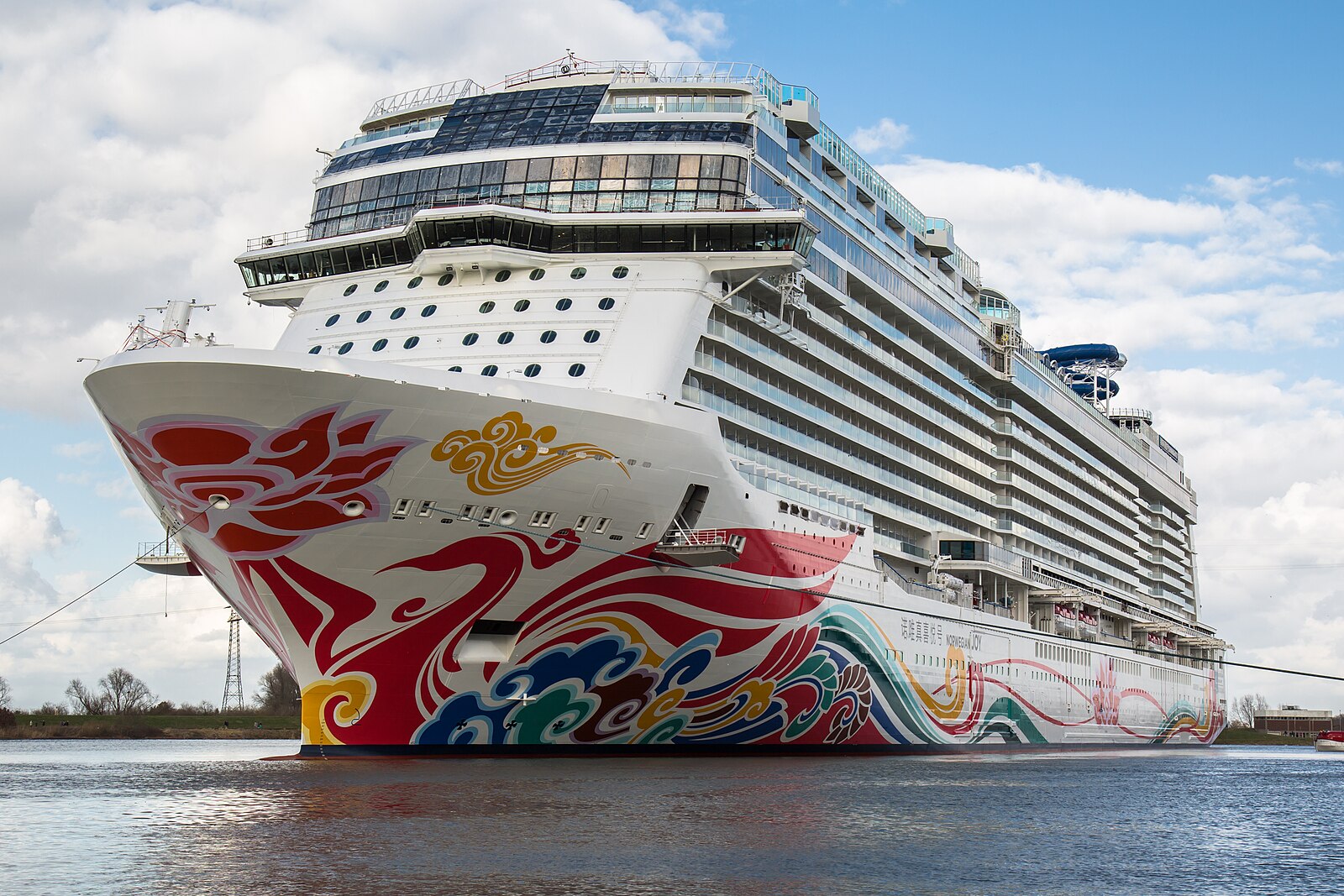
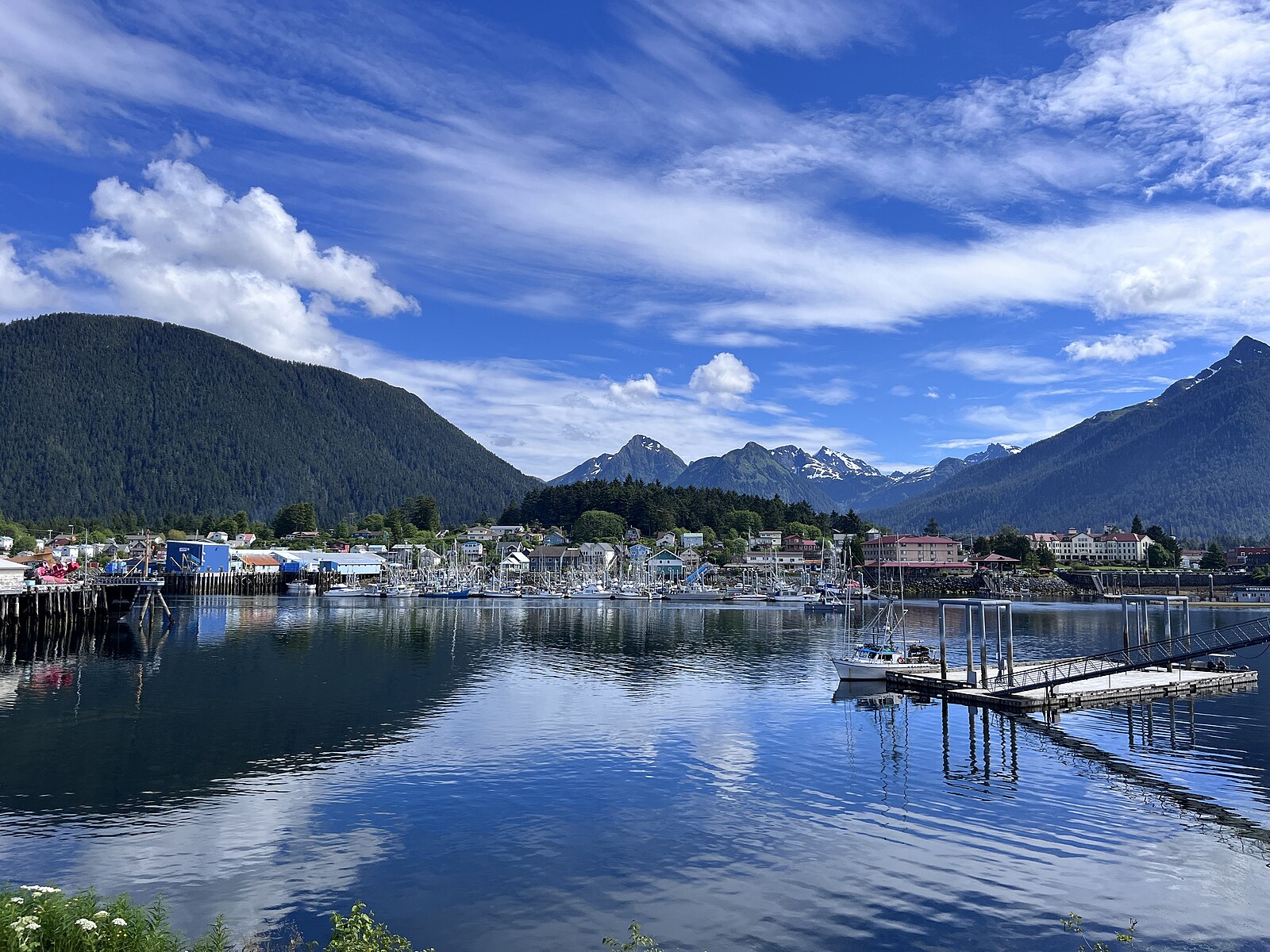
Norwegian Joy left Seattle on Friday, September 11, 2026, on a ten-night round trip: Ketchikan, Glacier Bay, Juneau, Icy Strait Point, then Sitka on Thursday, September 17. Alongside at 8 a.m., away at 3:30 p.m.
The morning ran on a different schedule. Chris McGraw, who manages the Sitka Sound Cruise Terminal, told the Daily Sitka Sentinel that the cruise line’s agency notified him of a whale strike at 7:45 a.m., and that he had to push the port call back by two and a half hours.
At 8:20 a.m., NOAA law enforcement called Lauren Wild, the Sitka area stranding coordinator for the NOAA Alaska Marine Mammal Stranding Network and an assistant professor of applied fisheries at the University of Alaska Southeast.
“I got a call that there was a dead fin whale on the bulbous bow of a cruise ship that was coming into port and that they were going to remove it with a tug from a tug company before it went into port,” Wild told the Sentinel.
Wild took her own vessel out with a Sitka High science teacher and a graduate student. The cruise company hired the tug Banner, which pulled the whale off the bow near Middle Island and towed it toward a beach for a necropsy. Then the whale sank, thirty or forty feet short — “it’s not neutrally buoyant yet” — and her team tied the line off to trees on shore.
Wild couldn’t measure the animal, but put it at 35 or 40 feet at least. “We can tell it’s male; we don’t know how long it is but it doesn’t look to be a full-size adult,” she said. “It looks like it might be a sub-adult male or a juvenile male.”
Norwegian Joy came alongside around 10 a.m. The line added an extra hour in port, and the ship sailed roughly 90 minutes late. Its statement, attributed by the Anchorage Daily News to Joy’s captain, Dan Svensson: “We are deeply saddened by this situation and have been working closely with the appropriate authorities and relevant wildlife experts.”
One thing nobody knows yet, and we’re not going to pretend otherwise. Asked whether the ship killed the whale or picked up one that was already dead, NOAA Fisheries Alaska spokesperson Jennifer Angelo told the ADN: “We don’t have any of that information yet.” The necropsy isn’t done and NOAA’s Office of Law Enforcement is still investigating, which is why biologists won’t say where the carcass is.
One detail is worth sitting with: fin whales are not Sitka Sound regulars. “They are very common out in the Gulf of Alaska, in deeper water offshore, but we do not typically see them inside the sound,” Wild said.
This Keeps Happening, and the Gaps Are Getting Shorter
| Date | Ship | Port | Whale | Outcome |
|---|---|---|---|---|
| May 29, 2016 | Zaandam (Holland America) | Seward | Fin whale | Not on the bow at 4:36 a.m.; found at 5:06 a.m. |
| Aug 9, 2017 | Grand Princess (Princess) | Ketchikan | Humpback, about 20 ft | Towed 8 miles for necropsy; “the ship felt no impact” |
| Jun 19, 2026 | Ovation of the Seas (Royal Caribbean) | Seward | Pregnant fin whale, 61 ft | Blunt force trauma to jaw, spine and ribs, consistent with a vessel strike |
| Sep 17, 2026 | Norwegian Joy (Norwegian) | Sitka | Fin whale, est. 35–40 ft, male | Under investigation; cause of death not established |
The June case removes the comfort of doubt. Ovation of the Seas arrived in Seward with a 61-foot pregnant fin whale on the bow, freshly dead and in good nutritional condition. NOAA Fisheries, the Alaska SeaLife Center and Alaska Veterinary Pathology Services ran the necropsy, and Alaska Public Media reported the preliminary finding: blunt force trauma to the jaw, spine and ribs, consistent with a vessel strike. Official cause of death is still pending.
The 2016 Zaandam case carries the detail that explains everything else here. An officer rigging the boarding platform at 4:36 a.m. saw nothing on the bow. At 5:06 a.m., the ADN reported, the whale was there. Half an hour on final approach, and a 61,000-ton ship picked up a fin whale without anyone noticing.
Why a Cruise Ship Can Hit a Whale and Not Feel It
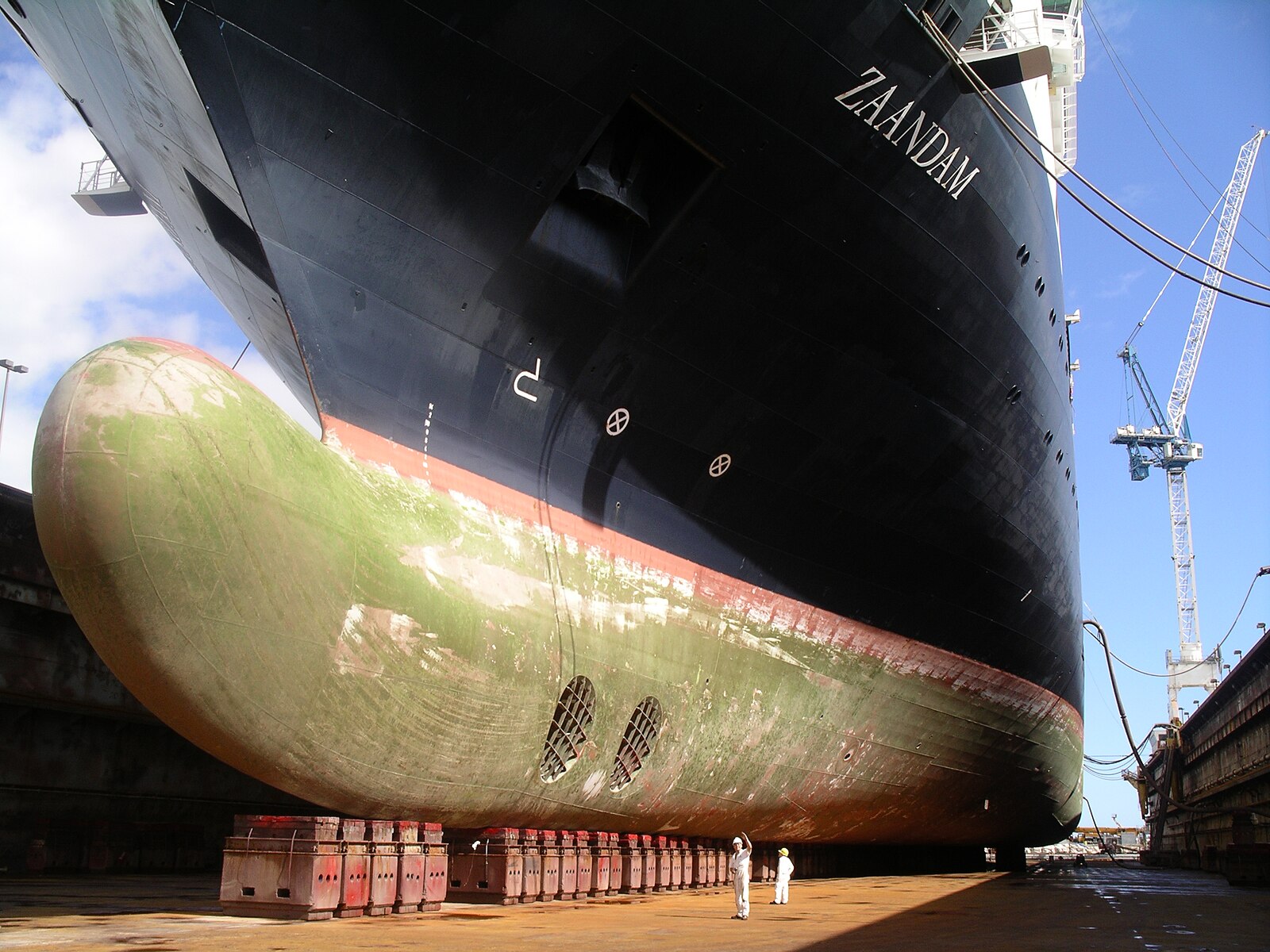
Look at that photo. The rounded snout under the black hull is a bulbous bow, fitted to almost every large modern ship. It sits ahead of the hull and just below the waterline, throwing its own wave to cancel out the bow wave and cut fuel burn. Brilliant naval architecture — and, geometrically, a giant blunt scoop moving at 20-plus knots through exactly the depth of water where a large whale rests, breathes and sleeps.
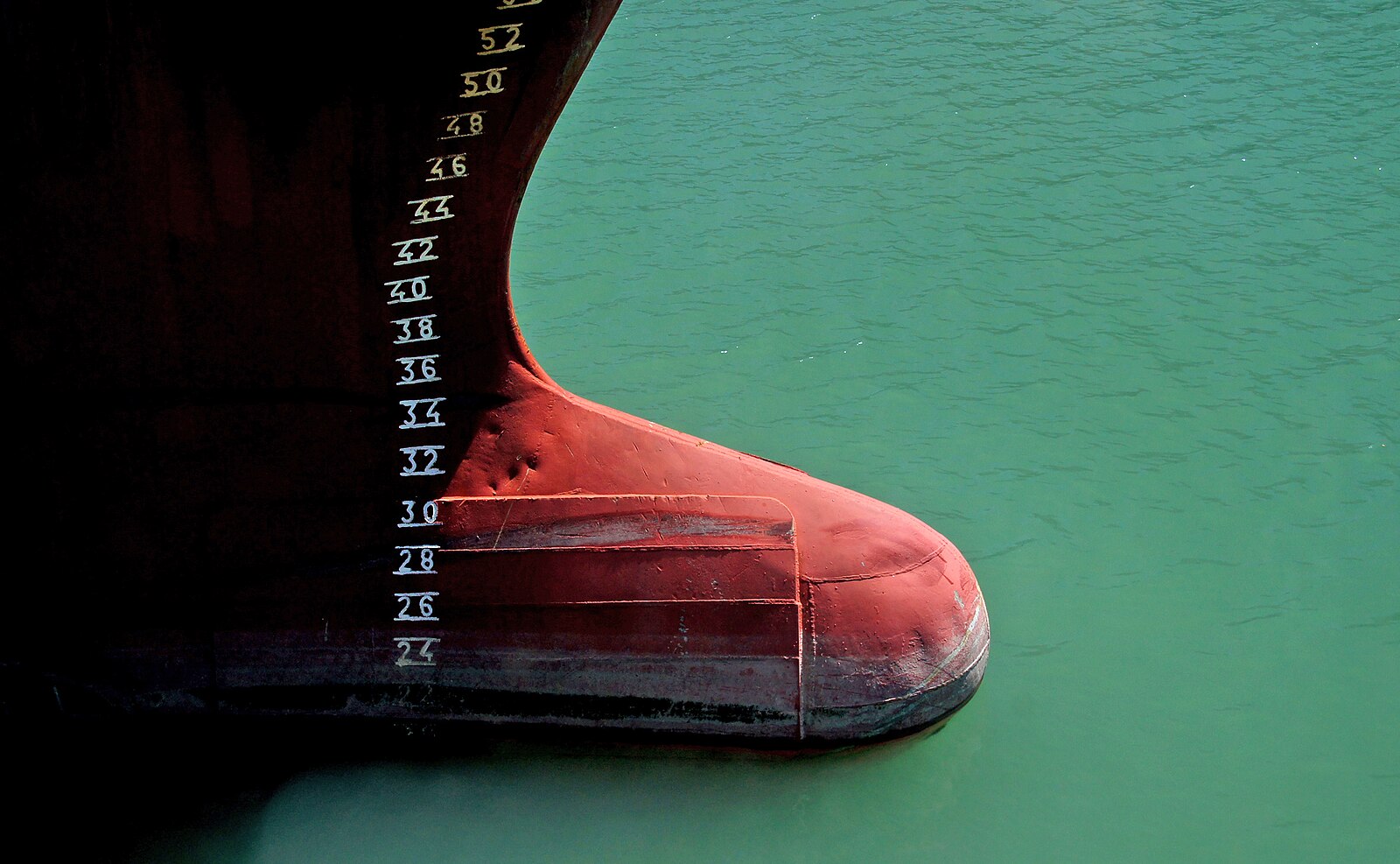
NOAA is blunt about what follows. On its vessel strikes page, the agency writes that “some species of large whales become wedged across the bulbous bows of large vessels following a strike,” and that on a ship this size “it is unlikely that their operators will detect a whale strike when it occurs. There can be no noticeable change in speed or other signal.”
That’s the whole mechanism. An 80-ton animal against a 167,725-ton ship is a fly on a windscreen, except the windscreen is under water, so nobody even hears it. Once the whale is across the bulb, the pressure of the ship’s own forward motion pins it there — until the ship slows to manoeuvre into port. That’s the moment the pressure drops, the whale surfaces into view, and a passenger with a balcony and a phone starts filming. Princess said it plainly in 2017: “the ship felt no impact.”
The Rule That Exists on One Coast and Not the Other
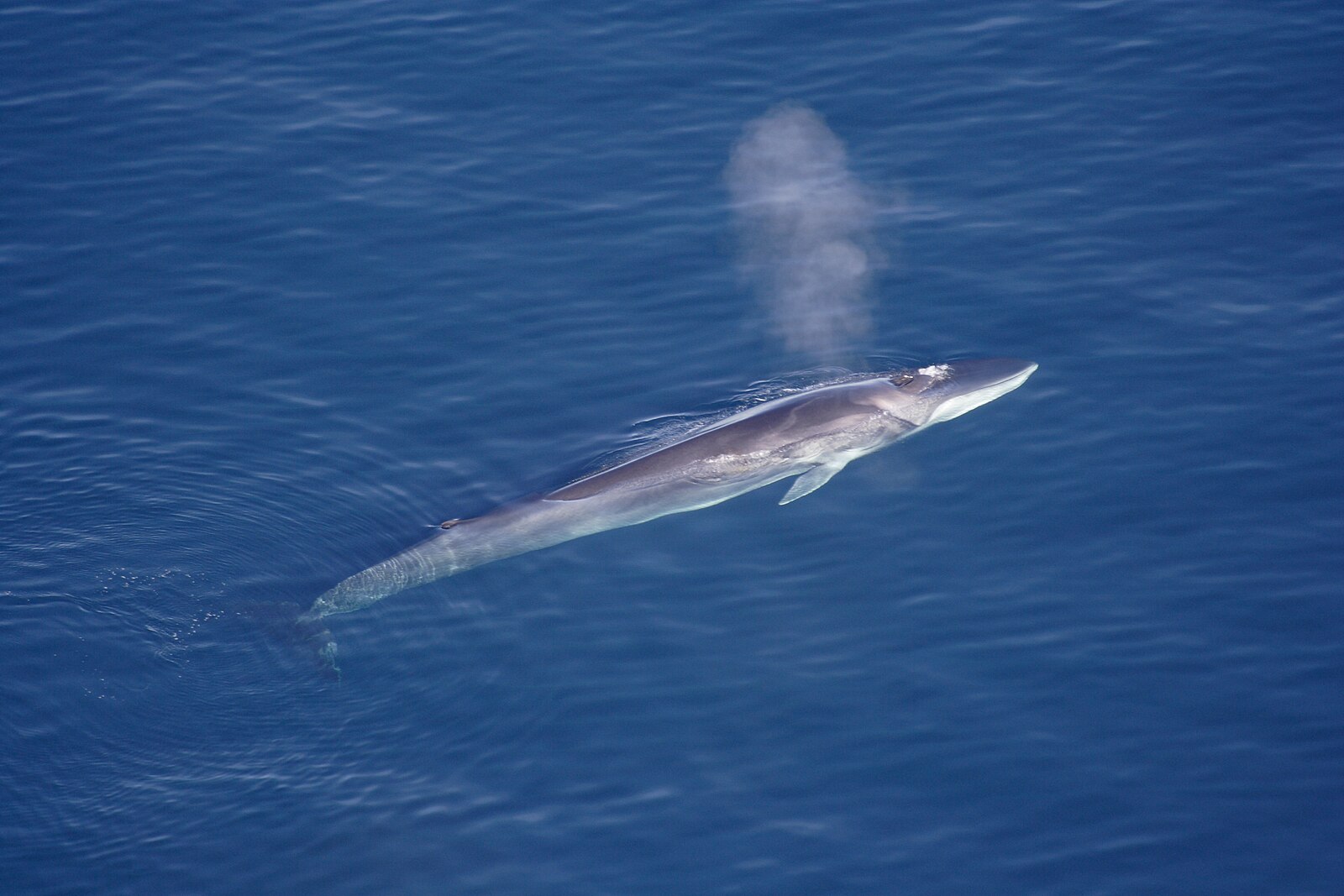
Here’s the part the incident reports skip. NOAA’s own fin whale page says fin whales “are probably the most vulnerable species to ship strikes after North Atlantic Right Whales.” They grow to 85 feet, weigh 40 to 80 tons, live 80 to 90 years, and are endangered.
The one species ranked above them gets a mandatory speed limit. Fin whales don’t. Here’s what a cruise ship is actually required to do, depending on where it is:
| Where | What the law requires | Source |
|---|---|---|
| US East Coast Seasonal Management Areas | Most vessels 65 ft or longer: 10 knots or less, mandatory, seasonal, enforced by NOAA and the Coast Guard | NOAA Fisheries |
| Glacier Bay National Park “whale waters” | 13 knots through the water; no approach within ¼ nautical mile of a humpback; if you end up closer, slow to 10 knots and alter course | National Park Service |
| Alaska generally, near a humpback | Stay 100 yards off and operate “at a slow, safe speed” — defined by the collision regulations, not by a number | 50 CFR 223.214 |
| Sitka Sound or the Gulf of Alaska, near a fin whale | No speed limit. No mandatory slow zone. Voluntary measures only | — |
Norwegian Joy’s service speed is 22.5 knots. Glacier Bay, where she was on September 14, is the only leg of that itinerary with a hard number attached. Sitka Sound, where the whale came aboard, has none.
Rick Steiner, a marine conservation biologist in Anchorage and a former University of Alaska marine professor, set out the history in an ADN opinion piece in July. By his account he formally proposed Alaska whale-strike protections in 2009, 2013, 2018, 2021 and 2022, and every administration declined. He wants 10 knots by day, 8 in poor visibility, and points to California, where a voluntary slowdown reportedly halved ship-whale strikes. Steiner is an advocate rather than a neutral referee and we’re flagging that — but he also makes the point that reframes the table above: the strikes we know about are only the ones that arrived in port stuck to something. He puts unobserved offshore deaths at somewhere between 7 and 25 times the visible ones.
The Detail Nobody Else Mentioned
There’s a genuinely good programme running in these same waters. Whale Alert Alaska, run jointly by NOAA Fisheries Alaska Region and Glacier Bay National Park, lets bridge teams report sightings in real time so the next ship through knows to post an extra lookout, slow down or steer around the group. More than 60 users take part, including 24 cruise ships.
NOAA publishes a leaderboard of the ships reporting the most whales. The top reporter, with 280 sightings, was Norwegian Encore — Norwegian Joy’s near-identical Breakaway Plus sister. Queen Elizabeth logged 192. Nieuw Amsterdam, 76.
That isn’t hypocrisy, and we’re not calling it that. It’s proof that cruise bridge teams are watching hard and sharing what they see — and that it still isn’t enough, because you cannot spot what is directly under your bulb at 22 knots. Good lookouts are not a substitute for a slower ship.
What This Means If You’re Booked on an Alaska Cruise
- A late arrival is your problem too. Joy lost two and a half hours in Sitka, and an independent tour operator owes you nothing when the ship is the late one. Ship-sponsored excursions get rebooked or refunded, and the ship waits for them. On a port day with a tight morning start, that gap is the whole argument for booking through the line.
- Know what a shortened call is worth. A trimmed port call is not a missed port, and it usually triggers nothing beyond goodwill. Norwegian’s extra hour here was a decent response, not a legal obligation. Our guide to what you’re owed when a cruise ship skips a port has the contract wording.
- You can report a whale in distress yourself. The NOAA Alaska Marine Mammal Stranding Network runs a 24-hour hotline on (877) 925-7773, covering injured, entangled or dead whales, seals and sea lions. Reporting a suspected strike is how cases like this one get a necropsy at all.
- Give a beached carcass a very wide berth. Wild asked the public to stay away so the necropsy and the investigation could proceed, and taking any part of an endangered whale is a federal offence.
- On your own boat, the rules bite. In Alaska you must not approach within 100 yards of a humpback, put your vessel in its path, or pass at anything but a slow, safe speed. In Glacier Bay the distance is a quarter of a nautical mile. Violations go to NOAA Enforcement on (800) 853-1964.
The Bottom Line
Nobody on that bridge wanted this. Norwegian reported the strike itself, before the ship was even alongside, which is how the terminal manager knew at 7:45 a.m. and NOAA knew by 8:20. That part is the system working.
The system is just pointed at the wrong end of the problem. We have a sightings network, trained lookouts, a 13-knot cap inside one national park and a 100-yard rule covering one species. What we don’t have, anywhere fin whales actually live, is a number a 167,725-ton ship has to slow down to.
Until that changes, the honest summary of this story is the one Lauren Wild’s team is living right now: a dead juvenile male, sunk forty feet short of a beach, tied off to a tree, waiting to float so somebody can find out what killed him. Two in one season, four that we know of since 2016 — and the only reason we know about any of them is that they arrived in port still attached.
Coming up on Cruise Chaos: more chaos from the high seas — the strangest true cruise stories we can stand up with sources, fact-checked and linked, as always.
🎁 Get our free Cruise Survival Kit. Join the Cruise Chaos crew and we’ll email you our printable packing checklist and money-saving cheat sheet right away, plus the week’s best cruise stories and verified deals every Friday. Send me the free kit →
Keep Reading
- Snap, Drift, Crunch: Why Cruise Ships Keep Breaking Free From the Dock
- Ship Collides With Brooklyn Bridge: What Went Wrong on Mexico’s Cuauhtémoc
- What Happens When a Cruise Ship Skips a Port? Here’s What You’re Actually Owed
Sources
- Daily Sitka Sentinel: Fin Whale Struck by Cruise Ship in Sitka Sound
- Anchorage Daily News: Dead fin whale found on cruise ship’s bow in Sitka
- Cruise Hive: Norwegian Joy Docks Late in Sitka With Dead Whale on Its Bow
- Alaska Public Media: Preliminary necropsy shows dead fin whale in Seward had injuries consistent with vessel strike
- Anchorage Daily News (2016): Cruise ship arrives in Seward with dead endangered whale draped against its bow
- Global News (2017): Dead whale found on bow of Grand Princess in Ketchikan
- NOAA Fisheries: Vessel Strikes
- NOAA Fisheries: Fin Whale
- NOAA Fisheries: Reducing Vessel Strikes to North Atlantic Right Whales
- eCFR: 50 CFR 223.214, Approaching threatened humpback whales in Alaska
- National Park Service: Glacier Bay Supports Efforts to Prevent Whale Strikes
- NOAA Fisheries: Cruise Ships Honored for Reporting Most Whales on Whale Alert Alaska Network
- NOAA Fisheries: Alaska Marine Mammal Viewing Guidelines and Regulations
- Rick Steiner, ADN opinion: Alaska’s whale-strike risk is growing while regulators keep studying the obvious
- Wikipedia: Norwegian Joy (ship specifications only)