
How we work: facts are checked against original sources and linked, cruise prices are verified on the cruise line’s own website the day we publish, and we earn no commissions. Spotted a mistake? Tell us and we will correct it.
In May 2025 a rumour went round a Carnival fan group on Facebook: from now on, a guest had heard, “Carnival will not accept any cash at all.” Somebody asked John Heald, Carnival’s brand ambassador, and he shot it down. “Yes, you can indeed still use it,” he replied, while admitting that “cash is becoming less used,” Cruise Hive reported. He’d already had to say the same thing a year earlier: “This is not correct, cash is and will continue to be allowed,” he wrote in April 2024, according to Cruise Hive.
Cash keeps coming up because cruise ships are strange places to spend money. Your fare covers a lot, the bars and shops won’t take notes, and yet the port outside is full of people who’d like your dollars.
Here’s the short answer. You don’t need much cash on board. Every big line runs a cashless account, charged to your cruise card or wristband, and you settle it with a credit card or a cash deposit. But bring a modest amount of small bills in U.S. dollars for porters, extra tips, taxis and market stalls in port, and a little local currency if you’re visiting a country that doesn’t use dollars. Below we list each major line’s cash rules, and we explain the ATM and exchange-rate traps.

Do You Need to Bring Money on an All-Inclusive Cruise?
You need a way to pay, but not necessarily cash. “All-inclusive” means different things on different ships. On a mainstream line, the fare covers your cabin, the main restaurants and buffet, and the entertainment. Drinks, specialty dining, excursions, Wi-Fi and gratuities are usually extra, and they all go on your onboard account. (Our guide to what a cruise really costs per person breaks down those extras.)
Gratuities are the part people most often forget, and they’re billed automatically. Princess, for example, adds “crew appreciation” of $18 per person per day in standard cabins, $19 in mini-suites and $20 in suites, according to its onboard FAQ. Even Virgin Voyages, which used to bundle tips into the fare, has changed course. For bookings made from October 7, 2025, under its new VoyageFair Choices fares, Virgin “automatically appl[ies] a daily service gratuity of $22 USD per Sailor,” or $20 a night if you prepay, according to Virgin’s own FAQ. The fan site VV Insider reported the change when it was announced in September 2025.
So the real question isn’t whether you’ll spend money. It’s how you want to pay: with a card linked to your account, or with cash handed over at the start. And separately, how much paper money you’ll want for the few places that don’t take your cruise card.
Can You Use Cash on a Cruise Ship?
Yes, but mostly indirectly. Royal Caribbean describes its SeaPass account as “the cashless system used for all onboard purchases and services” in its payment FAQ. Carnival works the same way. Cruise Hive notes that its shops, bars, spa and photo gallery don’t take cash directly. What you can do is fund the account with cash. We checked each big line’s own rules.
| Line | Onboard currency | Paying your account in cash | Deposit guidance | ATM on board? |
|---|---|---|---|---|
| Royal Caribbean | US dollars | Tell the terminal agent at check-in that you want a cash-backed account. Settle it on board before you leave | No minimum deposit. Spending is capped at $500 for sailings of 7 nights or more and $300 for shorter ones until you add more cash or a card | Yes, in the casino. “Convenience and bank fees may apply” |
| Carnival | US dollars | Deposit cash at Guest Services on the first day. Heald says cash “is and will continue to be allowed” | Recommended minimum per person: $100 (2-4 nights), $200 (5-8), $350 (9+), per Cruise Hive | Not confirmed on the Carnival pages we could read |
| Norwegian | US dollars | Cash deposit at check-in. Your account closes to charges once the deposit runs out, until you top it up | Suggested per person: $150 (up to 6 nights), $300 (7 nights), $450 (8+) | Yes, but it won’t work when the satellite link drops, which “can happen when sailing in or out of port” |
| Princess | US dollars, or Australian dollars on select Australian itineraries | Leave a cash deposit with Guest Services at the start of the cruise | No amount stated in the U.S. FAQ | ATMs that dispense foreign currencies on ships sailing from European ports and some “exotic” itineraries. Fees may apply |
| Virgin Voyages | US dollars | Load cash onto your account. You can also settle the final bill in cash at Sailor Services on Deck 5, in USD, GBP, CAD or NZD | None stated | Yes, dispensing US dollars. No currency exchange on board |
What the cash rules mean in practice
A cash account has a ceiling. Royal Caribbean reviews cash accounts daily, and when you hit the limit the ship tells you. Then you either put down more cash or add a card, or your SeaPass is switched off for purchases. Norwegian works the same way: once you’ve spent your deposit, the account closes to further charges until you top it up. Royal Caribbean’s FAQ describes its $500 and $300 caps as voyage limits. Royal Caribbean Blog’s older SeaPass explainer calls them daily limits. We’ve gone with the cruise line’s own wording, but ask at the terminal if it matters to you.
Gratuities count against it. Automatic tips go on the same account. On Princess, a couple in a standard cabin on a seven-night cruise run up $252 in crew appreciation ($18 × 2 × 7) before buying a single drink. Budget your deposit with that in mind.
Getting your change back. Norwegian says refunds of unspent deposits “cannot be made until the day of disembarkation.” Royal Caribbean requires cash-account guests to settle up on board before they leave. Either way, visit Guest Services the evening before you leave rather than joining the final-morning rush.
A card is still simpler. The catch with a card is the hold, not the fees. Royal Caribbean says it places daily authorisations on your card, which usually drop off “within 3 to 5 business days” but can take up to 30 days depending on your bank. That’s a bigger problem with a debit card than a credit card, which is why Norwegian says it accepts debit cards but doesn’t recommend them.
Is There an ATM on a Cruise Ship, and What Does It Cost?
Usually, yes. On Royal Caribbean ships, the line says, ATMs “are located in the Casino.” Don’t treat it as your bank, though. Ship ATMs “often charge exorbitant fees — upward of $10 per transaction,” The Points Guy’s Ashley Kosciolek wrote in her November 2024 guide, and your own bank may charge on top. Royal Caribbean and Princess both warn that fees may apply. Neither publishes an amount on the pages we read.
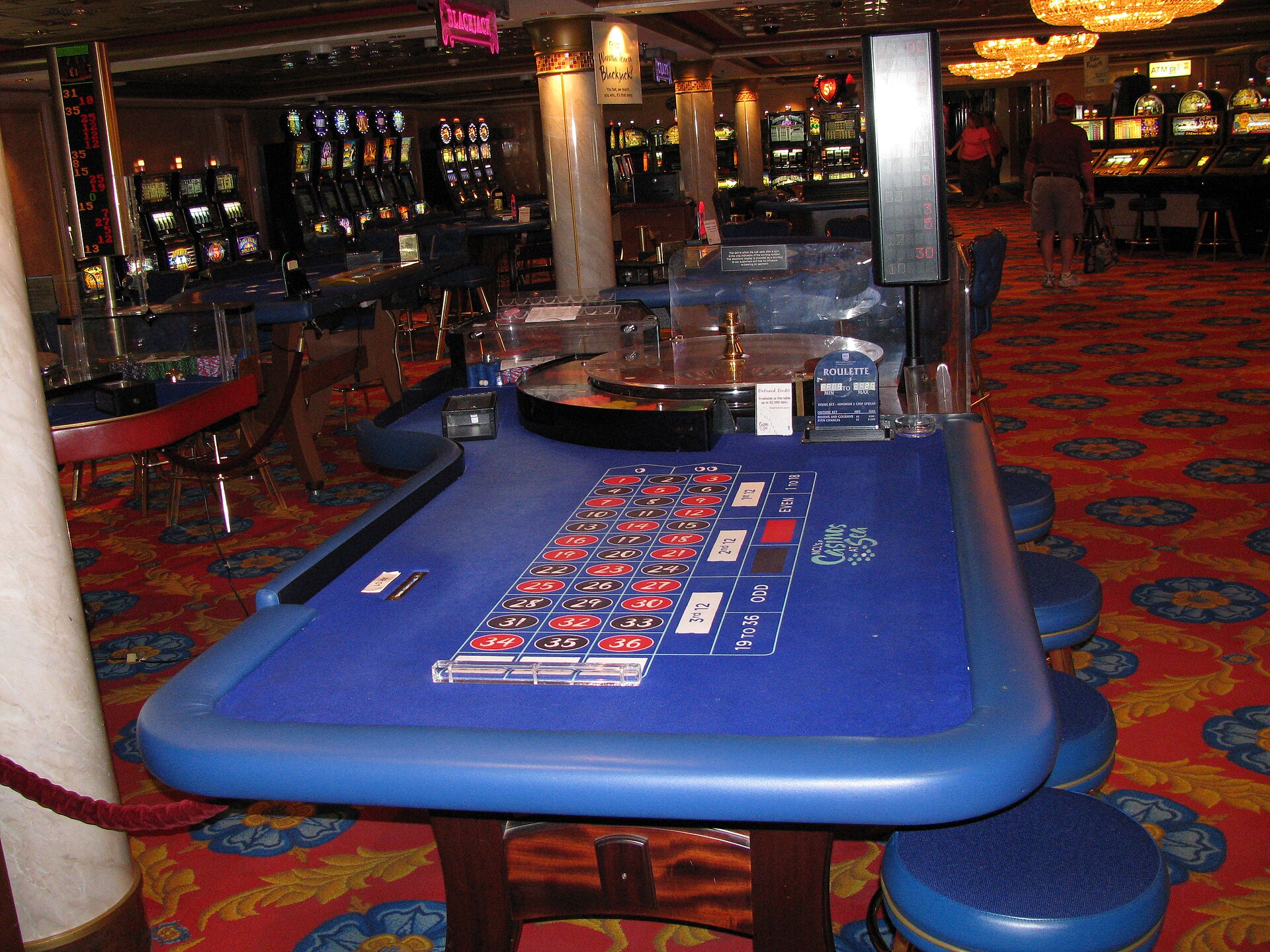
There are two more catches. Norwegian warns that the machine “will not be in service when the satellite goes down,” which can happen as the ship sails in or out of port. That’s exactly when you’d want cash for the day ashore. And don’t count on changing money on board: Virgin says “currency exchange is not available on board and will need to be conducted on land before embarking.” Princess is the partial exception, with currency-dispensing ATMs on European and some long-haul sailings.
The casino can also turn your onboard account into gaming credit. Royal Caribbean lets guests charge up to $10,000 a day for gambling ($5,000 on slots and $5,000 on tables), but it says “all table game transactions are subject to convenience fee” unless you hold one of its top Club Royale tiers, according to its casino FAQ. Princess takes cash for chips, but it doesn’t accept credit cards in the casino. Everything is charged to the stateroom account instead. Royal Caribbean adds that the money is meant for gaming, so it isn’t a back door to taxi money. Get your cash at home.
Where Do You Actually Need Cash on a Cruise?
Not on board, mostly. Here’s where paper money still earns its place in your wallet:
- Porters at the terminal. “Luggage porters will be on hand to collect your bags and get them to the ship, and they will expect compensation,” The Points Guy’s tipping guide says. It suggests around $1 or $2 per bag.
- Extra tips for crew. Automatic gratuities cover the standard service. If your cabin attendant or a bartender goes beyond it, cash is the direct way to say thanks, and Carnival explicitly allows it, according to Cruise Hive. The Points Guy suggests packing “small denomination bills,” and says Guest Services can break larger notes.
- Tour guides and drivers. The same guide suggests about $3 per person for a half-day tour and $6 for a full day, plus $1 to $2 for the bus driver.
- Taxis, market stalls and small shops in port. This is the big one. The Points Guy notes that in some destinations “vendors only accept cash in local currency.” Norwegian also recommends carrying “a small amount of local currency” for foreign ports.
Do You Need Local Currency in Port?
It depends where you’re going, and on the most popular short cruises, often not. Here’s how it works at the Caribbean ports first-time cruisers visit most.
The Bahamas: dollars are dollars
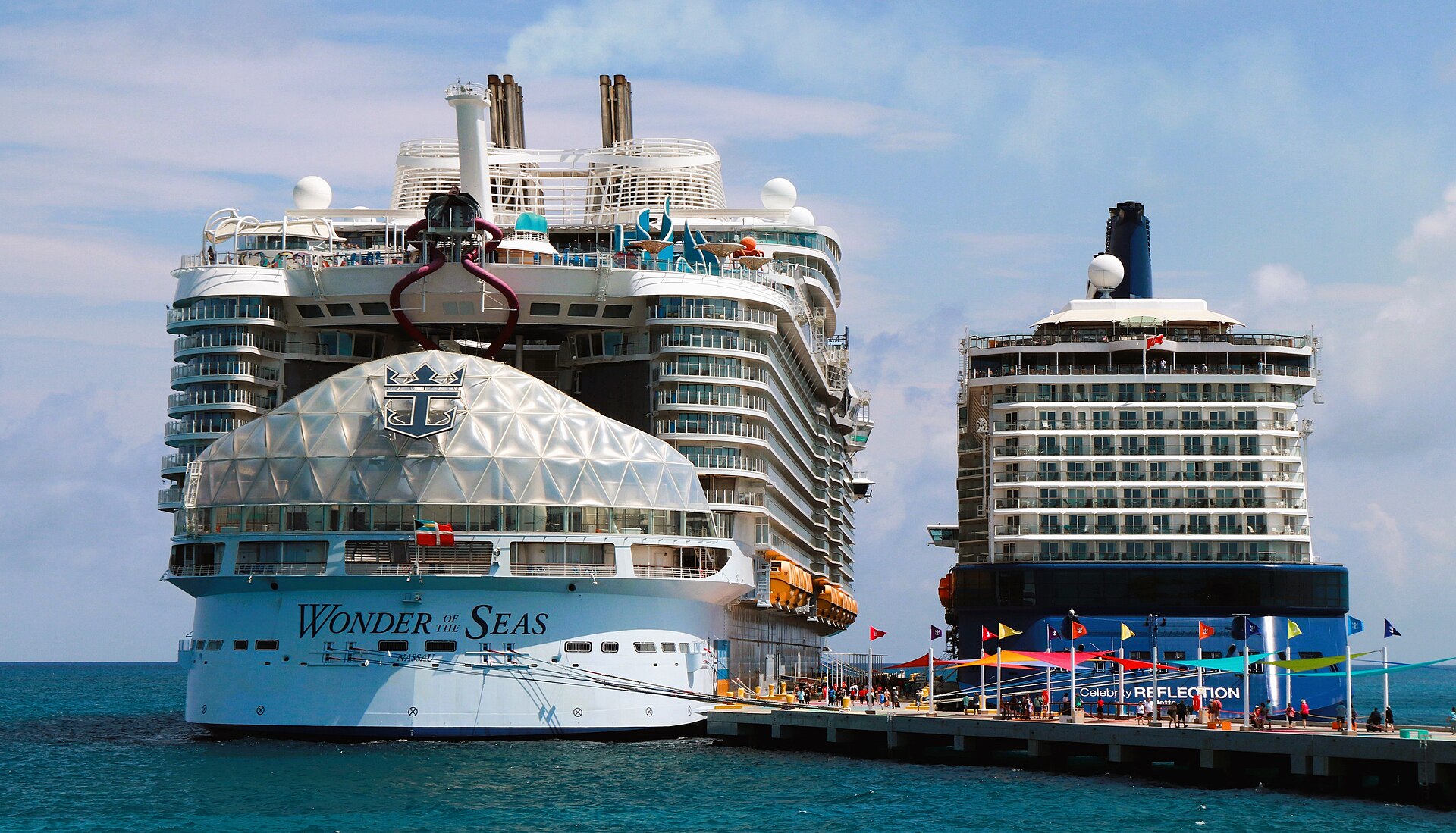
The Central Bank of The Bahamas describes “the fixed parity between the Bahamian and U.S. dollars that has prevailed since 1973” in its monetary policy statement. One Bahamian dollar is worth one U.S. dollar, and World Travel Guide notes that the U.S. dollar “is also accepted as legal tender.” In Nassau you can spend U.S. cash without exchanging anything. Your change may come back in Bahamian notes, so spend those before you get back on board.

Private islands: mostly your cruise card
A cruise line’s private island works like an extension of the ship. At Royal Caribbean’s Perfect Day at CocoCay, “you’ll need your SeaPass® card to pay for things on the island,” the line’s CocoCay FAQ says. The exception is the market selling local Bahamian crafts. You can charge purchases there to your SeaPass only until 2:30 p.m., but “cash (USD) is always accepted.” Bring a few dollars if you plan to shop there.
Mexico: dollars work, pesos work better
In Cozumel, “just about any shop you hit will take U.S. currency,” says Cruzely’s April 2026 port guide, but “don’t be surprised if you pay in dollars and receive pesos in change.” Its advice is to carry smaller bills so you aren’t left holding pesos you can’t use at home. The cost is in the exchange rate. “Any business can decide to accept a non-official currency and they can set the rate at which they will exchange it,” explains Stingray Villa, a Cozumel rental host. It estimates that those homemade rates can mean paying “15-20% more for things.” That figure is the host’s estimate, not an official one, but the direction is clear: dollars are convenient, and pesos are cheaper.
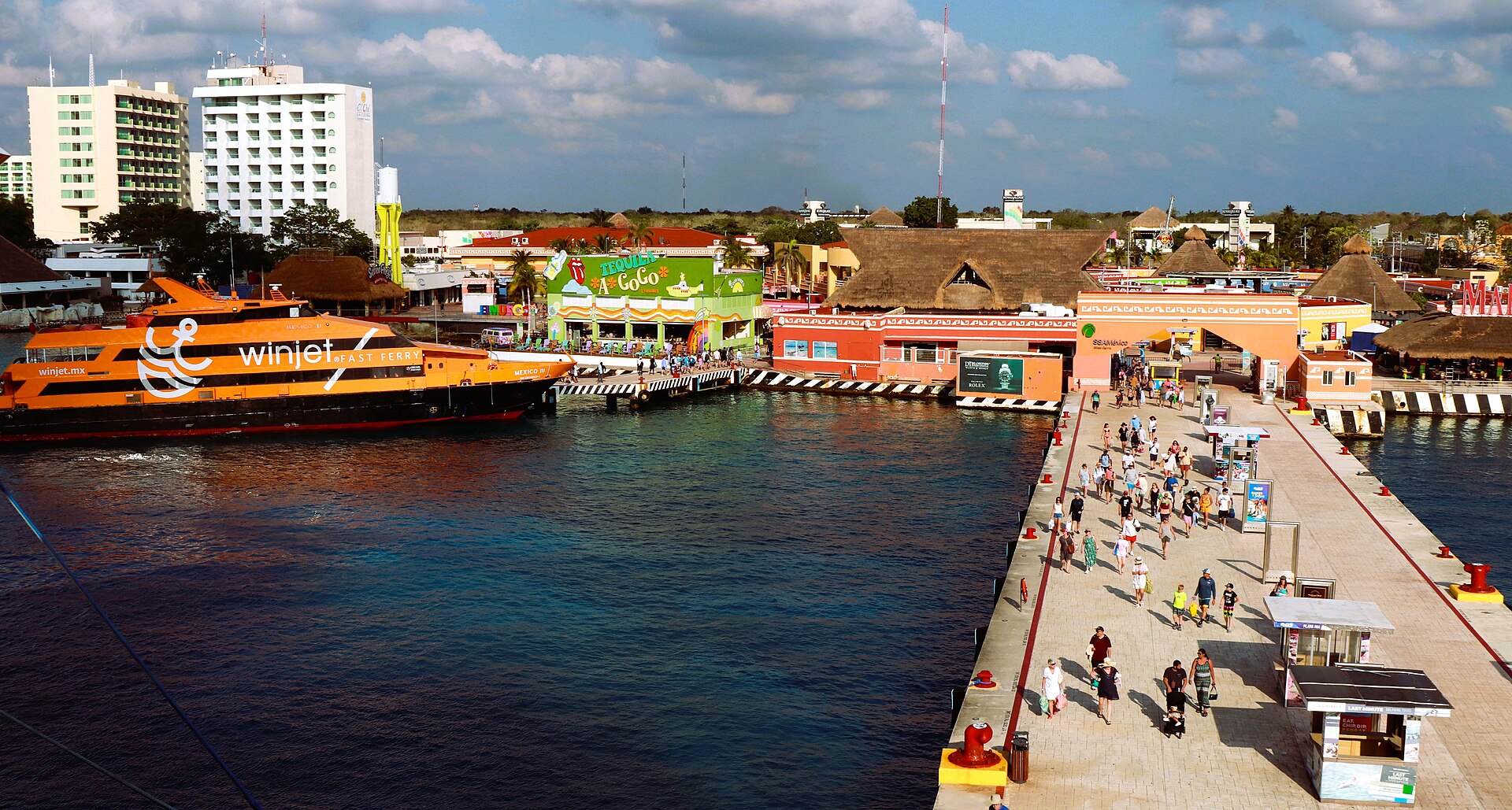
Taxis are the one place to be ready with cash. Cruzely says taxi rates from the port are flat fees posted at the taxi stand. Stingray Villa says fares are regulated and “drivers are required to carry an official rate sheet.” Check the price before you get in, and have small notes ready. If Mexico is on your itinerary, our guide to passports for Mexico cruises covers the paperwork side.
Europe and beyond
Outside dollar-friendly ports, plan to use a card or local cash. Princess’s currency-dispensing ATMs on European sailings exist for this reason. For the best rate, Kosciolek advises completing transactions “in local currency instead of U.S. dollars to avoid bad exchange rates.”
How Much Cash Should You Bring on a Cruise?
No cruise line publishes a figure for pocket money, and anyone who gives you one number is guessing. Build your own budget from the things above instead:
- Porters: your number of bags × $1-$2, twice (on and off).
- Excursion tips: roughly $3 (half day) or $6 (full day) per person per tour, using The Points Guy’s guide.
- Taxis and small purchases for each port where you’ll go ashore independently. Check the posted fares in the port guides for your ports before you go.
- A cushion of small bills for extra thank-yous to crew.
- Your full onboard deposit, but only if you’re running your account on cash. Use your line’s guidance in the table, plus automatic gratuities.
There’s also a ceiling at the other end. If you’re carrying a lot, U.S. federal law requires you to report more than $10,000 in currency or monetary instruments when you enter or leave the United States. “When families or groups are involved, the $10,000 threshold applies to the total amount they are carrying or sending collectively, not per individual,” U.S. Customs and Border Protection says. The report is made on FinCEN Form 105. Carrying the money is legal. Failing to declare it can lead to seizure and “civil or criminal penalties.”
Your Cruise Money Checklist
- Decide card or cash for your onboard account before you reach the terminal. If it’s cash, tell the check-in agent (Royal Caribbean) or go to Guest Services on day one (Carnival, Princess).
- Use a credit card rather than a debit card if you can, so holds don’t lock up your spending money.
- Get U.S. dollars in small notes at home, not from the ship’s ATM.
- Buy a little local currency before you sail for non-dollar ports. Virgin, for one, won’t exchange money on board.
- Count gratuities into your budget. They’re added automatically, and on a cash account they eat into your deposit.
- Collect any refund the evening before you leave, and spend leftover Bahamian dollars or pesos before you re-board.
Quick Answers
Do you need cash on a cruise ship?
Not for onboard purchases. Ships are cashless, so everything is charged to your cruise card or wristband. You’ll want some small bills for porters, extra crew tips, tour guides, taxis and market stalls in port.
Can I pay my cruise onboard account with cash?
Yes, on all the major lines we checked. You leave a cash deposit at check-in or Guest Services, and you can top it up during the cruise. Royal Caribbean caps cash-account spending at $500 on sailings of 7 nights or more and $300 on shorter ones until you add more.
Are there ATMs on cruise ships?
Most big ships have one, often in the casino, but the fees can be high. The Points Guy reports charges of more than $10 per transaction. Norwegian warns its ATMs stop working when the satellite link drops, which can happen near port.
Should I bring US dollars or pesos to Cozumel?
Dollars are widely accepted in Cozumel, but each business sets its own exchange rate and change often comes back in pesos. Pesos or a card usually work out cheaper. Carry small bills either way.
Can you use US dollars in the Bahamas?
Yes. The Bahamian dollar has been fixed at par with the U.S. dollar since 1973, and U.S. dollars are accepted as legal tender. You may get your change in Bahamian notes.
The Bottom Line
Cash hasn’t been banned at sea, whatever the Facebook groups say. It’s just been moved to the edges. The ship itself runs on your cruise card, and the fare covers far more than a land holiday would. Bring a card for the account, a stack of small dollar bills for the people who carry your bags and drive your taxi, and a little local cash for ports that don’t use dollars. Leave the ship’s ATM for emergencies.
Cruise Chaos earns nothing from cruise lines, banks or booking links. Every rule and price in this guide links to where we read it. If something has changed since we checked, tell us and we’ll correct it.
Coming up on Cruise Chaos: 7 cruises to avoid, and the documented reasons behind each one.
🎁 Get our free Cruise Survival Kit. Join the Cruise Chaos crew and we’ll email you our printable packing checklist and money-saving cheat sheet right away, plus the week’s best cruise stories and verified deals every Friday. Send me the free kit →
Keep Reading
- How Much Does a Cruise Cost Per Person? We Did the Sums From the Cruise Lines’ Own Books
- Do You Need a Lanyard for a Cruise? Which Ships Still Use Key Cards, and Who Gets One Free
- Do You Need a Passport for a Cruise to the Bahamas? The Birth Certificate Rules That Trip People Up
Sources
- Royal Caribbean: How do I pay for onboard purchases?, How do I set up a SeaPass or Onboard Expense Account?, If I chose cash for my onboard expense account, how much should I deposit?, Are there cash limits at the casino? and How do I pay for things on Perfect Day at CocoCay?
- Norwegian Cruise Line: How do I pay for onboard expenses?, What about currency? and Is there an ATM on board?
- Princess Cruises: Onboard experience FAQs
- Virgin Voyages: Onboard payments FAQ and VoyageFair Choices FAQ
- Cruise Hive: Carnival Cruise Line Clarifies the Use of Cash Onboard (18 Apr 2024) and Carnival Cruise Line cashes out onboard payment rumor (7 May 2025)
- Royal Caribbean Blog: Cruising 101, SeaPass account
- The Points Guy: How to get cash on a cruise ship (Nov 2024) and The people you should tip on a cruise (Jan 2025)
- VV Insider: Virgin Voyages announces changes to fares and gratuities (Sep 2025)
- Central Bank of The Bahamas: Monetary policy and World Travel Guide: Bahamas money and duty free
- Cruzely: Savvy tips for visiting Cozumel on a cruise (Apr 2026) and Stingray Villa: Should you use pesos or dollars in Cozumel? (Mar 2024)
- U.S. Customs and Border Protection: Money and other monetary instruments
You May Also Like
 Do You Need a Passport for a Cruise to Mexico? What Happens When Things Go Wrong in Cozumel
 How Much Does a Cruise Cost Per Person? We Did the Sums From the Cruise Lines’ Own Books
 What Happens If Your Cruise Price Goes Down After You Book? The 24, 48 and 72-Hour Rules
 Can You Bring Vapes on a Cruise? Every Line’s Rule, and the Ports Where It Gets You in Trouble